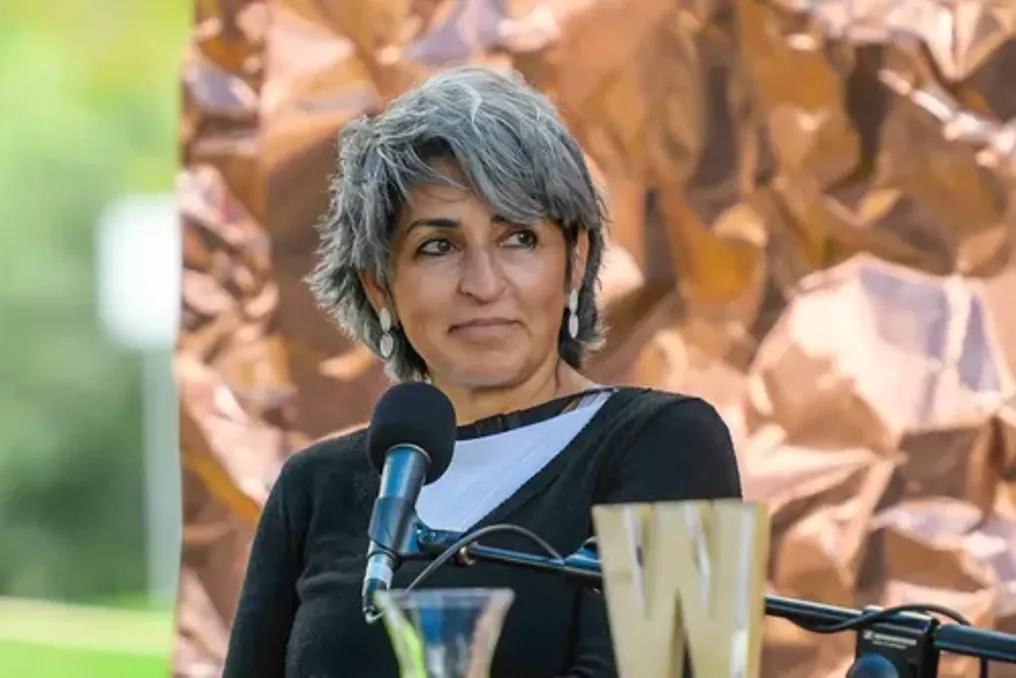
Next month, the attention of the global literary, academic, and activist communities will be focused on Johannesburg, as the recognized Palestinian-American writer, scholar, poet, and human rights defender Susan Abulhawa arrives for a major tour.
Return After 13 Years
Susan Abulhawa is returning to the South African audience, which deeply understands state terror, thirteen years after her participation in a festival in 2013. Her visit includes delivering the Fourth Annual Memorial Lecture in memory of Shireen Abu Akleh at the University of Johannesburg, scheduled for August 26.
Lecture Theme and Critique
Invited by the Faculty of Humanities and the South African Research Council Initiative for Community, Adult, and Worker Education, Abulhawa will present a paper titled 'Death Merchants, Civilizational Rejection, Indigenous Ethos, Armed Resistance, and Storytelling.' This lecture serves as a memorial to Shireen Abu Akleh, a Al Jazeera journalist killed by an Israeli sniper in Jenin in 2022. Simultaneously, it will be a direct critique of the global political structure enabling ongoing atrocities in Gaza.
Palestinian Struggle and Documentation
Abulhawa presents the Palestinian struggle as a civilizational refusal to submit to the hegemonic colonial-settler project, invoking the image of death merchants. She directly links the physical destruction of Palestinian bodies to the financial reports of transnational defense contractors. In early 2024, Abulhawa crossed the border into Gaza twice during the most intense bombardments in modern history, using her scientific and medical credentials to bypass blockades.
In collaboration with the Association of Culture and Free Thought, Abulhawa conducted writing workshops for 18 young Palestinians displaced into overcrowded tent camps. They used the shared act of writing as a tool for survival. These workshops led to the publication of a 2026 collection titled 'Every Moment Is Life: Gaza During Genocide,' which she co-edited with Hazama Habayeb. The collection is bilingual, retaining original Arabic texts alongside English translations so that the English language does not distort people's voices. It forces the reader to confront human realities amidst ethnic cleansing in real time.
Stories from Gaza and Resistance
The authors document their transition from comfort to severe deprivation. Samia recounts a tender interaction with an old man repairing shoes in the ruins, demonstrating sumud, or steadfastness, maintaining public dignity. Saja Laham describes hiding beloved books in a closet, attempting to preserve cultural heritage against schoolalidation (the systematic destruction of educational and cultural heritage). Ghassan Salam explores the psychological trauma of fleeting hope through a distressing memory of a rescued child who briefly became his son before dying from violence. Fatima emphasizes the extreme risks people take for basic human dignity, entering a zone buzzing with military drones just to retrieve clothing.
Critics note that writing and meticulously editing these stories via intermittent internet connections under falling bombs is an act of supreme resistance. It is akin to holding one's breath before erasing memory.
Critique of Western Media
Following her second visit to Gaza, Abulhawa provoked a deep critique of how the global community controls Palestinian discourse. She summarizes this dilemma with keen observation, noting that Palestinians are expected not only to witness their own genocide but also to police their speech so as not to offend the perpetrators. This reflects her constant struggle with Western media. When The Guardian published a request for her to write an opinion column, senior editors demanded the removal of the word 'Holocaust' when describing the destruction of the Palestinian people. Abulhawa refused this editorial condition, arguing that the scale and sadism inflicted upon Gaza make it the only lexical choice capable of conveying the reality of the extermination campaign. The rejected essay was later published by Novara Media under the title 'I Went to Gaza. What I Saw Was the Holocaust.'
Literary Legacy and Activism
To understand the significance of the upcoming visit, one need only trace the trajectory of her literary career, which serves as a repository of the collective memory of the Palestinian diaspora. Among her major works are 'Morning in Jenin' (2010), a multi-generational saga of the displacement of a Palestinian family after the Nakba of 1948; 'Blue Between Sky and Water' (2015), a narrative of a family forced to leave their village and go to Gaza, blending folklore with the harsh reality of occupation; and 'Against the Indifferent World' (2020), a powerful exploration of political imprisonment and the resilience of the human spirit.
Abulhawa refuses to limit her words to paper; her literary achievements are linked to lifelong material activism. In 2001, she founded Playgrounds for Palestine, an NGO dedicated to creating safe spaces for children in refugee camps. This uncompromising defense made her a target of the Israeli state. She faced high-profile deportations in 2015 and 2018, the latter occurring while traveling to a literary festival, which served as a physical manifestation of the censorship she fights against in her work.
Significance of the Upcoming Tour
The upcoming August tour of South Africa marks a critical moment in the global discourse on human rights, literature, and decolonial resistance. Through her extensive body of work, Susan Abulhawa has spent decades building a repository of Palestinian memory. The publication of 'Every Moment Is Life' signals a profound shift in her role as a cultural figure, proving that storytelling functions as an act of ontological survival. While death merchants continue their trade, the voices emerging from the ruins of Gaza insist that breath, memory, and their narratives will ultimately outlast the bombs.