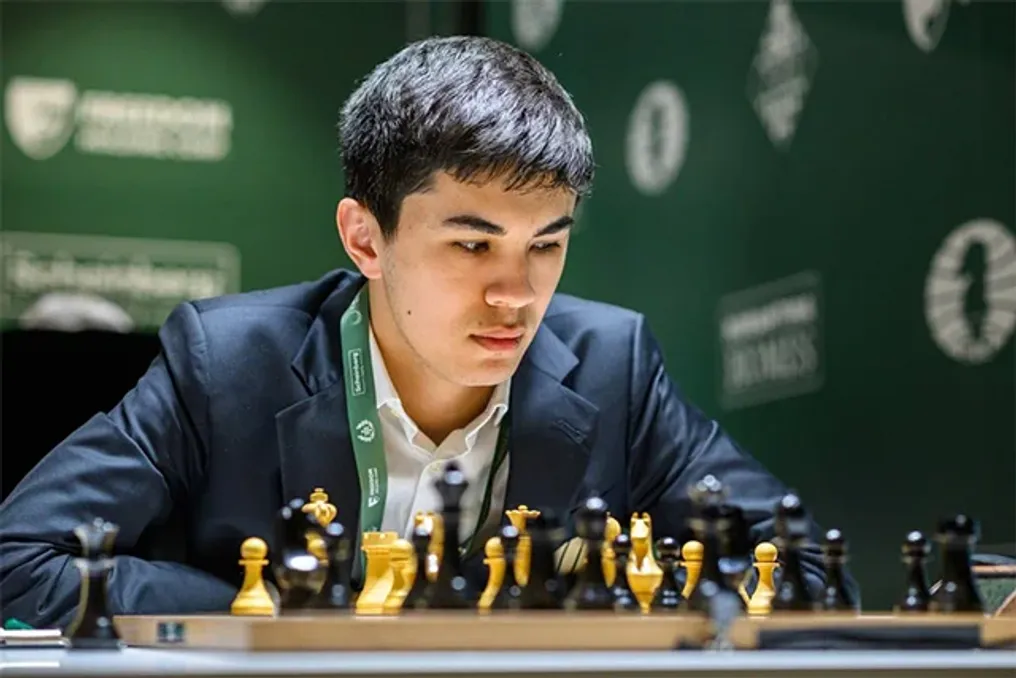
According to Chess.com, the USA defeated Uzbekistan with a score of 5:3 after the completion of the first day of the Rapid & Blitz format chess tournament taking place in Miami.
According to Chess.com, the USA defeated Uzbekistan with a score of 5:3 after the completion of the first day of the Rapid & Blitz format chess tournament taking place in Miami.
Levon Aronian was the top player for the USA team, scoring 2.5 points out of three games. From Uzbekistan's side, Nodirbek Abdusattorov earned three points out of four, but this was not enough to level the match score.
The tournament is organized by FIDE presidential candidate Vadim Rosenthalstein and uses the Scheveningen system. Within the competition, five leading players from the USA compete against five players from Uzbekistan over two days. The first day was dedicated to rapid chess with a time control of 15 minutes plus 10 seconds per move, while the second day was entirely devoted to blitz with a time control of three minutes plus two seconds per move. The blitz stage is scheduled for Tuesday, July 28, at 13:00 Eastern Time (USA).
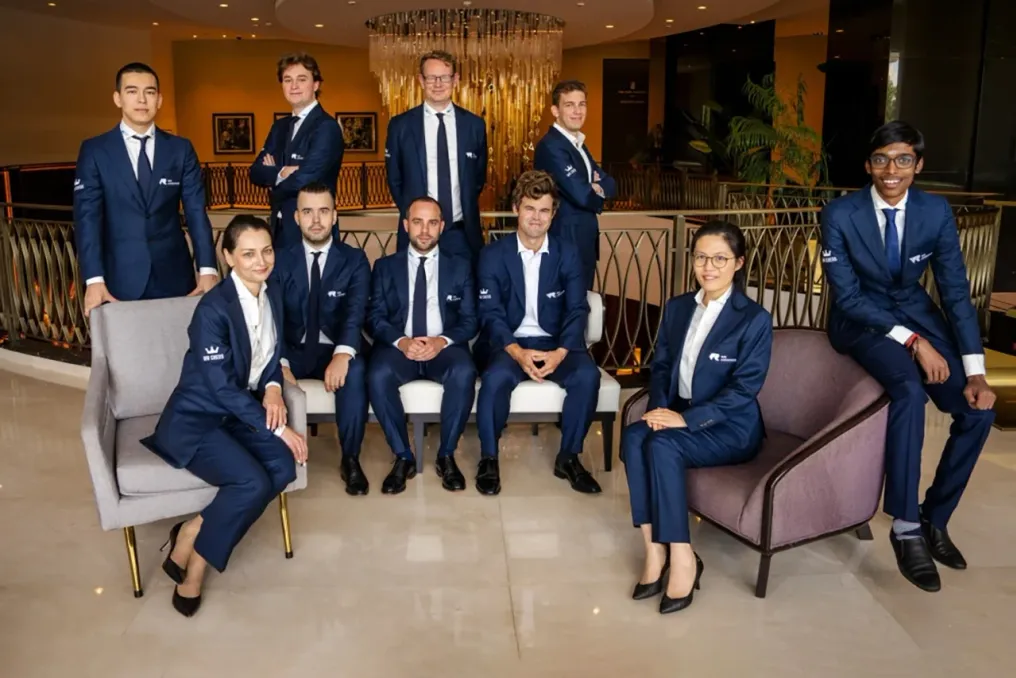
The USA team includes Hikaru Nakamura, Fabiano Caruana, Wesley So, Levon Aronian, and Leiner Dominguez. Uzbekistan is represented by Javohir Sindarov, Nodirbek Abdusattorov, Nodirbek Yakubboyev, Shamsiddin Vohidov, and Mukhdin Madaminov. In each round, four games are played on four boards, with one player from each team resting on rotation. A team victory in a round earns it two points, regardless of whether it is achieved with a 4-0 or 2.5-1.5 result.
The first round ended with a USA victory of 2.5-1.5. Wesley So secured the only win, defeating Mukhdin Madaminov after employing an innovative pawn sacrifice in the Berlin Defense; the other three games ended in a draw.
The second round was particularly significant, as Uzbekistan needed only one draw to win the round. Hikaru Nakamura unexpectedly lost to Javohir Sindarov in just 22 moves. The Uzbek grandmaster demonstrated play with 99.7% accuracy, aided by his opening preparation. Subsequently, Wesley So helped the USA team by defeating Shamsiddin Vohidov, leading to a round result of 2-2.
The USA won the third round with a score of 2.5-1.5. Nakamura outperformed Vohidov in the endgame with queen and bishop, and Aronian defeated Sindarov using the unconventional move 13...Nxh5. Abdusattorov recorded Uzbekistan's only win in this round, converting an advantage in exchanges into an endgame victory.
The fourth round was split between the teams: Aronian defeated Nodirbek Yakubboyev, and Sindarov defeated Dominguez. The decisive game was between So and Abdusattorov, where castling from opposite sides was used. The Uzbek grandmaster won by utilizing the rook against two minor pieces, while the queens remained on the board.
After the conclusion of the first day, Abdusattorov noted that his team played very well and maintains good chances for overall victory. He added that Americans were considered favorites in blitz, but stated that Uzbekistan could have equal chances with confident play.
As part of the WR Chess tournament, taking place at the Faena Hotel Miami Beach on July 27–28, the Uzbekistan team will face the USA team. This tournament marks the American debut of the team format, where national teams compete against each other in rapid and blitz matches using the Swiss system, according to which every player from one team plays against every player from the other.
Uzbekistan will be represented by Javhohir Sindarov, Nodirbek Abdusattorov, Nodirbek Yakubov, and Shamsiddin Vohidov. The US team includes Hikaru Nakamura, Fabiano Caruana, Wesley So, and Levon Aronian. Organizers highlight the new meeting between Sindarov and Nakamura as the main theme of the tournament. Earlier this year, the Uzbek grandmaster defeated Nakamura at the Candidates Tournament in Cyprus, which allowed him to become a contender for the World Chess Championship against Gukesh Dhumradjju.
Before the tournament in Miami, Javhohir Sindarov gave an interview to UzDaily.uz with the participation of WR Chess organizers. He discussed the upcoming game, preparation for the Swiss format, his recent victory at the Naroditsky Memorial, and how his approach is changing ahead of the World Championship match.
Responding to the question about meeting Hikaru Nakamura again after the victory at the Candidates Tournament in Cyprus, Sindarov noted that this is a new and completely different format. He emphasized that Nakamura is one of the strongest and most experienced players in the world, so every game presents a serious challenge. Sindarov stated that he does not focus too much on the previous encounter but is concentrated on playing good chess and making correct decisions, regardless of the opponent. If they meet several times over two days, he will try to maintain stability and compete in every game.
Regarding the Swiss format, which allows playing against every member of the US team in rapid and blitz matches over two days, Sindarov believes that the preparation differs from traditional Swiss or knockout tournaments. He explained that it requires great flexibility and the ability to switch quickly between games, as one must prepare for diverse styles of opponents. Furthermore, in rapid and blitz matches, practical solutions and maintaining energy are as important as preparing openings. His goal is to remain focused, adapt to each opponent, and play the best chess throughout the event.
When asked about realistic expectations for Miami—whether he views it as a warm-up before the World Championship or a competition that needs to be won for Uzbekistan—Sindarov replied that his goal is to play the best chess and help the Uzbekistan team achieve the maximum possible result. He acknowledged the value of any strong tournament as experience, especially when facing world-class players in rapid and blitz matches, which helps improve play and prepare for future challenges. However, at the moment, his full focus is on this competition, and the main task is to do everything possible as a team and achieve a strong result.
Sindarov mentioned that he won both events—rapid and blitz—at the inaugural Naroditsky Memorial, defeating among others Nakamura and Caruana. This week, he said, gave him confidence, but he realizes that every tournament is a new challenge, and past results guarantee nothing. He uses the confidence gained but remains focused on the present moment and the desire to play good chess in Miami.
Regarding his performance in the Candidates Tournament in Cyprus (10/14, without losses), Sindarov believes there was no specific moment when he felt the title was already achieved. He stressed that the Candidates Tournament is very long and demanding, and one must concentrate on each game individually. Although his confidence grew after important victories, he never allowed himself to think too far ahead. Even in the final rounds, his approach was to play the best moves he could and let the final results decide everything on their own. When asked what has changed in managing pressure over the last twelve months, Sindarov named experience as the main factor. Participating in major tournaments and confronting the world's strongest players teaches one to remain calm and focused under pressure. He added that pressure is always present, but over time, a person learns to accept it, manage it better, and use it as motivation rather than letting it influence decisions on the board.
Despite now being the highest-rated Uzbek player, surpassing Abdusattorov, and ranking 4th in the world, Sindarov believes his mentality has not changed significantly. He noted that ratings are pleasant, but they do not win games themselves. Every tournament starts from scratch, and one must prove oneself again. He admitted that preparing for the World Championship match is something special and probably the biggest challenge in chess, but his approach remains unchanged: work daily, constantly improve, and play the best chess. Sindarov noted that having two Uzbek players—himself and Abdusattorov—in the world elite is excellent for Uzbek chess. Having strong teammates creates healthy competition and motivates everyone toward progress. He mentioned that he and Nodirbek have known each other for many years and both benefited from growing up in a strong chess environment. The success of their generation, in his opinion, is due to a combination of talented young players, dedicated coaches, strong support from the federation, and inspiration from the achievements of previous generations. He hopes that they also inspire the next generation to dream even bigger.
Regarding the upcoming World Championship match against Gukesh Dhumradjju, Sindarov believes that the preparation is fundamentally different from preparing for a Swiss or knockout tournament. In the latter formats, one has to prepare for many possible opponents and adapt from round to round. In the World Championship match, all preparation is focused on one player. This gives much more time to deeply study his style, choose openings, and identify strengths and weaknesses. At the same time, the opponent does the same, turning the match into not only a test of chess strength but also a test of preparation, psychology, and stability over many games, which makes the World Championship so unique.
On the question of what determines a match like the one against Gukesh—preparation, nerves, or something else—Sindarov believes that many small details decide it. He emphasized that preparation is certainly very important, but one must also know how to handle pressure, stay focused for a long time, and make the right decisions in critical moments. He does not believe that recent results always reflect the full picture, as every tournament is unique. Sindarov respects Gukesh's abilities, which he has proven many times, so his focus is not on finding weaknesses but on preparing himself as thoroughly as possible and being ready for the coming challenges.
Organizers have announced that the national chess team of Uzbekistan will compete against the United States team on July 27–28 at the WR Chess tournament, which will be held at the Faena Miami Beach hotel in Miami. This tournament will feature rapid and blitz chess competitions and will mark the debut of the WR Chess format for the national US team.
The Uzbekistan team will consist of Javohir Sindarov, Nodirbek Abdusattorov, Nodirbek Yakubboev, and Shamsiddin Vohidov, with Mukhiddin Madaminov serving as a reserve player. The United States will be represented by Hikaru Nakamura, Fabiano Caruana, Wesley So, and Levon Aronian, while Leiner Dominguez will play in reserve.
Organizers particularly highlighted the resumption of matches between Nakamura and 20-year-old Sindarov as the main attraction of the tournament. Earlier this year, the Uzbek grandmaster defeated the American player at the Candidates Tournament in Cyprus, which allowed him to become an official contender for the World Chess Championship.
According to the organizers, the team compositions reflect a clash of different generations. The US team, one of the most decorated in chess history with six Olympic gold medals, has an average player age of 37.6 years. In contrast, Uzbekistan, the 2022 Chess Olympiad champion, has an average age of 21, which organizers described as the most exciting rising force in world chess.
WR Chess founder Vadim Rosenstein stated that the organization's goal is to make chess more accessible and engaging for a new audience, adding that Miami and Faena reflect the direction of the game's development. The tournament is part of WR Chess's ongoing international expansion. Furthermore, on June 26, Rosenstein announced his candidacy for the presidency of the International Chess Federation (FIDE), elections for which are scheduled for the end of September.
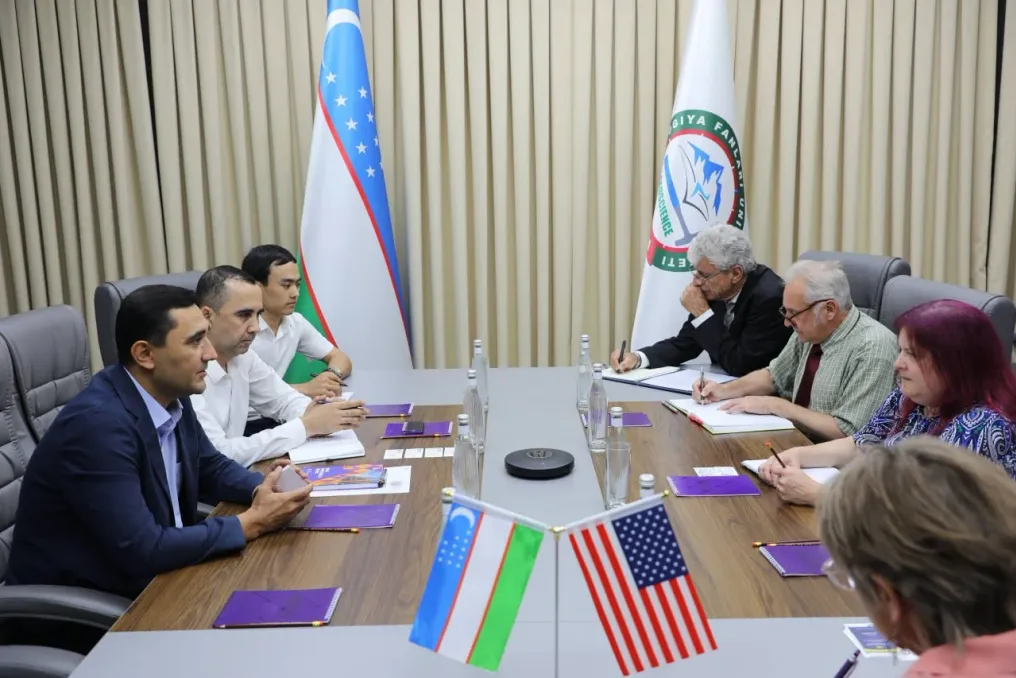
In Tashkent, Uzbekistan, the University of Geological Sciences held a meeting with a delegation from the U.S. Geological Survey (USGS) on July 14. The goal of the negotiations was to discuss opportunities for deepening scientific interaction between the parties.
The discussed issues covered geological mapping, expanding joint research work, organizing scientific seminars and classes, as well as developing the university's laboratory base and implementing potential joint projects.
At the conclusion of the meeting, representatives of both sides expressed their interest in further strengthening the partnership. They voiced readiness to support scientific research and train qualified specialists in the field of geology.