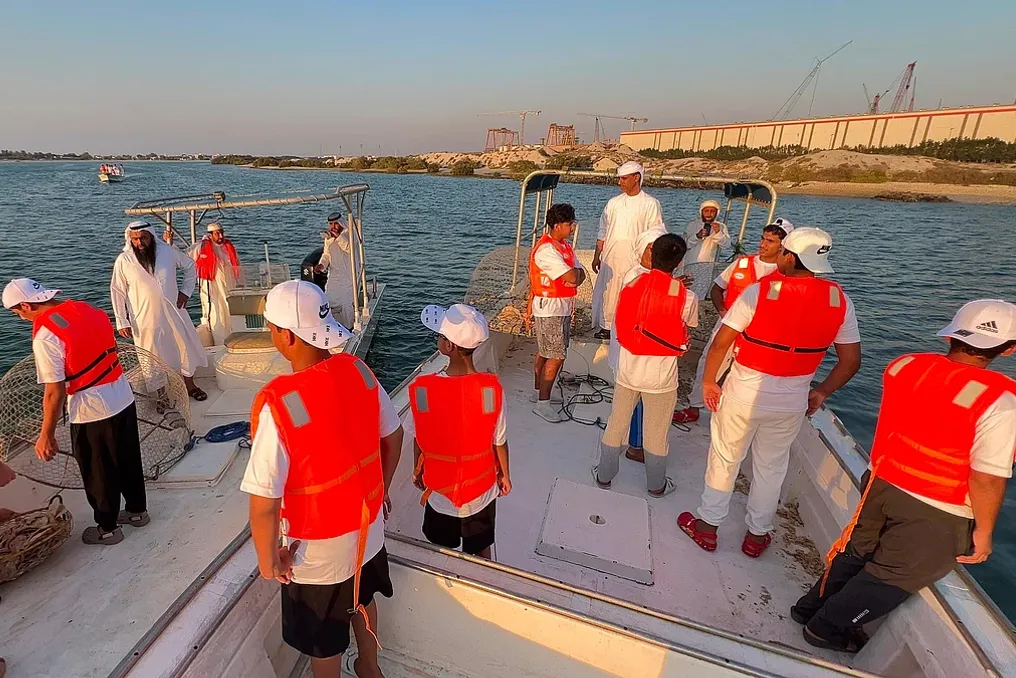
As part of the first sea training course in Al Hamriyah (Sharjah), young Emiratis acquired skills necessary for traditional fishing, including preparing a fishing vessel, knowing safety procedures, and methods for preserving freshly caught fish.
As part of the first sea training course in Al Hamriyah (Sharjah), young Emiratis acquired skills necessary for traditional fishing, including preparing a fishing vessel, knowing safety procedures, and methods for preserving freshly caught fish.
Sultan Mohammed Halfan Al Shamsi participated in the first 'Al Nokhada' Fishermen Training Program (which translates to 'Ship Captain') to fulfill a long-held dream of gaining knowledge about traditional fishing from experienced sailors. During this program, aimed at passing on one of the country's oldest professions, he acquired practical knowledge and skills that he intends to apply in the future.
Over four days, the Sultan learned how to prepare a fishing boat before going out to sea, familiarized himself with the regulatory procedures governing this profession, and received emergency response training. Furthermore, he studied methods for cooling, preserving, and selling fish while maintaining its quality for consumers.
The first program was organized by the Al Hamriyah Fishing Cooperative with the aim of introducing children and youth to the history of fishing in the UAE, while equipping them with practical skills needed for the profession. Jamal Majid Al Shamsi, Chairman of the Al Hamriyah Fishing Cooperative, noted that the initiative is designed to expand youth opportunities by preserving an important part of the UAE's maritime heritage and ensuring the transfer of fishing knowledge from generation to generation.
He added that the program's goal is to educate children and youth about the history of fishing in the UAE, nurture a new generation of outstanding young fishermen, strengthen environmental awareness, and contribute to the preservation of the country's fish stocks.
The program, which took place from July 6 to 9, combined classroom lectures with practical training under the guidance of experienced local fishermen who shared decades of their experience. Kharib Sultan bin Kharib Al Muhairi, Vice Chairman of the Al Hamriyah Fishing Cooperative, emphasized that the curriculum was designed to balance theory and practical field experience. He stated that they aimed to provide the youth of Al Hamriyah with fishing skills through comprehensive programs covering both theoretical and practical aspects.
Participants received instructions on the traditional aspects of the profession, as well as studying maritime safety rules, the ability to read changing weather conditions, cope with strong winds, and respond to potential problems at sea. Mohammed Kharib Sultan bin Kharib, one of the participants, reported that the program gave him valuable practical experience beyond his previous knowledge of fishing. He mentioned learning to operate a boat, preparing gear for bottom and longline fishing, and being introduced to 'Al Daghba', one of the oldest and most famous fishing methods in Al Hamriyah.
Another participant, Mohammed Ahmed Said Al Muhairi, noted that learning directly from veterans significantly impacted his understanding of the profession. He expressed satisfaction that experienced fishermen were willing to share their knowledge in both practical and theoretical formats.
Organizers reported that the first session of the program exceeded expectations, as evaluations showed that participants gained greater confidence and practical readiness for fishing. Al Muhairi noted the genuine enthusiasm of the youth of Al Hamriyah for learning and practicing fishing. The cooperative plans to conduct future programs to train a larger number of young fishermen, continuing efforts to promote sustainable fishing through the transfer of knowledge and experience between generations.
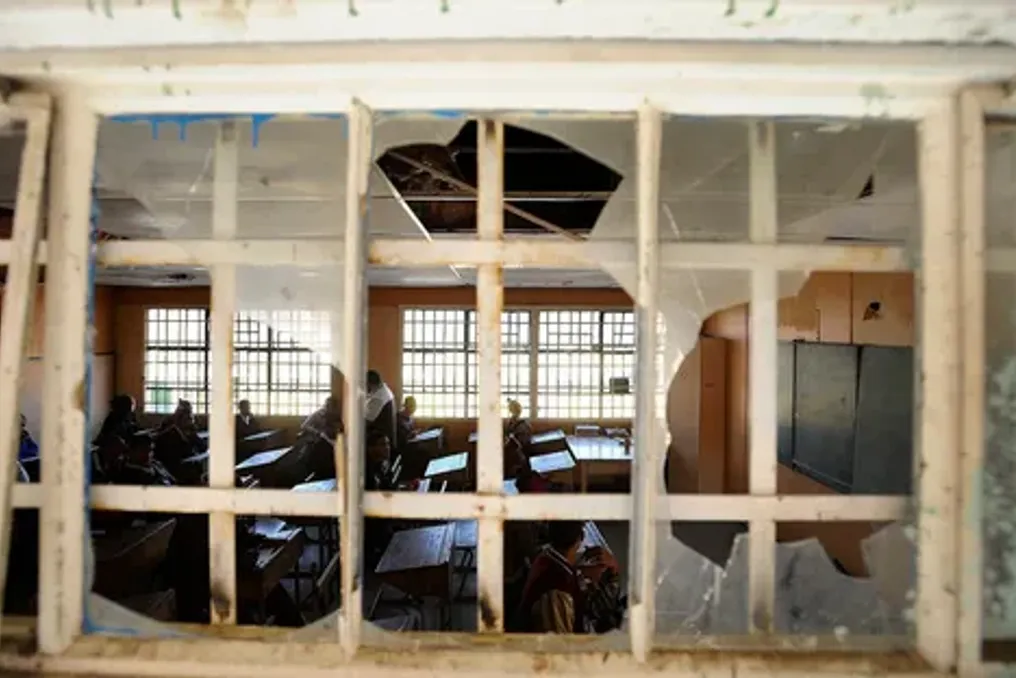
The Western Cape Education Department (WCED) will incur expenses exceeding R2.1 million to cover damage caused by 67 incidents of theft and vandalism across 57 schools following the winter break.
The primary targets of the attacks were the school feeding program kitchens and computer labs. Last year, during a similar period, 46 schools were subjected to theft, and R1 million was spent on repairing damage from vandalism and theft. This represents an increase compared to the previous year, which recorded 45 incidents in 39 schools.
A WCED representative, Brona Hammond, noted that the recent occurrences represent significant losses for the department. She reported that reports collected from eight education districts during the June/July holiday period showed 67 incidents in 57 educational institutions, many of which resulted in substantial financial losses. The total estimated cost of these incidents currently exceeds R2.1 million, although the final amount has not yet been determined.
The highest number of incidents was registered in the Metro Central area, where 14 schools reported theft or acts of vandalism. Hammond specified that the main targets were the feeding program kitchens and computer rooms. Among the most frequently stolen or damaged items were electrical cables, internet and Wi-Fi cables, intercom cables, electrical wiring, CCTV cameras, air conditioning systems, motorized gates, gas cylinders, light fixtures, and copper pipes. In some cases, perpetrators even stole school shoes and vegetables from school gardens.
Furthermore, some schools reported secondary damage after deliberate damage to water infrastructure, she added. Hammond emphasized that such incidents are not merely criminal acts but demonstrate a complete disregard for a public institution meant to serve children and create opportunities for youth.
The WCED representative highly praised the work of the police and security personnel, whose vigilance and prompt response contributed to successful interventions during the holidays. The department provided subsidies for additional security at 430 schools during the break, which led to some successes. Examples included the police arresting three suspects at Metro East Primary School following reports of suspicious activity, and at Metro Central High School, suspects were detained during an incident thanks to the quick reaction of security services and SAPS.
In another Metro Central high school, security staff confronted intruders overnight, and stolen gas cylinders were recovered. Hammond concluded that while security itself cannot always prevent criminals from accessing parts of the school, it underscores the critical importance of vigilance, rapid reporting, and a strong partnership between schools, security providers, SAPS, and local communities. The department is currently contacting schools to settle damages and implement appropriate repair and replacement procedures.
Ridwan Ahmed, CEO of the National Association of Professional Teachers of South Africa (NAPTOSA), expressed the view that the education sector is already under pressure, and now budgets will have to be stretched even further. He noted that education is already facing immense pressure as schools cope with limited budgets, staff reductions, and growing demands, while teachers are forced to do more with fewer resources.
Ahmed stressed that every rand spent on restoring damage or replacing stolen infrastructure could have been directed towards improving teaching, supporting students, or educational resources. As an NAPTOSA representative, he stated that protecting schools cannot rest solely on the shoulders of the Western Cape Education Department. School safety is a shared responsibility requiring joint efforts from communities, parents, law enforcement agencies, municipalities, businesses, and education stakeholders. A school valued and protected by its community is less likely to become a target.
Parents have been warned not to pay anyone who promises to secure a place for their child in Gauteng's public schools. This warning came amid the Gauteng Department of Education's preparations to launch the online admission process for Grade 1 and Grade 8 students next week for 2027.
The MEC for Education, Sport, Arts, Culture and Recreation in Gauteng, Lebogan Mabile, stated that applications will open on Wednesday, August 5th, at 8 am, and close on Friday, September 4th, at midnight. Responding to concerns about corruption in the admission process, Mabile emphasized that the department will adopt a zero-tolerance approach to any employee found accepting bribes.
He stated: 'If any of our employees are caught accepting a bribe claiming they can secure a school place, we will fire them and initiate criminal charges against them.' Mabile strongly urged parents to report corruption to both the department and SAPS, cautioning against attempts to purchase school places. He added that 'the public should not be misled or try to buy a place. This could result in serious consequences for them, and they could end up in jail.'
Mabile also addressed the issue of school choice, clarifying that parents retain the freedom to apply to schools of their choice, although placement depends on each school's approved capacity. He assured that 'there is no system limiting any freedom of choice. Everyone has the freedom to choose.' He advised parents to consider high-performing schools in Gauteng settlements when selecting desired institutions.
Meanwhile, the Chief Director of Admissions for the Gauteng Department of Education, Mmule Madonsela, sought to reassure parents that the online admission system is fair and impartial. Madonsela noted that 'the online admission system operates using an identity number. It does not know color, religion, or nationality.'
He explained that applications are verified through the Department of Home Affairs, which guarantees the transparency and security of the admission process. The online system is intended only for students entering Grade 1 and Grade 8 at Gauteng public schools in 2027. Applications for other grades will be processed directly by the schools, and parents interested in specialized Schools should review the additional admission requirements before applying.
Parents and legal guardians were advised to prepare in advance for the opening date by gathering necessary supporting documents, verifying their information, and studying the online application procedure.