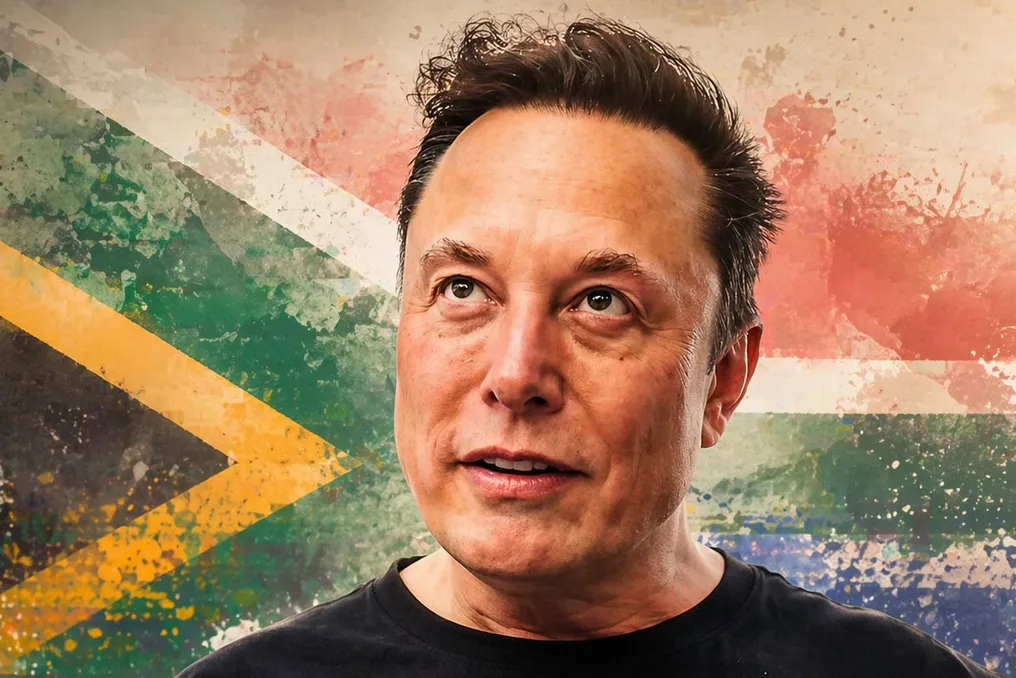
Elon Musk's satellite broadband service Starlink, which has over 10,000 satellites and millions of customers in dozens of countries, is actively operating almost across all of Southern Africa, including Mozambique, Malawi, Madagascar, Botswana, Zimbabwe, Zambia, Eswatini, and Lesotho. However, this week, a competing group, Amazon Leo, received the route to South Africa, despite having only 390 satellites and no commercial customers anywhere in the world yet.
Market Entry Strategy
The internet provider Herotel, owned by Maziv, an operator of fiber optic and wireless networks, will distribute Leo satellite broadband under the new brand Evry, with a commercial launch expected in 2027. Thus, Amazon has overtaken Starlink. This success was achieved not through technological superiority, large financial reserves, or regulatory privileges, but because Amazon viewed the South African licensing regime as an engineering problem to be solved, while Starlink waited long and loudly for rule changes.
Requirements and Company Reactions
The rules applicable to both companies are identical: to obtain a network license in South Africa, an operator must own at least 30% of historically disadvantaged groups. SpaceX refused to give up a stake in its local operations, and Musk publicly disputed this requirement for years, calling it racially discriminatory. He argued that he could not launch Starlink in the country because 'I am not Black,' turning the licensing issue into a diplomatic and political spectacle. As a result, Starlink remains unavailable in Africa's most advanced broadband market, despite thriving in almost all neighboring countries.
Outcomes of Different Approaches
Amazon studied the same rules but reached a different conclusion. Icasa reported in a notification last month that satellite operators currently cannot obtain the necessary network licenses, and that the realistic path to the market is through an existing license holder. Amazon did exactly that: Herotel will hold the licenses, and Amazon will not. This allowed them to avoid conflict over equity, political theater, and posts on X. It turned out that the boring strategy is effective and aligns with Amazon's overall approach to South Africa, including the launch of the regional AWS in Cape Town and years of quiet preparation. Amazon views regulatory hurdles as part of the cost of doing business, whereas Musk sees them as an ideological reason.
Benefit from Strategies
Musk's stance led to years of headlines, a central role in tensions between South Africa and the US, but brought no revenue from a market with enormous product demand. This demand is so high that Icasa was forced to combat the smuggling of Starlink terminals through neighboring countries. Consequently, Amazon's compliance secured it a first-mover advantage: an approximate launch date (2027), a distribution partner with wide coverage in small and rural settlements where satellite broadband works best, and an active registration page. Nevertheless, the first announcement does not mean first service, as Leo has not launched commercially anywhere yet, and its debut in South Africa in 2027 leaves room for delays.
Future of Regulation and Conclusions
Despite this, it cannot be considered a victory for transformation policy. The licensing regime did not extract 30% equity from Amazon because Amazon (apparently) does not need a license at all. If the measure of success is broad ownership of the digital economy, then channeling foreign operators through distribution structures achieves this only formally. Therefore, it would be unwise if the government did not finalize an equivalent to equity capital. The December 2025 policy of Communications Minister Solly Malatsi, allowing multinational corporations to fulfill empowerment obligations through equivalent equity investment programs (EEIPs) instead of ownership stakes, is causing political debate, and experts warn that implementation could take years.
Starlink has already submitted a proposal worth about 500 million rand to connect 5,000 schools, plus 2 billion rand for local infrastructure. However, not every multinational corporation will be able or willing to follow the partnership model like Amazon's; some prefer to operate directly, have their own licenses, and invest accordingly. South Africa, with its stagnant economy and high unemployment, is not in a good position to deter companies actively trying to invest by insisting on one narrow form of compliance. The goal of the rules is transformation, not checkpoint control. The main lesson of this week is the temperament of corporations: in regulated markets, the scarce resource is not the satellite or the capital, but the willingness to find a way through local rules that may not be liked. Amazon, apparently, found such a way, while Musk, with a six-year head start and a product that South Africans are literally smuggling across borders, could not.