
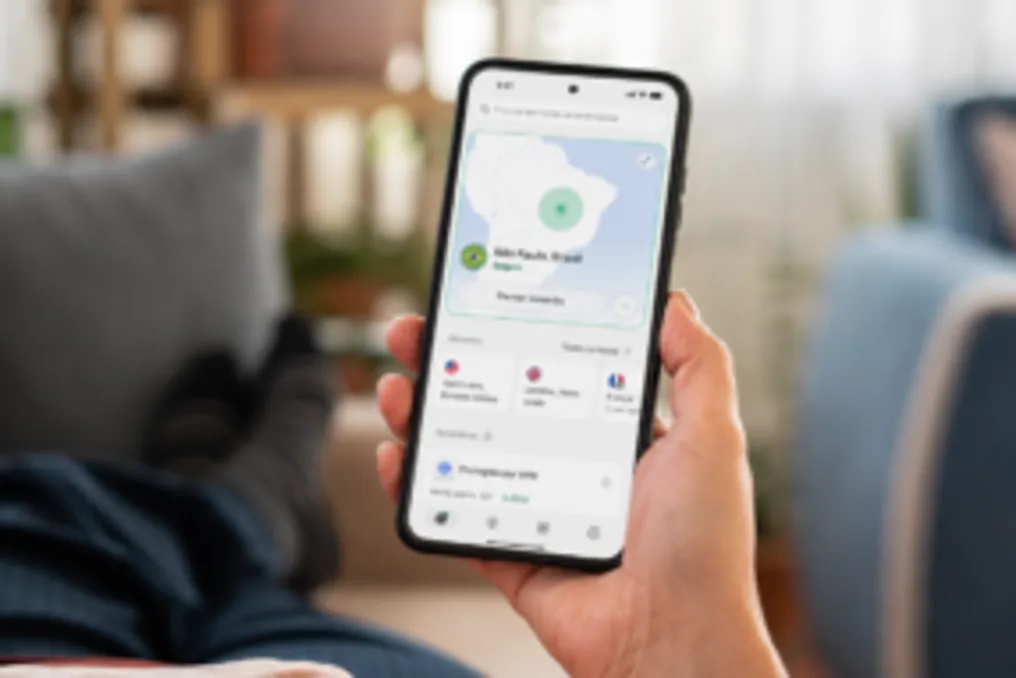
A VPN, or Virtual Private Network, is a technology designed to establish a layer of security between the user's device and the internet. This function involves encrypting connection data and masking the user's true IP address.
Risks of Unprotected Connections
When performing activities such as accessing airport Wi-Fi, using banking applications, checking work emails, or making online purchases, digital traces are left behind. If the connection is not properly protected, this data risks exposure. Tools like NordVPN help in this scenario by hindering both the tracking of online activities and the risk of data interception.
When to Use a VPN
Using a VPN becomes relevant in several situations. It is indicated for those who access public Wi-Fi networks, work remotely, make virtual purchases, use banking services on mobile phones, wish to reduce browsing monitoring, or need to consume geographically restricted content. Although a VPN does not eliminate all security precautions, it provides an essential layer of privacy for the connection.
Technical Operation of a VPN
Technically, a VPN creates a secure and encrypted link between the device and the internet, using a VPN server as an intermediary. This process ensures that data is transformed into a format illegible to third parties. Furthermore, the original IP address is hidden, causing websites and services to view the VPN server's IP. Consequently, providers, public networks, and third parties find it more difficult to track browsing traffic, and the apparent location can be changed by selecting a server in another country.
Various Uses of VPN Technology
The VPN has transcended the niche of security specialists, becoming useful in multiple applications. It protects sensitive information on open Wi-Fi networks, minimizes online tracking by advertisers and websites, and enables access to regionally restricted content by connecting to international servers. In a remote work environment, it serves as additional protection when accessing corporate systems. Additionally, it can help bypass limitations imposed by providers in uses such as streaming or gaming, and by hiding the IP, it increases security in games against targeted attacks. It is also useful for comparing prices during travel and shopping, checking regional variations.
Criteria for Choosing a VPN
Selecting an effective VPN must go beyond cost, balancing security, speed, privacy, and usability. Important criteria include the implementation of robust encryption to protect traffic, a proven no-logs policy, independent audits to validate the provider's privacy, a vast network of servers to ensure stability, adequate speed, compatibility with various devices (computer, mobile phone, TV, router), and extra features such as anti-phishing protection or tracker blocking.
NordVPN Highlights
NordVPN incorporates advanced features, complementing basic VPN functionality. Tests conducted by West Coast Labs in October 2025 indicated that NordVPN achieved an average speed of 817 Mbps and an overall score of 58/60, boasting over 9,500 servers distributed in more than 224 locations across the Americas, Europe, Africa, and Asia-Pacific. Its no-logs policy is validated by six independent audits. Traffic is protected by 256-bit AES encryption and supports modern protocols such as OpenVPN, IKEv2/IPsec, and NordLynx. The NordWhisper protocol assists in restrictive networks, such as public Wi-Fi or corporate environments. The network offers specialized servers, including Double VPN, Onion over VPN, obfuscated servers, P2P, and dedicated IP. Furthermore, Next-Gen Antivirus provides defense against malware, phishing, and ads, and a specific feature for Android and iPhone alerts about fraudulent calls before the user answers.
Advanced Functionalities
For specific uses, NordVPN offers features such as Double VPN, which doubles encryption by routing traffic through two distinct servers; Onion over VPN, which integrates the VPN with the Onion network for greater anonymity; obfuscated servers, to disguise usage on blocking networks; optimized P2P servers for file sharing; and dedicated IP for connection predictability. Split Tunneling allows the user to define which applications should use the VPN and which should access the internet normally, while threat protection blocks malicious pages and trackers.
Platform and Support
NordVPN offers a complete solution that combines VPN, next-generation antivirus, and fraud protection. With a single subscription, up to ten devices can be protected simultaneously, compatible with operating systems such as Windows, macOS, and Linux, as well as mobile devices (Android and iOS), Apple TV, and routers. The provider guarantees 24/7 customer support.