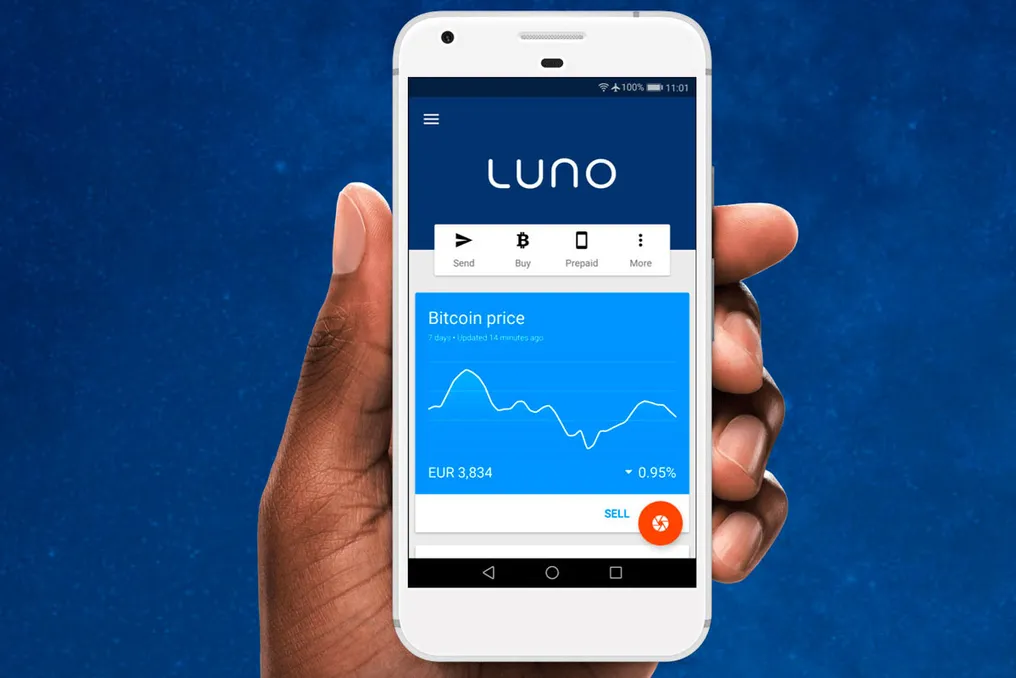
Luno, a crypto exchange platform founded in South Africa and now owned by the American Digital Currency Group, announced the reduction of 20% of its global workforce and the reorganization of its business into three separate divisions, CEO James Lanigan stated on Tuesday.
Although the company did not disclose the exact number of laid-off employees, it was reported that staff were notified individually on that day. Positions in South Africa were among those cut, but Luno declined to comment on specific figures.
Layoffs Process in South Africa
A company representative told TechCentral that Luno is conducting a necessary and thorough consultation process with all affected employees in South Africa and currently cannot confirm exact data. In South Africa, layoffs for operational reasons are regulated by Section 189 of the Labour Relations Act, which requires employers to consult with affected personnel before reductions take effect.
Luno is headquartered in London and operates across Africa and Asia. Lanigan emphasized that this was an extremely difficult decision, adding: 'We have incredible people in this organization, and parting ways with colleagues who have contributed so much is hard. But this is a decision we were forced to make—for our customers, our remaining team, and our long-term mission, which is to build a sustainable and focused structure.'
Reasons for Reductions and Company History
Luno explained the need for the cuts due to two main factors: the decline in retail cryptocurrency trading, which the company called a phase of the cycle observed since its founding in 2013, and its own investments in automation. The company stated that it continues to implement and develop tools that rapidly change the resource model required for efficient business operation, making a more compact structure 'both necessary and appropriate.'
This is the second round of deep cuts in three and a half years. In January 2023, during the last crypto winter, Luno laid off 35% of its staff—about 960 people, affecting over 330 employees. At that time, the company noted that '2022 was incredibly tough for the entire tech industry, and especially for the crypto market.'
Lanigan, previously Chief Operating Officer, was promoted to CEO two months after these cuts, replacing co-founder Marcus Swanepoel, who moved to the position of Executive Chairman. Digital Currency Group, an investor in Luno since the seed round in 2014, fully acquired the company in September 2020.
Structure of New Business Divisions
The first of the three divisions combines the existing retail Luno exchange with a new 'crypto-as-a-service' offering. The retail business serves over 16 million users in Africa and the Asia-Pacific region, offering products for trading, staking, and payments covering cryptocurrencies, tokenized stocks, commodities, and exchange-traded funds.
This service expansion opens up infrastructure for partners via API, allowing them to offer cryptocurrency under their own brands while Luno provides liquidity, custody, wallet infrastructure, and compliance.
An example of such a partnership is Discovery Bank, which began offering cryptocurrency trading through Luno in November 2025, giving its clients access to over 50 cryptocurrencies within the banking application. Discovery Bank CEO Hilton Callner then stated that this step is 'a clear signal that cryptocurrency is moving from a niche asset to a core investment tool.'
The second division focuses on stablecoins and wallet infrastructure. It is based on Luno's observation that 98% of the global stablecoin supply is denominated in US dollars. The company's response is Zaru, a random-backed stablecoin launched in February 2026. Luno describes it as the first institutional stablecoin backed by reserves and supported by a regulated entity in South Africa. Luno claims that Zaru enables rand settlements within one day, both domestically and internationally, around the clock and almost cost-free, and is built on an 'implement and license' model. Among the network partners listed by the company are EasyEquities, Lesaka, Sanlam, and Standard Bank. Luno noted that Zaru is part of a broader push into emerging markets where local currency stablecoin infrastructure remains limited.
Reduction of Geographic Presence
The third division is global settlements, an institutional business focused on the speed, reliability, and cost of cross-border money transfers. It includes a brokerage desk for large currency and crypto conversions, as well as a settlement network offering same-day cross-border payments with enterprise-level compliance, a full audit trail, and no time restrictions. Luno summarized this goal as 'any pair, any volume, wherever Luno operates.'
Lanigan clarified that these three lines of business are not separate companies but represent three manifestations of one unified platform. The job cuts are related to the narrowing of Luno's geographic presence. The company informed clients in several regions that it will cease providing them services starting September 1, 2026, after which their accounts will be permanently closed. Deposits and purchases were disabled on June 1, and the deadline for sending cryptocurrency from the platform expired on June 29. Clients have until August 31 to sell and withdraw funds to a bank account.
Luno addressed affected clients with a statement: 'Moving forward, we want to focus on our core markets in Africa and Southeast Asia. This decision was not easy, and we sincerely apologize for any inconvenience caused.'
This restructuring reflects a broader shift in the crypto industry, as exchanges seek more stable revenue from institutional clients, payments, and financial infrastructure, while retail trading remains volatile.