Apple has introduced Apple Upgrade, a new subscription service intended for iPhones, Macs, iPads, and Apple Watches, which was launched on Tuesday, July 28th, exclusively in the United States.
Apple has introduced Apple Upgrade, a new subscription service intended for iPhones, Macs, iPads, and Apple Watches, which was launched on Tuesday, July 28th, exclusively in the United States.
This program operates through leasing contracts provided by Klarna, featuring characteristics similar to financing. Customers have options for various plans, including 12 or 24-month contracts for iPhones and Apple Watches, and 24 or 36-month contracts for Macs and iPads.
At the end of the contract period, the user has the option to purchase the product with a single payment or return it, thereby concluding the agreement. Furthermore, Apple will allow the inclusion of AppleCare plans during device usage.
The initial monthly costs are set as follows: iPhones cost US$ 17.99 (approximately R$ 92); Macs, US$ 24.99 (R$ 128); iPads, US$ 11.99 (R$ 61); and Apple Watches, also US$ 11.99 (R$ 61).
It is possible to reduce the monthly amount if the customer trades in a used device. The contract can be made through the Apple online store or in the company's physical stores. Apple clarified that Klarna will be responsible for conducting a credit check to approve or deny the subscription, following local regulations, and the device can be picked up or delivered at home.
With the implementation of Apple Upgrade, Apple is discontinuing two existing programs in the US: the iPhone Upgrade Program and iPhone Payments. Customers who were already using these previous modalities have the option to migrate to the new Apple Upgrade.
Currently, Apple Upgrade is restricted to the US market. The company has not yet announced when the program will be extended to other markets, nor whether adjustments will be necessary for countries whose electronics leasing regulations differ, such as Brazil.
The website uses a security service to protect against cyberattacks. Performing a recent action triggered this protective system.
There are several actions that can lead to such a block. These include sending a specific word or phrase, using an SQL command, or providing incorrect data.
Users are advised to write to the website owner to report the block. When contacting them, you should specify what actions were being performed when this page appeared, and also provide the Cloudflare Ray ID, which is located at the bottom of the page.
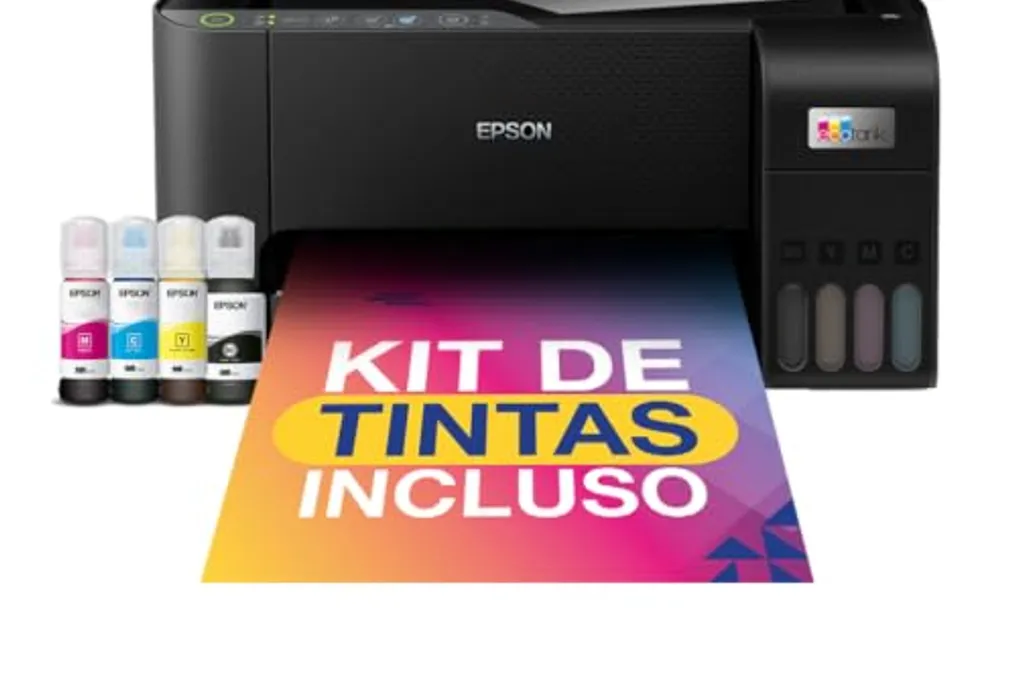
For those who need to update their home or office printer, this is an opportune time to conduct research. Three alternatives of multi-function printers available on sale on Amazon have been gathered, presenting models that integrate printing, copying, and scanning functions, with some having Wi-Fi connectivity.
The Epson Ecotank L3250 is highlighted as one of the most sought-after choices by users with high printing volumes. Its ink tank mechanism eliminates the need for conventional cartridges, resulting in a considerable reduction in cost per page. This model offers Wi-Fi for wireless printing, in addition to functioning as a copier and scanner, and supports bivolt voltage without the need for a transformer.
The HP DeskJet Ink Advantage 2975 is presented as a compact and affordable solution, ideal for home environments. It allows color printing, copying, and scanning documents using a single device. Its discreet design facilitates integration into various spaces, and HP Ink Advantage cartridges are designed to maintain a lower printing cost than the market standard.
The HP Smart Tank 589 focuses on long-term savings through its ink tank system. This device can be connected via Wi-Fi or USB, printing in good quality color, and also acting as a copier and scanner. It is recommended for users with a moderate monthly printing volume who wish to avoid recurring supply expenses.
It is important to note that promotions on Amazon can change throughout the day, suggesting that interested parties access the links immediately to secure the best available price. These three options cater to varied usage profiles, whether for domestic or professional purposes, allowing the consumer to choose the one that best suits their routine.
Due to Kyiv's attacks on oil refineries and depots in Russia, there has been a fuel shortage in various Russian areas, including the annexed Crimean Peninsula. This scarcity led many of the affected zones to impose limits on the amount of fuel that could be traded, resulting in long queues of vehicles waiting for refueling and demonstrations.
Between Monday and today, local authorities and media outlets confirmed that these restrictions have been suspended or eased in at least seven regions. These include Moscow and St. Petersburg, as well as southern areas that were particularly affected by the lack of supply.
This easing occurred after Russia announced on Saturday the extension of the gasoline export ban until the end of the year, as part of measures aimed at stabilizing the market. To deal with the shortage, Russia, being a major global oil producer, had vetoed exports of gasoline and diesel, a measure that remains active for now.
In Russian capitals and the country's second-largest city, oil companies such as Lukoil, Teboil, and Gazprom have partially or fully suspended the limits imposed on fuel purchases at their stations. Furthermore, local media reported the easing or complete revocation of restrictions in the regions of Rostov, Volgograd, Stavropol, and Krasnodar, located in the southwest, as well as in the Omsk region in Siberia.
Alexandr Novak, the Russian Deputy Prime Minister in charge of energy, guaranteed on Saturday that the situation was gradually normalizing and that several refineries had resumed operations following the Ukrainian attacks. According to Novak, there has been a considerable improvement in fuel supply at gas stations, covering even agricultural producers.