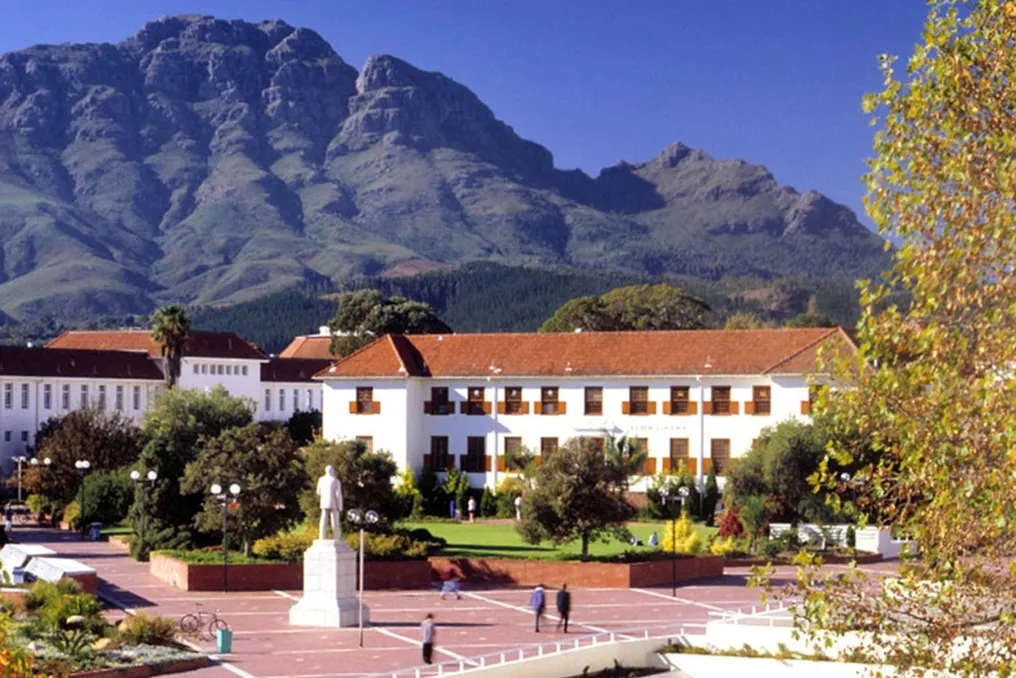
Cape Winelands Airport, a former military airfield outside Durbanville slated for reconstruction with initial investments up to 10 billion rand, is being positioned as more than just a new passenger hub for Cape Town.
Cape Winelands Airport, a former military airfield outside Durbanville slated for reconstruction with initial investments up to 10 billion rand, is being positioned as more than just a new passenger hub for Cape Town.
Airport developers and partner Stellenbosch University have presented plans to create an 'Aviation Village' for aerospace and aviation companies, a dedicated drone corridor, an expanded satellite engineering center, and a complex of new aviation qualifications. Several companies have already signed letters of intent to locate their facilities in this Aviation Village.
Previously known as Phisantecraal Airfield, the airport was built in 1943 as a South African Air Force base for Lockheed Ventura bombers and is currently used for general aviation and flight training.
The consortium RSA Aero, the project owner, plans to construct a new terminal, runway infrastructure, and 450 hectares of developable land. The airport director is Dion Kloete, who previously served as CEO of Cape Town International Airport. Strategic partnerships with WBHO Construction and Growthpoint Properties were announced at the end of 2025, and in March, architects Boogertman + Partners were appointed as design leads alongside airport specialist amd.sigma from Berlin, a subsidiary of Munich Airport International.
Despite all the plans, nothing has been implemented yet. The area remains an active airfield for general aviation, surrounded by agricultural land; the first site preparation work is expected only in the last quarter of 2026, with commissioning planned for the end of 2028.
Environmental approval was granted on October 27, 2025, following six appeals—one was withdrawn, and the remaining five were rejected by the Western Cape Minister of Environment, Anton Bredell, at the end of May. However, zoning approved by the Cape Town municipal tribunal is undergoing a separate appeal, and the airfield licensing still needs to be obtained. The project has been recognized as a 'strategic integrated project' by Infrastructure South Africa, obligating all government bodies to prioritize its approvals, licenses, and permits.
The technological aspirations became evident in early July when the airport and Stellenbosch University announced a cooperation agreement covering 'smart' and 'green' development, including research in space and aviation. Professor Corne Schutte, Vice-Dean of the Faculty of Engineering at Stellenbosch University for Research and Industry Liaison, noted that one must be frank: 'it is more of an intention than a prospectus.'
Company representative Deidre Davies stated that the goal of creating the Aviation Village near the airport is to strengthen the sector. She added that an Aviation Village Working Group has been formed, comprising representatives from academia, local and international private sectors, government, and the community. Although details of the companies that have signed intentions are not yet disclosed, Davies confirmed their existence.
The university confirmed that the vision of the airport as an aerospace center is accurate, referencing a heritage that 'runs from South Africa's first satellite through the local satellite engineering industry that originated at the university.' According to Wesgro, in 2024, the Western Cape accounted for over 55% of South Africa's space navigation systems exports and nearly 94% of spacecraft and launch vehicle exports to markets including the USA, UK, Japan, France, and Thailand. The agency names the Somerset West–Stellenbosch corridor a key node in Africa's space economy.
The university provided a striking figure: its faculty of engineering 'currently has 226 people employed in its space-related spin-off companies, with a combined turnover exceeding 205 million rand.' The program in question is the Electronic Systems Laboratory, founded in 1991. From it emerged Sunsat, South Africa's first satellite, which was designed and assembled almost entirely by postgraduate engineers and launched on a Delta II rocket from Vandenberg, California, in February 1999.
SunSpace and Information Systems were spun out from the laboratory in 2000 and later built SumbandilaSat with the university, launched in 2009 and used for disaster monitoring, including fire suppression campaigns in Kruger National Park. The company CubeSpace, which spun out of the same laboratory under the leadership of Professor Herman Steyn, deals with attitude determination and control systems that 'are now used on hundreds of satellites for clients in over 30 countries and are NASA-approved.'
The cooperation agreement includes a modernized centre of excellence at Stellenbosch University. Professor Schutte emphasized that 'this is not starting from scratch'; opportunities existed for over 30 years, and the question is how to develop them further.
Planned research is divided into three interconnected areas: first, satellite technology itself (compact optical payloads, imaging sensors, radiation-hardened onboard electronics); second, mission engineering (integrating these technologies into complete missions for crop monitoring or disaster response); and third, autonomy and situational awareness in space (self-deciding satellites and space debris tracking).
Regarding rockets and launches, such as from the Denel Overberg test range in the Southern Cape, the university directed questions about the rocket development and testing program to the University of KwaZulu-Natal Aerospace Systems Research Institute (ASRI). However, it confirmed that both capabilities interact, stating that it 'is actively engaging with ASRI to understand how their work and our own satellite activities can align.'
Deidre Davies reported that the airport also plans a drone corridor. She noted that the integration of manned and unmanned aviation will become necessary as the industry develops, and the airport wants to play a leading role in this. The corridor will integrate with the Western Cape drone strategy, allowing systems to be tested in real conditions alongside existing aviation.
The airport is also committed to being 'green' from the outset, concerning construction, energy supply, and operation. Renewable energy sources will include solar panels and biodigesters, as well as on-site water harvesting and wastewater treatment. The architects aim to make it one of the most environmentally friendly airports in the world.
For Stellenbosch University, the educational component is the core of the partnership, as this is where the airport ceases to be merely infrastructure and begins to produce people. The learning structure is designed as a 'ladder, not a single qualification': ranging from short courses and micro-credentials to structured master's degrees with a research project. Proposed programs include air and airport management, aerospace systems, aviation and logistics, unmanned aerial vehicles, and sustainable aviation.
The area will also include an 'Agri-zone,' which will not be purely commercial or industrial. The plan involves developing 'integrated, clean, and healthy spaces,' including staff accommodation. This zone focuses on research and development to improve crop yields and crop rotation.
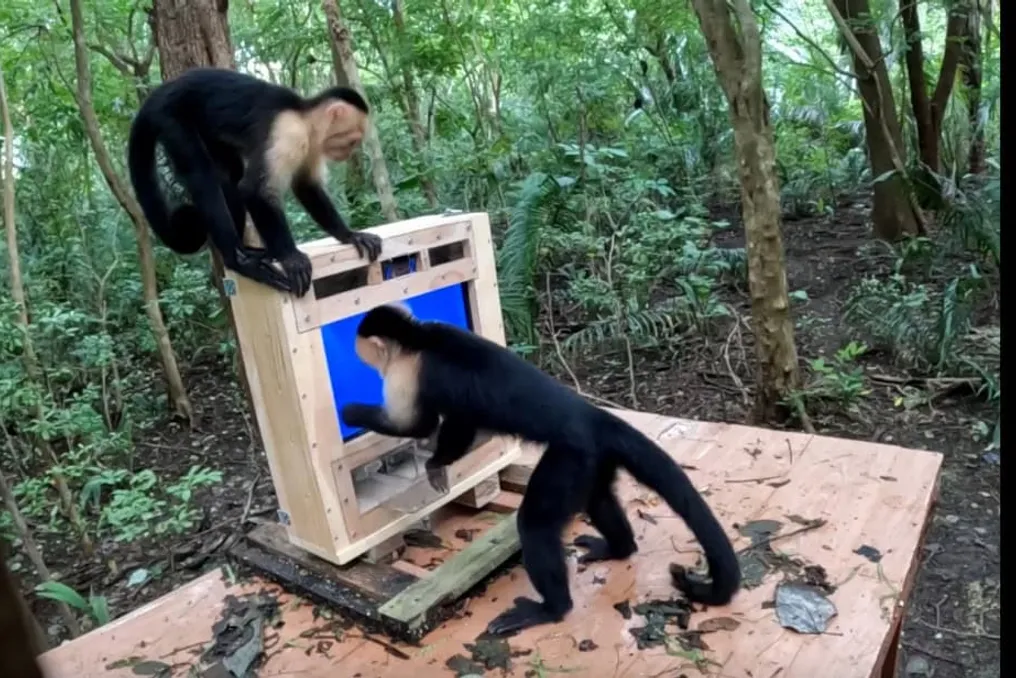
Scientists used a capuchin monkey to test a new methodology for studying animal intelligence in a forest in Costa Rica. A station equipped with artificial intelligence, a camera, and a touchscreen was implemented to monitor how these primates acquire knowledge.
This apparatus, named CapuchinAI, has the potential to elucidate how cognitive abilities affect the choices and survival of animals in their natural habitat, something that is notoriously difficult to observe in laboratory settings, according to The New York Times.
The first contact occurred last summer when Papi, a dominant male, found a wooden box containing a 15-inch screen at the Taboga Forest Reserve. Initially, the monkey only inspected the object. After a few touches, a slice of dried banana was released onto a tray, quickly establishing the correlation: touching the screen resulted in a reward.
The station was designed to identify animals in real time and record their reactions during simple learning tests. To achieve this, researchers trained an artificial intelligence model using images of the very monkeys being studied in that region. Marcela Benítez, a primatologist from Emory University, emphasizes that to understand how primates make decisions and use their evolved brains, it is crucial to contextualize this in the environment where they live.
The initial phase faced an unforeseen obstacle: during the first two days, no monkey showed interest in interacting with the equipment. Doctoral student Federico Sánchez Vargas even considered restarting the project. However, the situation changed on the third day with the appearance of Papi. Throughout the tests, 16 monkeys interacted with or explored the station. Although not all understood the premise, a portion managed to assimilate the task.
The collected data showed that ten out of the sixteen monkeys learned to press the screen to get food. Furthermore, at least eight of these animals were able to retain this knowledge in subsequent sessions. It was also observed that some animals attempted to interact through alternative means, without grasping the mechanism. The system was effective in documenting individual variations in the learning process.
The next phases of the project will include a more sophisticated facial recognition model capable of distinguishing each individual monkey, with a previous version of this technology already achieving over 97% accuracy in this identification. Researchers plan to introduce new challenges to measure skills such as mental flexibility and impulse control. In certain tests, the animals will need to touch green squares while avoiding red ones, and adapt when the rules are changed.
The team seeks to determine whether specific experiences of the animals, such as drought periods, can impact their cognitive development. According to Benítez, the ultimate purpose is to 'relate cognition to real-world challenges, outcomes, and ultimately, survival.' Despite the technological progress, scientists emphasize that they do not wish to turn the forest into a place full of screens, stating that the intention is to use technology merely as an aid for understanding primates, without replacing human observation.
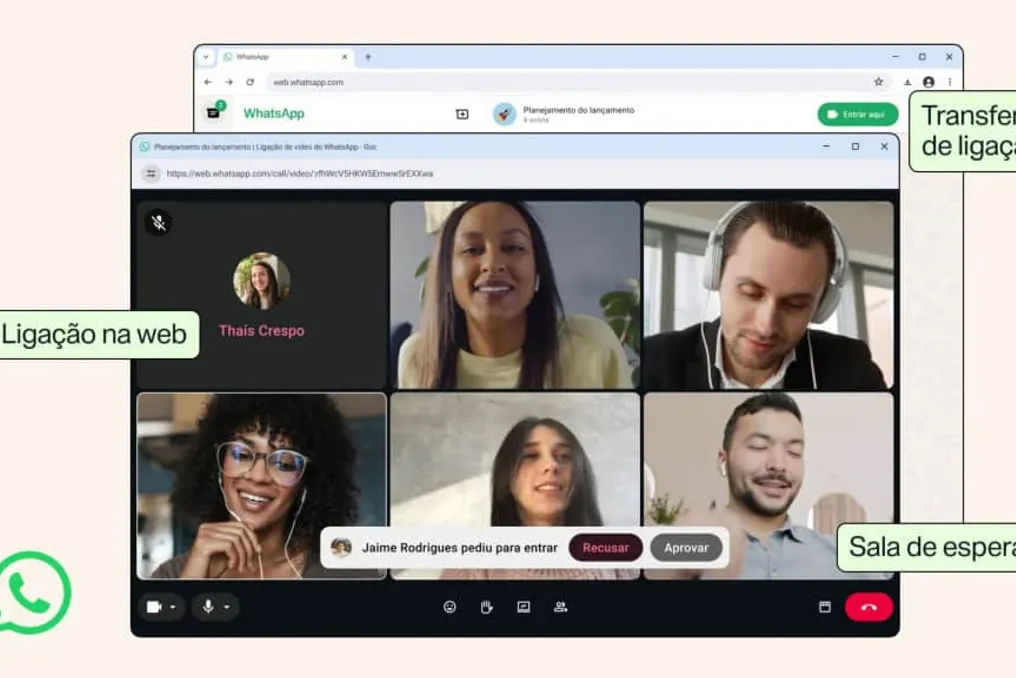
WhatsApp announced on Tuesday (28th) the inclusion of voice and video calls in its Web version. This addition allows users to make calls directly through the computer's browser, eliminating the need to install specific software.
The company presented this functionality as an update that is being progressively implemented for users. This advancement enriches the capabilities of the service accessed via the browser, making the experience more similar to that provided on other devices.
In addition to calls, the update introduces several other tools, such as screen sharing, reactions during conversations, recording of calls made, and technical improvements focused on enhancing transmission quality.
With this change, the user can use WhatsApp in the browser to make both audio and video calls directly on the PC. Previously, this type of contact required the use of applications intended for mobile phones or desktops.
According to WhatsApp, calls made through the Web version maintain the same level of security as messages, using end-to-end encryption, which ensures that conversations remain protected against unauthorized access by third parties.
The platform has also come to support call transfer between different devices. This feature allows the user to start a call on one device and continue it on another, switching between mobile phone and computer without interrupting the established connection.
Another incorporated feature is the waiting room for calls initiated via a link. This function gives the call organizer the power to define who can join the conversation, requiring prior approval for participation.
The service has also received optimizations to improve the user experience during video conferences. The company reported that images now reach high definition faster at the beginning of calls, and a noise reduction system helps make the voice clearer in environments with external noise.
This update integrates a series of changes announced by WhatsApp across its various platforms. In the previous week, the application had announced changes to the versions for iPad and vehicles equipped with CarPlay and Android Auto, aiming to align these systems with the experience offered on mobile phones.
For those who wish to increase the speed and storage space of computers or laptops, there is an ideal opportunity to perform an upgrade. Three alternatives of NVMe SSDs with the PCIe Gen4 interface have been selected that are on sale on Amazon, featuring models from recognized manufacturers such as Kingston and Western Digital, capable of significantly improving equipment performance.
The Kingston NV3, with a capacity of 1TB and NVMe PCIe Gen4 interface, offers high read speeds in the M.2 2280 format. This model is suitable for most current laptops and desktops, making it a robust choice for those seeking performance and space without compromising energy efficiency.
Another highlighted option is the Western Digital WD Green SN3000 500GB NVMe PCIe Gen4 (WDS500G4G0E). This drive achieves sequential read speeds of up to 5,000 MB/s and has the M.2 2280 format, making it practical for those needing a quick update on PCs and laptops while maintaining Western Digital's reputation for reliability.
Additionally, there is the 500GB version of the Kingston NV3, which maintains the NVMe Gen4 specifications in a more compact package and at a more accessible price. This version is recommended for users planning to replace an old SSD or revitalize a laptop with limited disk capacity, without sacrificing modern speeds.
It is important to note that these promotions are temporary and stock may change at any time. If any of these models fit the user's needs, it is recommended to access the link immediately to secure the purchase before the product sells out.