
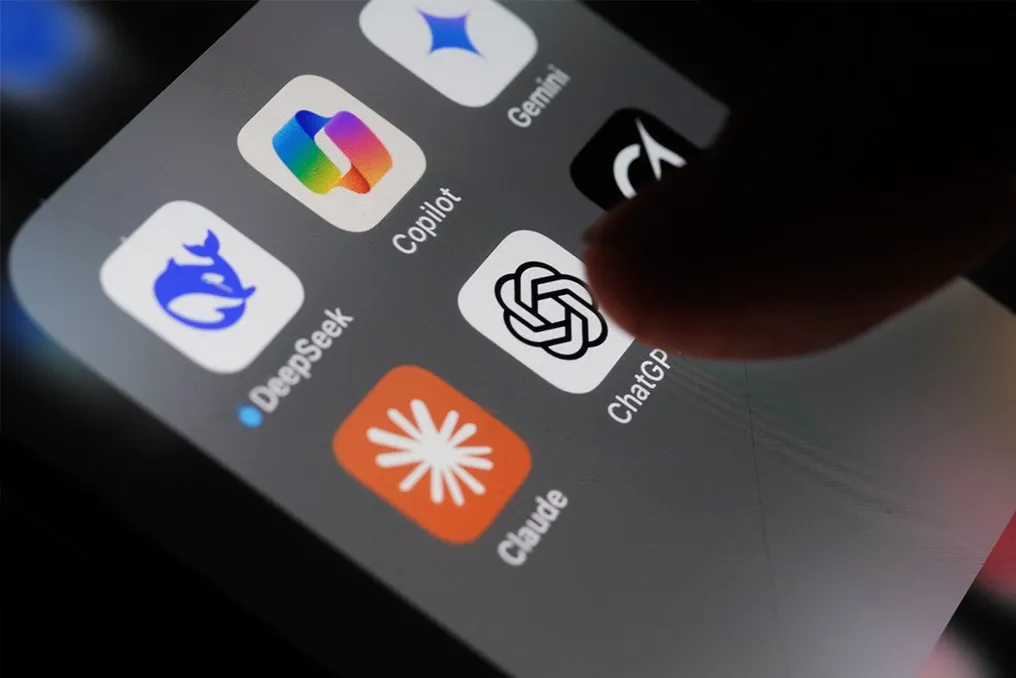
Each company establishes its own rules, but generally, messages users exchange with AI may be accessible to certain individuals. It is important to know how to increase the level of privacy.
US Court Precedent Example
In February 2026, American businessman Brad Heppner was under investigation for financial fraud. After hiring lawyers, he used Claude to summarize evidence, develop legal strategies, and prepare memoranda for his defense. When the FBI executed a search warrant at his home and seized electronic devices, they discovered 31 documents created using Claude.
The prosecutors demanded access to these records, but Heppner's lawyers argued that conversations with AI should be protected by the same privilege of confidentiality as discussions between a client and an attorney. The judge rejected this request, stating that because the user shared information with a service managed by a third party (Anthropic), whose terms of use permitted certain data processing, these conversations did not fall under attorney-client privilege protection.
Case Consequences and Warnings
As a result, Bradley Heppner was convicted, and the conversations with Claude were used by the prosecution as evidence. This case set an unprecedented precedent in the US, demonstrating that in a criminal charge situation, conversations with AI can be confiscated, read by authorities, and used against an individual. Following this, lawyers across the country began warning clients that conversations with generative AI tools could be requested in court proceedings.
A similar incident occurred in Brazil in June 2026 in the state of Espírito Santo. A man allegedly told ChatGPT a plan to murder his eight-year-old son. The tool's automated analysis detected the threat, after which OpenAI, the product owner, notified the FBI, who in turn alerted Brazilian authorities. The suspect was arrested the day before the alleged crime.
Who Can Read Your AI Conversations
None of the major AI systems guarantee privacy. They all store conversations on their servers for a period of time, and under various circumstances, personnel associated with these companies may gain access to the content.
Specific AI Privacy Policies
ChatGPT (OpenAI): Conversations remain in the sidebar forever unless the user deletes them. After deletion, the company claims the data is erased from servers within 30 days. However, while available, it may be accessed by 'trusted service providers' and a 'limited number of authorized OpenAI employees,' in addition to the program itself, for machine learning purposes. Cases related to crimes or security breaches are subject to special scrutiny.
Claude (Anthropic): It also states that conversations are deleted after 30 days, except in cases of terms of use violations, where storage may extend up to 2 years. Anthropic claims that the data is encrypted and employees do not have access to it, but it does not mention the possibility of use by authorized partners. Some analysts consider it the most private.
Gemini (Google): This is the most complex case. The standard retention period for conversations is 18 months, but the user can configure it to three months. Google explicitly states that human reviewers may analyze conversations (without user identification) to improve systems. Furthermore, the company recommends: 'Please do not enter sensitive information that you would not want a reviewer to see or Google to use to improve our services.' Some conversations are regularly sent to human reviewers, and these viewed interactions may be stored for up to three years, even if the user has disabled data saving or deleted history.
Grok (xAI): Everything published publicly on X/Twitter is used by Grok to train its own AI, including direct interactions with it. This includes third-party companies that are partners of xAI. Users are given the option to opt out of their data being used for this purpose. Moreover, the service itself warns: 'Please do not share personal or sensitive confidential data in your conversations with Grok.' Upon deleting a conversation with Grok, files are removed from servers after 30 days (except in legal proceedings).
Perplexity: The company states that it stores a range of user information not only based on interactions with the tool but also based on any publicly available information about the user on the internet. This information is transferred internally and to partners in an anonymous form, without user identification. Conversations are stored indefinitely unless the user deletes their account, after which they are removed from servers within 30 days.
Government Access and Anonymity Tips
Furthermore, as shown in the previously mentioned case, all companies can provide their data to authorities in cases of executing court orders, notifications, criminal investigations, and so on. This is not news: such conditions already applied to services like Gmail, Outlook, and Dropbox.
To remain more anonymous, there are useful recommendations: use temporary chat modes when available; disable the use of conversations for training in settings if such an option exists; avoid entering passwords, confidential documents, banking details, or medical information into free accounts or the cheapest plans; if you need to use AI with confidential information, choose Enterprise/Business plans, which offer stronger contractual privacy obligations and generally do not use data for training by default.