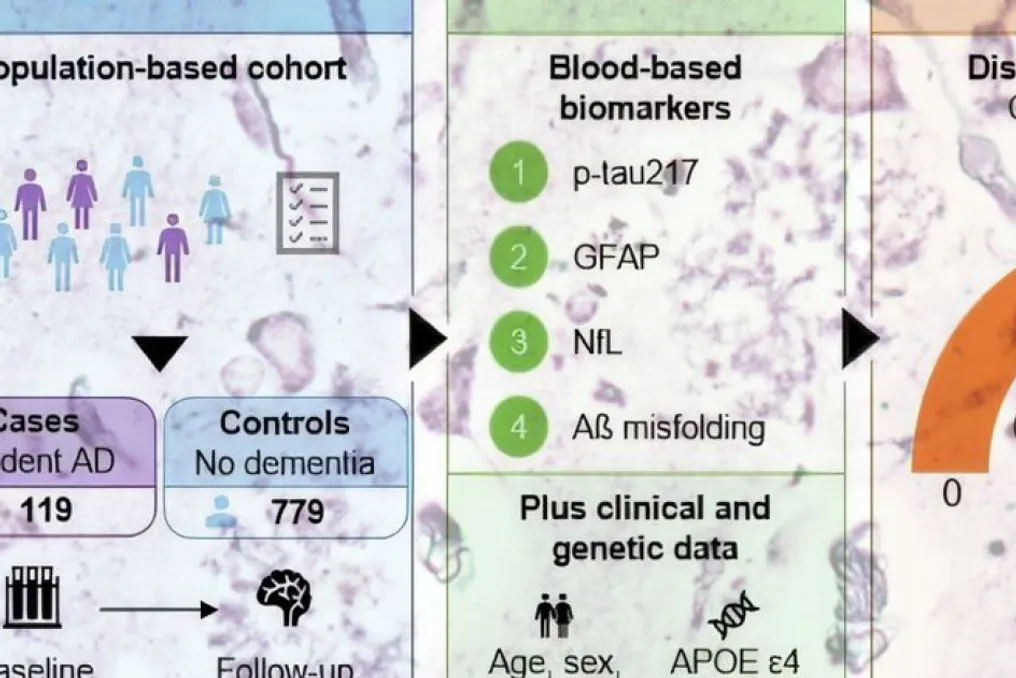
German scientists studied the long-term effectiveness of various blood-based biomarkers for predicting the development of Alzheimer's disease. They concluded that beta-amyloid folding disruption has the highest prognostic value, and its effectiveness increases when used in combination with other biomarkers.
The Importance of Early Diagnosis
Since existing disease-modifying drugs only work in the early stages or with mild cognitive impairment, it is critically important to diagnose the disease at the earliest possible, preferably preclinical, stages. However, many developed methods, such as measuring the ratio of beta-amyloid fragments 42/40 in cerebrospinal fluid or PET/CT scans of beta-amyloid deposits in the brain, are expensive, technically complex, and invasive. Therefore, particular attention is paid to diagnosis via blood tests.
New Methods and Research
In 2025, the U.S. Food and Drug Administration (FDA) approved the first blood test based on determining plasma concentrations of phosphorylated tau protein 217 (p-tau217) and beta-amyloid 1-42. It is important to note that all mentioned methods are only applicable when cognitive impairment is present and do not allow for preclinical diagnosis of Alzheimer's disease.
Hermann Brenner from Heidelberg University, along with colleagues, analyzed data from 779 individuals participating in the prospective ESTHER cohort. These participants, mostly women (52–57%), were over 61 years old at the start of the study. The researchers studied levels of p-tau217, light chain neurofilament (NfL), and glial fibrillary acidic protein (GFAP) in the blood at baseline and compared their prognostic power with beta-amyloid folding disruption, as well as with previously measured p-tau181 levels. The observation period lasted from 9.7 to 16.7 years (median was 13.6 years).
Follow-up Results
During the follow-up, any form of dementia developed in 385 participants, including Alzheimer's disease in 122 people. It was found that baseline p-tau217 levels were significantly higher in people with any dementia, and especially in patients with Alzheimer's disease (p < 0.0001), with this dependence being dose-proportional. Nevertheless, this correlation was strongly expressed only during the first nine years and was weaker than the association with GFAP (the risk ratio per standard deviation increase was 1.58 for p-tau217 versus 1.95 for GFAP in a multivariate model). In later follow-up stages (9–17 years), associations between p-tau217, GFAP, and NfL levels with the risk of any type of dementia were absent; however, the risk of Alzheimer's disease remained only for p-tau217 and GFAP, but significantly attenuated compared to the first nine years.
Diagnostic Marker Accuracy
The Area Under the ROC Curve for diagnosing any dementia using p-tau217 was 0.688 in the first nine years, decreasing to 0.599 later, which performed better than p-tau181 (p < 0.0001). For GFAP and NfL, this metric reached 0.743 and 0.733 respectively in the first nine years. Clinical accuracy is generally considered sufficient at a level of 0.8 and above. When diagnosing Alzheimer's disease, the area under the ROC curve was higher for all tested biomarkers, but also noticeably dropped after nine years (to 0.656 for p-tau217). The combination of all three biomarkers demonstrated a level of 0.842 in the first nine years and 0.703 in subsequent years.
Biomarker Comparison
To directly compare the prognostic effectiveness of p-tau217 and beta-amyloid folding disruption, the authors conducted an analysis in a subgroup where measurements of both markers were available (180 individuals without dementia and 55 with Alzheimer's disease). In the first nine years, their effectiveness was similar (AUC of 0.734 and 0.752). However, beta-amyloid folding disruption showed significantly higher effectiveness in the preclinical stage (upon developing Alzheimer's disease within 9–17 years: 0.847 vs 0.586) and throughout the entire observation period (0.794 vs 0.670). The highest results were achieved by combining beta-amyloid folding disruption with all other biomarkers (0.820 in the first nine years, 0.924 in subsequent years, and 0.858 over the entire observation period). Adding demographic and genetic factors (age, sex, BMI, and APOE ε4 carrier status) improved diagnostic accuracy in the prodromal phase (up to 0.894 in the first nine years), but had less impact on subsequent years and the overall observation period.
Study Conclusions
Thus, although p-tau217, GFAP, and NfL showed high effectiveness in detecting dementia, especially p-tau217 in Alzheimer's disease, this effectiveness was limited to the initial years of observation. Beta-amyloid folding disruption is recognized as the best preclinical predictor of Alzheimer's disease, especially when combined with all other biomarkers.
Previously, another international scientific group analyzed data from 462 individuals and found that the highest levels of p-tau217 are observed in newborns, especially premature ones, and can be almost three times higher than in Alzheimer's disease, although they then decrease to young adult levels within the first month of life. This indicates that tau phosphorylation performs different functions at different stages of central nervous system development.
Other Medical Advances
It is also worth mentioning that researchers from ten countries reported the successful completion of the third phase of clinical trials for the drug gefurunlimab for treating generalized myasthenia gravis with acetylcholine receptor antibodies. This drug works by blocking the activation of complement component C5, and during the trials, it helped patients reduce symptoms and increase daily activity. This was reported in the journal JAMA Neurology.