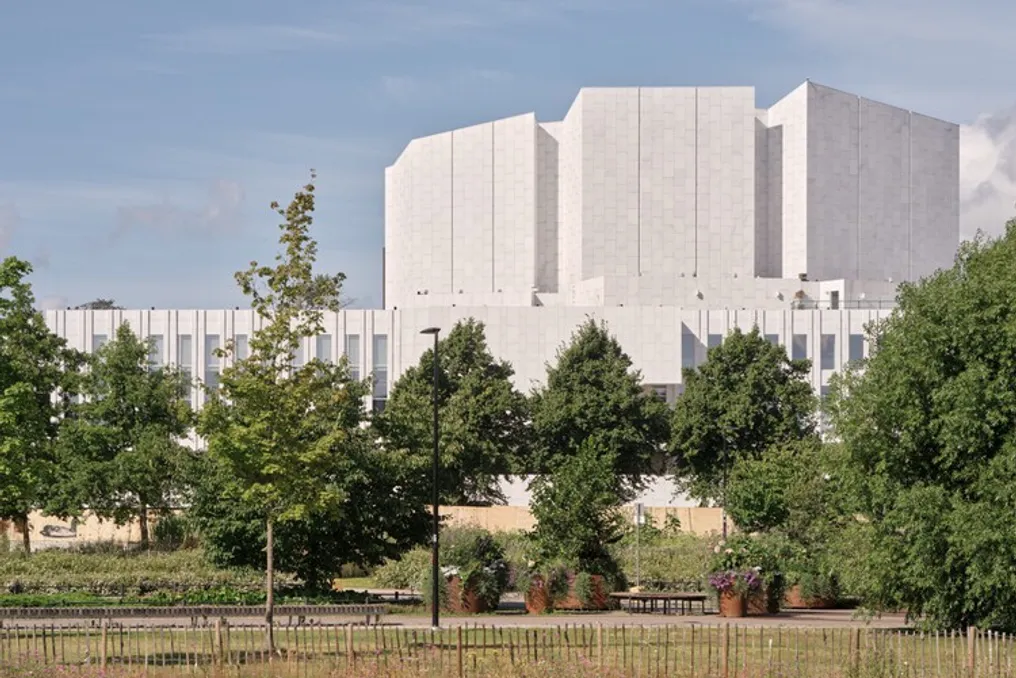
The UNESCO World Heritage Committee has formally included the collection known as Aalto Works on the UNESCO World Heritage List. This collection encompasses thirteen buildings and architectural complexes located in Finland, all designed by Aino Marsio-Aalto, Elissa Aalto, and Alvar Aalto.
Recognition of Modern Architecture
This designation officializes the international importance of these works, which were crucial in reshaping modern architecture. The main focus of this collection lies in a human-centered methodology, valuing the interaction between the constructions, daily routine, the natural environment, and social well-being.
The projects covered span a completion period from the late 1920s to the 1980s. Thus, the series not only illustrates Finland's contribution to the Modern Movement but also highlights the collaboration between the Aalto architectural team and their office.
Key Listed Landmarks
Among the most notable modern landmarks in Finland included in this registry are the Paimio Sanatorium, Villa Mairea, the Säynätsalo Town Hall, and the Seinäjoki Civic Center. It is noteworthy that five of the thirteen sites are located in Helsinki: the Aalto House, the Aalto Studio, the National Pensions Institute (KELA), the House of Culture, and the Finlandia Hall. This concentration in Helsinki represents the largest number of Aalto's works under the UNESCO banner.
This recognition places Aalto's projects alongside other modern architectural works already declared World Heritage by UNESCO, such as those related to Le Corbusier and Frank Lloyd Wright, underscoring the global impact of the modernism interpretation developed by the Aalto team.
Details of the Aalto Works Collection
The listed collection includes various sites, such as the Sunila Pulp Factory Residential Area in Kotka (designed between 1936–38, 1947, 1951–54). Other examples include the Paimio Sanatorium in Paimio (1929–33), the Säynätsalo Town Hall in Jyväskylä (1949–52), and the Seinäjoki Civic Center (1951–87).
In Helsinki, there are the National Pensions Institute (KELA) (1953–57), the Finlandia Hall (1962/1967–75), the Aalto House (1935–36), the Aalto Studio (1954–55, 1962–63), and the House of Culture (1952–58). Additionally, the Muuratsalo Experimental House in Jyväskylä (1952–54), the University of Jyväskylä, Aalto Campus, in Jyväskylä (1951–71), and the Church of the Three Crosses in Imatra (1956–58), and Villa Mairea in Pori (1938–39) are part of the collection.
Context of the Listing
The inclusion was announced during the 48th session of the UNESCO World Heritage Committee, held in Busan, South Korea. On this occasion, 25 new World Heritage properties were added to the list in 2026. Among these new items are cultural sites such as the Ancient Capitals of Asuka and Fujiwara in Japan, the Amazonian Theatres in Brazil, the Modernist Urban Center of Gdynia in Poland, and the Modernist Architecture complex of Tashkent in Uzbekistan.
The Aalto Works collection is among the 19 cultural properties recognized this year, marking the first time that 20th-century Finnish modern architecture has been included in the UNESCO World Heritage List.