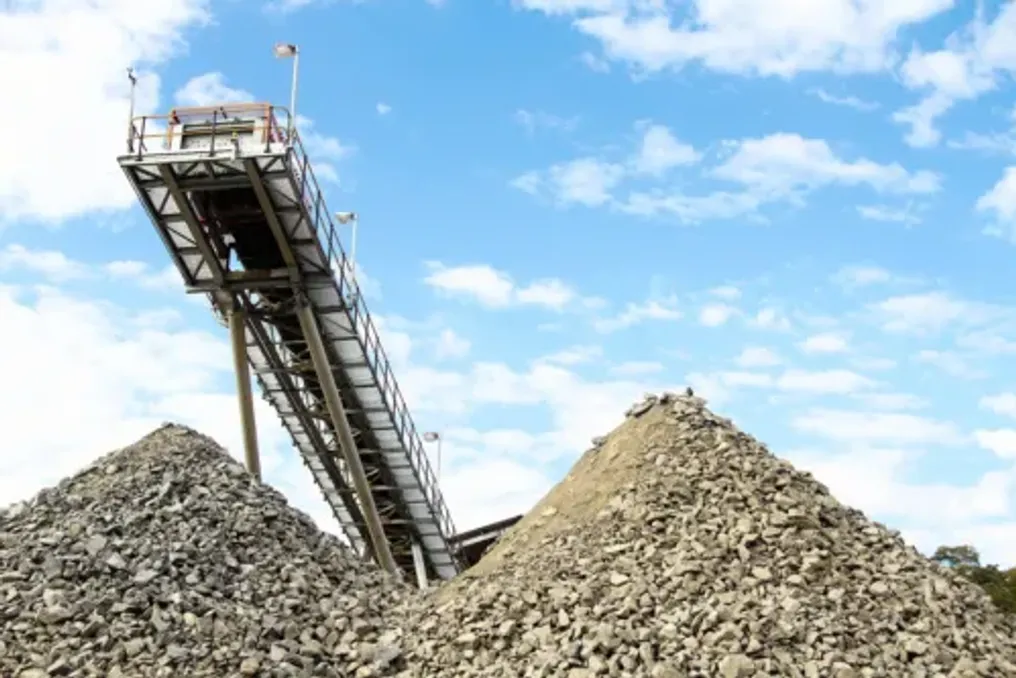
African countries continue to export their minerals in minimally processed form, only to import them as finished electronics, batteries, and defense systems at prices many times higher than the export value. In the context of a fragmented world order with multiple centers of influence, developing nations face a practical question: how to turn natural wealth into sustainable industrial potential without delaying urgent social development needs.
India's Example for Africa
For African strategic thinkers, recent Indian partnerships in technology and supply chains offer a valuable analytical case study. Through agreements such as the Australia-India Partnership on Cyberspace, critical technologies, and supply chains, as well as participation in emerging multilateral corridors, New Delhi is methodically integrating itself into high-value segments of global production without jeopardizing its own development goals.
From an African perspective, these steps highlight a central problem: the continent, which holds the largest share of minerals needed for the global digital and green transition, is structurally limited to the most basic stages of extraction and export. The practical task is to determine how Africa can leverage its resource potential to build a bridge between immediate development needs and long-term technological and industrial modernization.
The Problem of Raw Material Processing
Africa remains at a much more elementary level. Even the most determined political discussions often revolve around the term 'beneficiation,' a concept that yields intellectual space to minor raw material processing improvements rather than capturing the entire value chain. India does not simply exchange market access for resources; it actively links its industrial growth objectives with the reserves of partner countries' critical minerals, ensuring supply lines for clean energy systems, advanced manufacturing, and an expanding civilian nuclear program.
This is a deliberate exercise in systemic positioning, uniting national security, energy transition, and technological ambition into a single coherent structure. India seeks to influence production and design, whereas African negotiating forums are often preoccupied with securing gradual quotas for local processing. This gap is not due to a lack of resources but a deficit in strategic thinking regarding those resources. The Indian example confirms that true partnership and global competitiveness are achieved through a willingness to structurally integrate production, not merely manage extraction more efficiently.
Overcoming the Development Sequence
One of the most significant obstacles slowing down Africa's strategic thinking is the assumption of a fixed sequence: societies must first solve fundamental problems of poverty, infrastructure, and provision of basic services before they can legitimately focus on advanced technology and research and development (R&D). This idea is repeatedly used by political structures as justification for technological inertia.
India's experience refutes this logic. The country faces intense domestic pressure, including widespread deprivation and daily demands for ensuring the economic security of millions. Nevertheless, its leadership has refused to view this pressure as a permanent reason to postpone technological aspirations. Simultaneously expanding its digital public infrastructure and social safety net, India ensures that its engineering institutions, scientific personnel, and innovation clusters are at the forefront of semiconductor research, AI implementation, fintech, and space exploration.
For African analysts, the practical takeaway is not that development and advanced technology are sequential phases, but that they are parallel imperatives requiring targeted management. The essence of this balancing act lies in directing the revenue and strategic advantage from mineral wealth toward immediate human development while simultaneously building the institutional and industrial foundations that define modern economic life. One imperative cannot wait for the completion of the other.
Critical Minerals and Microchips
For a continent possessing the world's largest reserves of lithium, cobalt, rare earth elements, and copper—all essential for the global digital and green transition—this understanding is a verdict on the inadequacy of inherited economic models. Africa continues to export its minerals in minimally processed form, only to import them as finished electronics, batteries, and defense systems at prices many times higher than the export value.
If India, despite its internal challenges, can negotiate partnerships that advance it into chip manufacturing and secure high-tech supply chain resilience, then the structural barriers holding Africa in an extractive logic are primarily not imposed by geology or capital scarcity. They are the result of a collective failure to use mineral wealth as a conscious tool for technological ascent. The question is not whether Africa has the resources, but why these resources have not yet served a deliberate program of industrial and technological deepening that would make extraction a starting point, rather than a perpetual condition.
Prospects for Africa
A pragmatic consideration of Indian technological partnerships from an African viewpoint leaves no room for detached commentary. The continent possesses demographic weight, a growing pool of intellectual capital, and subterranean assets sought after by the world's most advanced economies and rising powers. However, there is a lack of mobilization of these advantages into a collective drive for structural economic transformation, based on substantial domestic research and innovation, assertive industrial policy, and a willingness to renegotiate Africa's terms of participation in global value chains.
The central task is cultivating the political and institutional discipline that ensures the mineral economy funds both immediate imperatives of human development and the long-term creation of technological capacity. India has demonstrated that belonging to the Global South does not necessarily imply a permanent position at the lowest rung of the value chain. For Africa, the time for analytical admiration has passed. The continent must now translate a clear understanding of its position into targeted, intellectually grounded actions that place it at the center of its own technological and industrial future, balancing the needs of today with the demands of tomorrow.