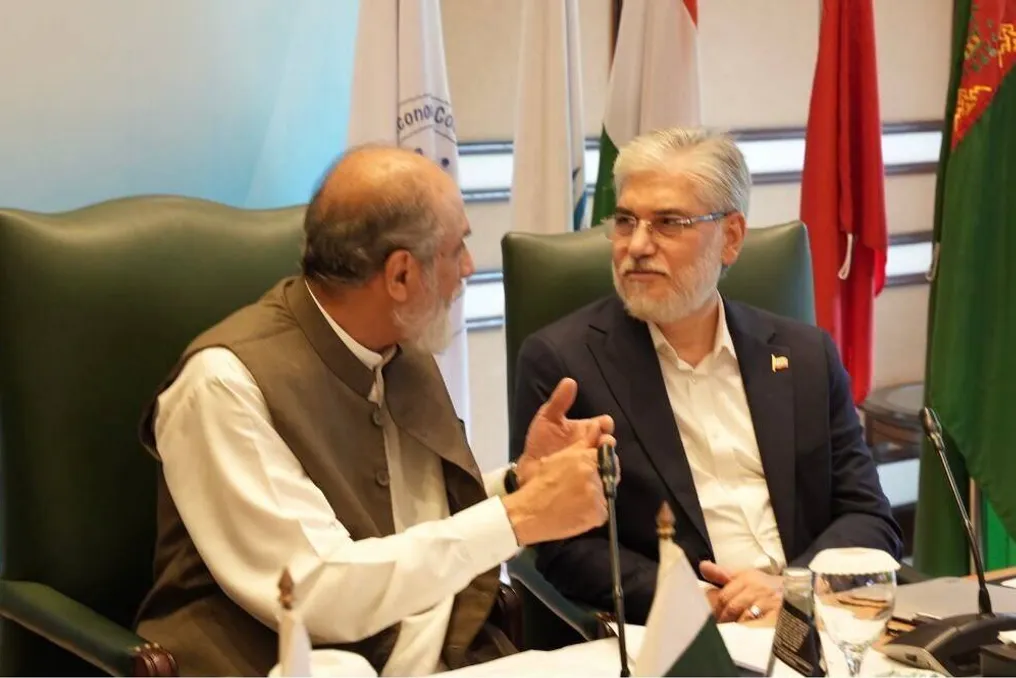
The Iranian Minister of Science, Research and Technology, Hossein Simai-Sarraf, and the Pakistani Federal Minister for Education and Professional Training, Khalid Maqbool Siddiqui, met to explore opportunities for deepening scientific and academic ties between the two countries.
Meeting within ECO Framework
The officials held talks on Thursday during the sidelines of the Sixth Meeting of the Ministers of Science of the Organisation of Economic Co-operation (ECO) in Islamabad. Discussions focused on strengthening relations through mutual scholarships, exchange of postgraduate students and researchers, and joint work on common issues such as climate change.
Positions of the Parties
The Iranian representative highly appreciated Pakistan's support to the country during the recent war between the US and Israel. Simai-Sarraf expressed hope that the visit would mark the beginning of a significant stage in the development of academic interaction between Iran and Pakistan, citing the religious, cultural, historical, and geographical commonalities of the two states. He also detailed the possibilities and potential of Iranian universities, research centers, and technology parks.
For his part, Maqbool Siddiqui emphasized the fraternal relationship between the nations, stating that since the recent critical situation strengthened the ties between Pakistan and Iran, cooperation needs to be deepened across various sectors.
Focus on Education and Technology
During the meeting with the Iranian delegation on Tuesday, Maqbool Siddiqui highlighted the importance of bilateral ties, noting that Islamabad intends to develop scientific and technological diplomacy with Tehran. Key discussion topics included improving cooperation in teacher training, curriculum development, digital education, artificial intelligence, educational technologies, technical and vocational training, joint research initiatives, as well as the exchange of professors and students.
The parties also expressed satisfaction with the successful implementation of existing Memoranda of Understanding (MOUs) between higher education institutions of Pakistan and Iran, including the National University of Modern Languages (NUML). Similar cooperation was also encouraged between other universities and research organizations. Other topics discussed included promoting joint research projects, holding academic conferences, developing innovative partnerships, and providing scholarship opportunities to strengthen academic bonds and facilitate the exchange of knowledge and experience.
Conclusion and Next Steps
Siddiqui noted that Pakistan is ready to implement the decisions made by the joint commission on education with Iran and to translate the shared vision of both countries into tangible practical results. He stressed that the long-standing fraternal relationship between Iran and Pakistan is a key factor in maintaining institutional interaction in solving common educational challenges and promoting scientific development.
In turn, Simai-Sarraf stated that expanding cooperation between the higher education and scientific institutions of the two countries would further deepen relations and contribute to regional development through innovation, research, and academic interaction. Both sides agreed to maintain close coordination between their ministries and scientific and technical institutions, and to explore new areas of cooperation aimed at strengthening public ties, enhancing academic interaction, and promoting sustainable development through education, science, and research.
ECO Activities
The Minister of Science attended the Board of Trustees (BoT) meeting of the ECO Science Fund at the sixth ECO ministerial meeting. This event brought together ministers, distinguished scientists, and senior officials from ECO member states to discuss the promotion of science, technology, and innovation, as well as to mobilize resources for transformative regional projects aimed at solving common development problems in the ECO region. The sixth BoT meeting reviewed a comprehensive agenda covering project implementation progress, financial oversight, and organizational restructuring. The Council conducted a detailed review of the implementation of previous BoT decisions and approved the work plan for the coming year, thereby strengthening the operational continuity of the institute. The election of the next President of the ECO Science Fund, currently headed by Kamel Tayebi from Iran, was also on the agenda. During his three-day visit, Simai-Sarraf met with the Pakistani Minister of Science and Technology and the Chairman of the Higher Education Commission (HEC), visited several leading universities in Islamabad, toured the ECO Science Fund, and discussed matters with Persian language professors.