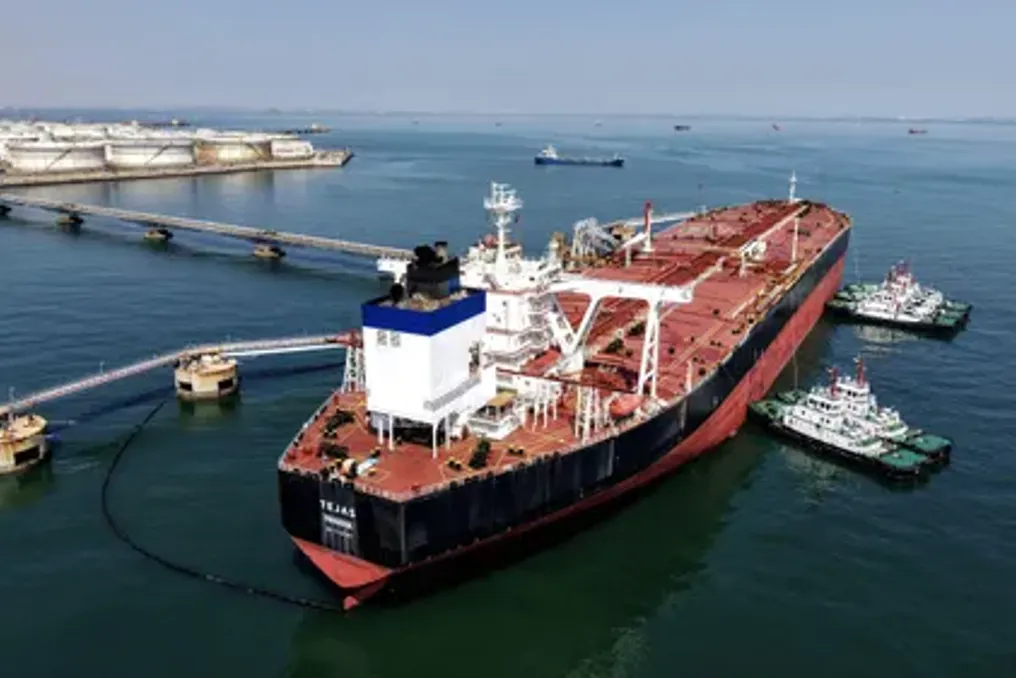
Oil prices continued to decline on Tuesday after a sharp drop on Monday. This occurred against the backdrop of growing hopes for the resumption of diplomatic efforts between the United States and Iran, which weakened concerns about disruptions in crude oil supplies through the Strait of Hormuz.
Market Fluctuations and Geopolitics
The fall in oil prices coincided with a general turmoil in global markets due to a sharp decline in technology sector stocks. Asian chip manufacturers incurred significant losses amid new worries about the future of the artificial intelligence boom.
The slump in the technology sector overshadowed the increased optimism regarding the crisis between the US and Iran. The parties moved away from mutual retaliatory attacks that had continued for almost two weeks after the diplomatic breakdown due to Tehran's blockade of the Strait of Hormuz. Meanwhile, Trump expressed hope that the resumption of diplomacy could end the war that began at the end of February.
It was reported that Oman and Iran were attempting to reach an agreement to resume shipping through the Strait of Hormuz, through which about one-fifth of global oil and LNG supplies usually pass. These hopes for reaching an agreement led to a sharp decrease in both major benchmarks: the international Brent benchmark lost more than eight percent on Monday, and WTI lost more than seven percent. On Tuesday morning, Brent traded at $88.36 per barrel.
Tech Sector Collapse
The South Korean Kospi plummeted by 10 percent as the technology sector suffered serious blows on another dark day for Asian stock markets. This was exacerbated by news of a breakthrough in China's chip industry, which intensified anxieties about the long-term sustainability of the AI boom.
These losses continued the global sell-off in the industry after an impressive rally over the past two years, which brought many indices and companies to record levels. The collapse also overshadowed the more positive outlook on the Middle East conflict, as the US and Iran suspended exchanges of strikes on the third day, and Donald Trump suggested a 'good probability' of a deal to end hostile actions.
Semiconductor companies were at the center of regional panic on Tuesday after The Information reported that the Shanghai-based company Shanghai Yuliangsheng began mass production of a chip technology that had long been dominated by the Dutch firm ASML. Shares of SK hynix and Samsung, listed in Seoul, fell by approximately 13 percent, leading to a 10.2 percent drop in the Kospi index, after it had previously been suspended due to a 20-minute stop signal. Both companies lost nearly half their value since reaching all-time highs last month, while the Kospi fell by more than 30 percent.
The Tokyo Nikkei index fell by more than four percent, while Kioxia dropped by 18 percent, and Advantest and Tokyo Electron lost 11 percent. Taipei also showed a decline of more than four percent, as the chip giant and market heavyweight TSMC was affected. Losses were observed across the rest of Asia.
US Markets and AI Analysis
Tuesday's hit followed a gloomy day on Wall Street, where the Philadelphia Semiconductor Index fell by 2.2 percent: Sandisk dropped by 11 percent, and Advanced Micro Devices and Nvidia lost about five percent. ASML fell by more than eight percent in Amsterdam.
AI trading has been under pressure for several weeks due to concerns related to the huge sums invested in AI, which has raised questions about when these investments will start yielding returns, as well as due to heightened attention to inflated valuations. Steven Innes of SPI Asset Management noted: 'The immediate fundamentals of semiconductors have not collapsed.' He added that 'Demand for high-bandwidth memory remains strong, hyperscalers are still spending, and the largest tech companies have not yet abandoned capital expenditure plans.'
However, according to Innes, the 'market's willingness to capitalize on these promises at virtually any cost has changed.' He explained that 'AI trading behaved like a flywheel in recent years: growth in shareholder value stimulated more spending, more spending confirmed higher profit expectations, and these expectations again raised valuations. Now this same wheel is starting to throw investors off at speed.'
Traders await earnings reports this week from SK hynix, Samsung, and Kioxia, as well as from American giants Microsoft, Meta, Apple, and Amazon.