As the global order disintegrates due to aggressive unilateralism and systemic protectionism, old economic models are rapidly disappearing. African and European countries find themselves in a vulnerable geopolitical position, caught between Washington's trade barriers and Beijing's industrial overcapacity.
Strategic Cooperation Between Continents
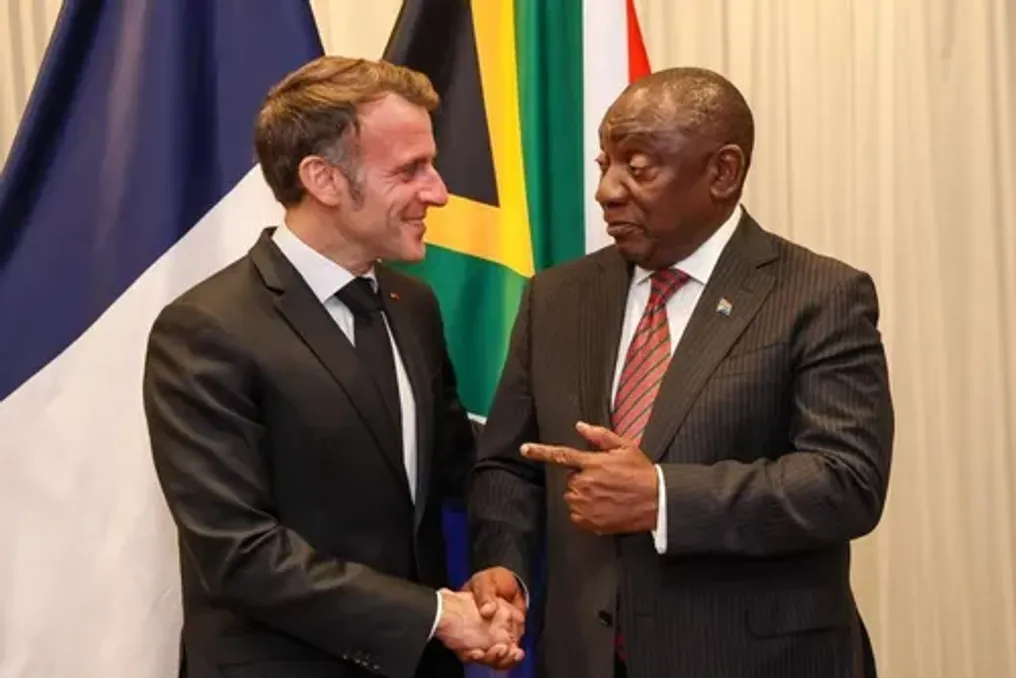
Despite maintaining indispensable economic ties with the US and China, the changing landscape offers Pretoria and African capitals an opportunity to deepen cooperation with France and Europe, transforming shared challenges into mutual resilience. This dynamic was evident during President Cyril Ramaphosa's official visit to Paris.
During bilateral meetings, the focus was primarily on commercial aspects, resulting in French companies pledging to invest 20.7 billion Rand (1.11 billion euros). Furthermore, crucial negotiations on transport infrastructure and civil nuclear energy were discussed.
Reaction of International Organizations
This pragmatic approach aligns with the broader institutional framework presented at the Africa Forward Summit in Nairobi. The Director-General of the World Trade Organization, Ngozi Okonjo-Iweala, speaking before the World Economic Forum in Davos, called on the continent to focus on decentralization and trade diversification, noting that the US accounts for only 6% of African exports and 4% of imports.
This shift towards mutual interaction is driven by geopolitical changes. Traditional development aid models are being replaced by a highly competitive environment where African states possess unprecedented diplomatic influence. Consequently, the strategies of France and Europe are shifting from asymmetric donor models to joint equity investments and more balanced risk distribution structures.
Initiatives at the Nairobi Summit
A common position became the strategic core of the Africa Forward Summit in Nairobi, which was held jointly with William Ruto of Kenya and French President Emmanuel Macron. At this event, African and French participants presented frameworks based solely on infrastructure, finance, and technology. To remain competitive, they launched a package worth 23 billion euros ($26.7 billion USD) related to energy, connectivity, and artificial intelligence.
However, the real test of this large figure depends on the actual implementation of promised first-loss guarantees. For South Africa's financial and banking sectors, these risk mitigation mechanisms are key indicators; without them, continental declarations lack operational depth.
South Africa's Position and Multilateralism
The strategic attractiveness voiced by Canadian Prime Minister Carney earlier this year, calling for 'middle powers' to stabilize the fractured international order, is an oversimplification of global reality. Grouping established Western nations and Global South leaders into one category ignores their fundamentally different economic priorities and political histories.
South Africa, along with Brazil and Indonesia, holds a unique geopolitical position that cannot be captured by simple labels. These states are vital continental anchors with clear strategic goals, demonstrating a distinct form of influence often overlooked by Western analysts. This influence includes regulating critical mineral supply chains, the ability to set agendas through consistent G20 presidencies, and the potential for independent diplomatic action outside traditional Western alliances.
For Pretoria, strategic autonomy means maintaining all global systems simultaneously, avoiding a false choice of sides. While maintaining core commitments within BRICS, South Africa has parallelly integrated France into the Square Kilometre Array (SKA) project, formalized technological cooperation in artificial intelligence, and resumed the long-planned Defence Strategy Dialogue scheduled for October. Future cooperation between Europe and South Africa must focus on these areas of substantive, transactional convergence.
Market Integration Through Multilateralism
The main shield against global trade turbulence remains the structural integration of the African continent. The leadership of the African Continental Free Trade Area (AfCFTA) consistently advocates for the world trade system, describing robust, rules-based multilateral structures as the best mechanism for protecting the interests of developing countries in an era of superpower unilateralism.
However, this protection cannot be guaranteed by political documents alone. Arming the continent against global instability requires the rapid physical and financial realization of a unified AfCFTA market. This is where the operational intersection of European capital and African financial institutions must occur. Mobilizing the vast investments needed to create logistical, transport, and energy corridors that make continental trade viable depends on deep coordination with pan-African development institutions and multilateral creditors capable of assuming complex cross-border risks.