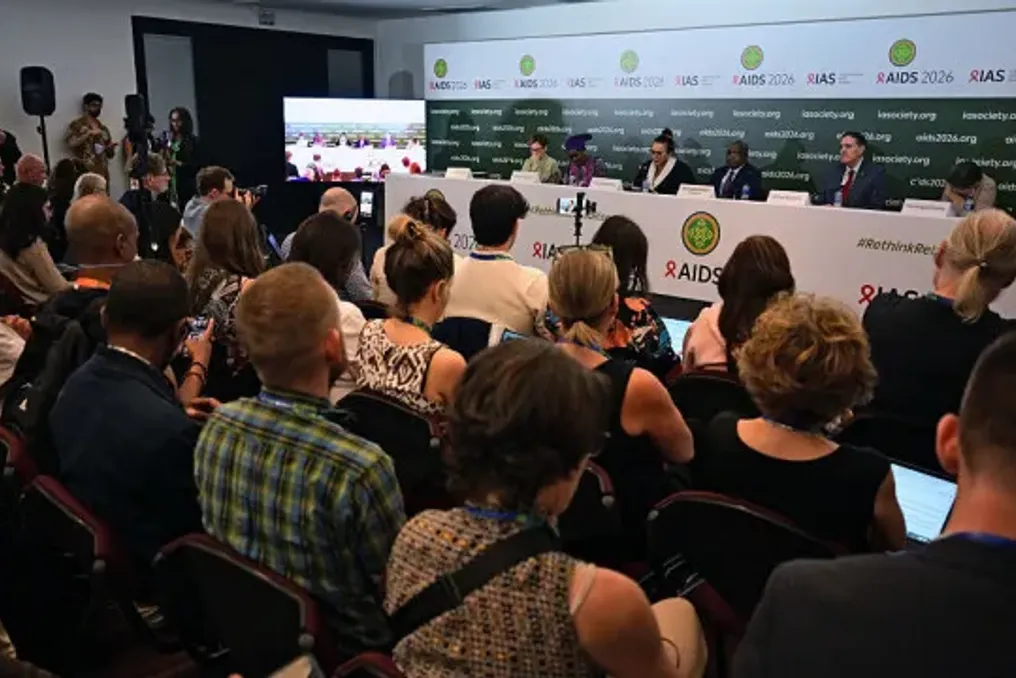
The global response to HIV, the agent causing AIDS, is 'completely paralyzed' due to the largest reduction in funding in decades, according to Angeli Achrekar, Executive Deputy Director of UNAIDS, speaking to the agency France-Presse (AFP).
Risk of HIV resurgence
Achrekar warned that without a reunion similar to the past, there could be an HIV resurgence, mentioning the increase in new infections in vulnerable populations in certain regions. This scenario was aggravated by the drastic decrease in international aid budget from the United States after Donald Trump's return to the White House last year, leading several European countries, such as France, Germany, and the United Kingdom, to adopt a similar stance.
Data on global funding
A report by the Joint United Nations Programme on HIV/AIDS (UNAIDS), presented at the 26th International AIDS Conference, revealed that global funding dedicated to HIV prevention and treatment in low- and middle-income nations fell by 18% just through 2025. Furthermore, funding provided by European countries for these purposes registered a drop of 58% since 2011. Despite these cuts, the United States continues to account for 74% of public funding aimed at combating HIV, according to the document's authors.
Challenges and appeals
Achrekar emphasized that the most HIV-affected developing countries, many located in Sub-Saharan Africa, are intensifying their own efforts. However, many low-income countries rely on official development assistance to cover up to 90% of the costs of their HIV combat initiatives. Experts stressed that it is still premature to determine the full impact of these budget reductions.
Goals and recent advances
Although the number of new infections and AIDS-related deaths reached its lowest level in over 30 years in 2025, the report's authors noted that new infections increased in 21 countries. In June, the UN set goals to eradicate AIDS as a public health threat by 2030, including ensuring that 20 million people have access to antiretroviral drugs that prevent HIV transmission. The organization also warned that last year, almost half of children living with HIV did not have access to these innovative treatments.
Pharmaceutical collaboration
Achrekar called on pharmaceutical companies to make medicines 'accessible and affordable to all.' Recently, the American pharmaceutical group Merck announced agreements that will allow manufacturers in Africa and India to market generic versions of its monthly preventive pill, alimatravir, which is still in clinical trials. Simultaneously, the NGO Médecins Sans Frontières (MSF) appealed to the American pharmaceutical company Gilead to make lenacapavir available in all low- and middle-income countries, as this injectable treatment represents a significant advance, requiring administration only twice a year.