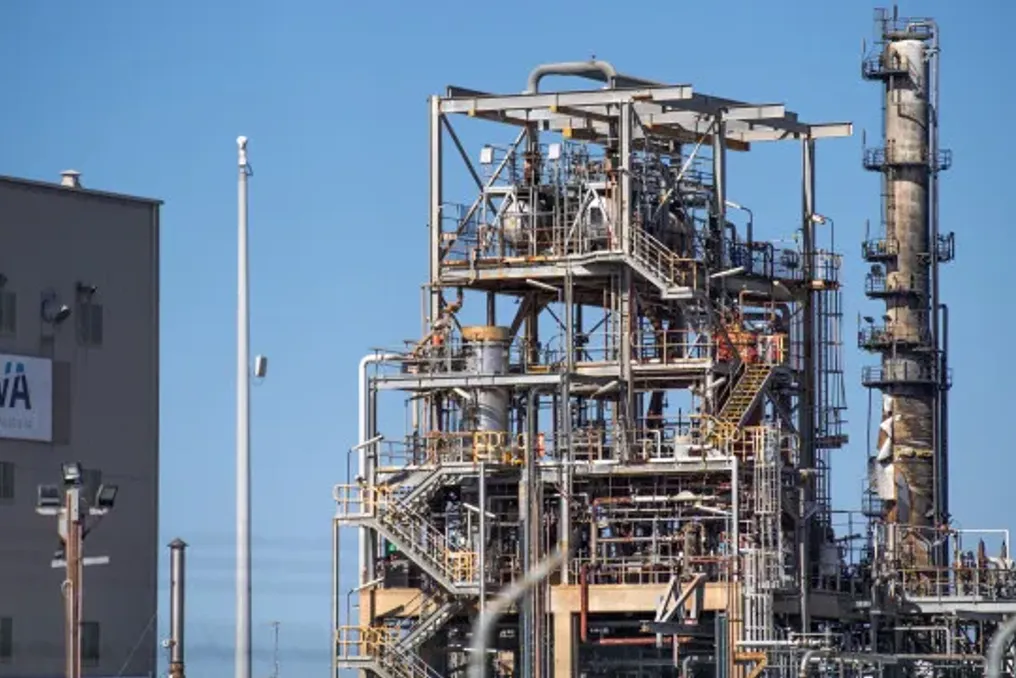
The Australian government, with support from Prime Minister Anthony Albanese's executive and the Western Australian state government, will allocate four million Australian dollars (equivalent to about 2.25 million euros) to begin analyzing an oil refinery construction project. This undertaking will be conducted by a private company, as announced by the Minister for Resources, Madeleine King, in statements to the press.
Need for energy self-sufficiency
Currently, Australia depends on importing approximately 90% of its liquid fuels consumption, a result of the gradual closure of several refineries over the past 25 years. Of the existing facilities, only those located in Lytton, Brisbane (in the east), and Geelong, in the state of Victoria (in the south), remain operational.
Geopolitical and strategic context
Madeleine King justified the initiative as a response to the worsening geopolitical scenario and the urgency of strengthening national supply capacity. In an interview with the public broadcaster ABC, she highlighted that the conflict in the Middle East generates instability in the global energy market, making fuel supply security crucial for the country's future.
The proposed study aims to determine the most appropriate location for the new infrastructure, while also assessing its technical and economic viability. The minister pointed out that northern Western Australia presents advantageous conditions, thanks to its industrial infrastructure and access to the Indian Ocean.
Advantages of domestic capacity
Furthermore, the minister emphasized that having domestic refining capacity would allow Australia to store crude oil for long periods and process it when necessary, offering a significant advantage compared to exclusive reliance on refined fuels, whose shelf life is more limited.
This project is part of a broader strategy by the Australian Government to increase energy security, motivated by the increased volatility in international oil markets, which has raised fuel costs. Concurrently, the Australian Government continues to analyze the possibility of temporarily reducing the special fuel tax, which expires at the beginning of August. Although King did not confirm an extension, she assured that the government is evaluating measures to mitigate the impact of rising gasoline and diesel prices on households.
Environmental reactions
The announcement drew criticism from environmental groups, such as Greenpeace, who argue that Australia should prioritize accelerating the transition to clean energy sources instead of investing in expanding fossil fuel-related infrastructure.