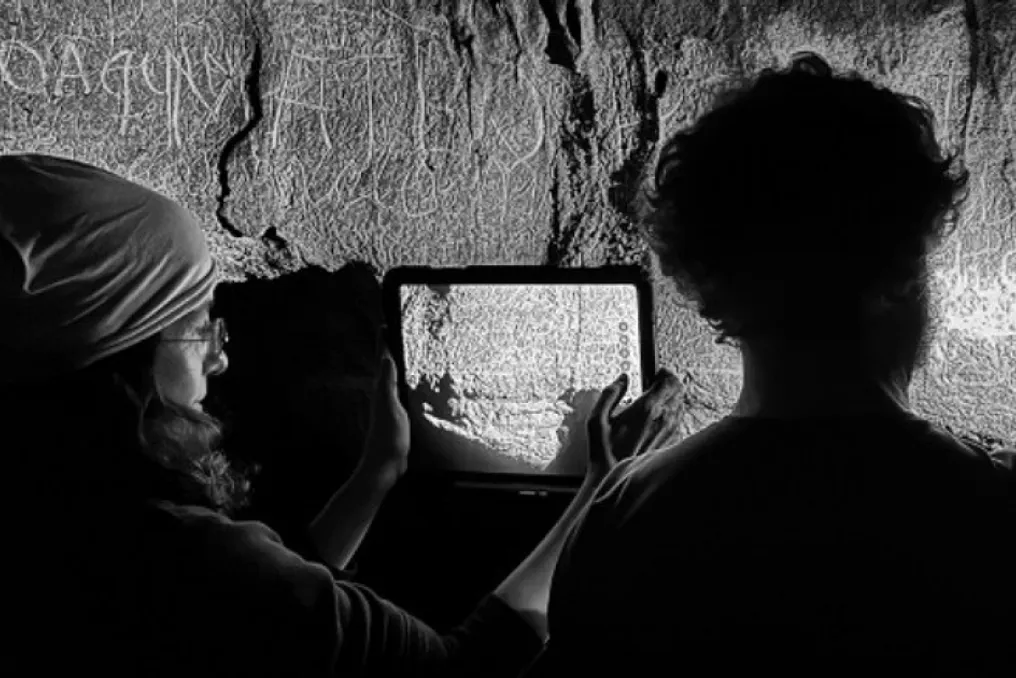
Spanish archaeologists have presented the results of new research in the Dones cave, which was previously known for its Paleolithic paintings. Further work in the cave uncovered over a hundred inscriptions from the Roman period, indicating that inhabitants of the Iberian Peninsula used this site for religious rituals in antiquity, with women apparently playing a significant role in these rites.
History of the Dones Cave
In the summer of 2021, archaeologists studied the Dones cave, located in the Valencian Autonomous Community, near the Mediterranean coast. That year, four previously unknown wall paintings, including an image of a bull's head, were discovered in the cave, which spans about 500 meters. In 2023, it became clear that this site is a major sanctuary visited by Upper Paleolithic hunter-gatherers.
In total, researchers found over one hundred pieces of wall art, including zoomorphic drawings—figures of horses, deer, and bulls. Thanks to the stylistic features of some works and traces of cave bear claws covering one of the images, it was established that at least part of these drawings dates back more than 24 thousand years.
Roman Use of the Sanctuary
Subsequent expeditions by Spanish specialists, led by Virhinia Barsela from the University of Alicante and Aitor Ruiz-Redondo from the University of Zaragoza, demonstrated that the Dones cave served as a sanctuary in later periods than the Upper Paleolithic. In 2024, approximately 200 meters from the entrance, scientists discovered at least 15 Roman inscriptions on the walls and ceiling. A coin minted during the reign of Emperor Claudius I (41–54 AD) was also found, presumably left in the cave as an offering. These findings allow for a preliminary dating of the cave's visitation to the 1st century AD.
From May to June 2026, archaeologists and epigraphists continued their work, recording at least 120 inscriptions written in Latin. Most of these records, according to the scientists, date to the 1st and 2nd centuries AD. Preliminary conclusions suggest that the cave was used again as a sanctuary, and it appears that women played an important role in conducting the cult. The name Cova-de-les-Dones, which translates to 'Cave of Women,' is also interesting, potentially indicating either frequent visits by women or the veneration of female deities.
Details of Cult Finds
Researchers noted the presence of several female names among the recorded inscriptions. Furthermore, five inscriptions appear to be dedicated to the same goddess, referred to as Domina, meaning 'Mistress.' The word MALACI appears three times, which could be an epithet or a local name for this goddess. Although the exact meaning of this word has not yet been established, scientists hypothesize that it may be related to water. In addition to the inscriptions, archaeologists also found spindle whorls, which were likely brought into the cave as sacrificial offerings along with other items.
Historical Context of the Region
The Romans began conquering the Iberian Peninsula in 218 BC, a process that lasted two centuries, accompanied by military clashes with the local population. Recently, archaeologists discovered evidence of one such clash in Catalonia—a punitive expedition by the Romans against the Cerretani that took place in 39 BC.
Other Archaeological Discoveries
Another part of the material mentions findings by Austrian scientists in Ephesus. They described an unusual burial discovered in an abandoned Roman latrine located in an odeon. In 2010, archaeologists found a tomb containing the remains of two infants—presumably twins—who were premature and died either at birth or shortly thereafter. According to the article published in the journal Childhood in the Past, this burial dates to the Byzantine period, specifically the 7th–9th centuries AD.