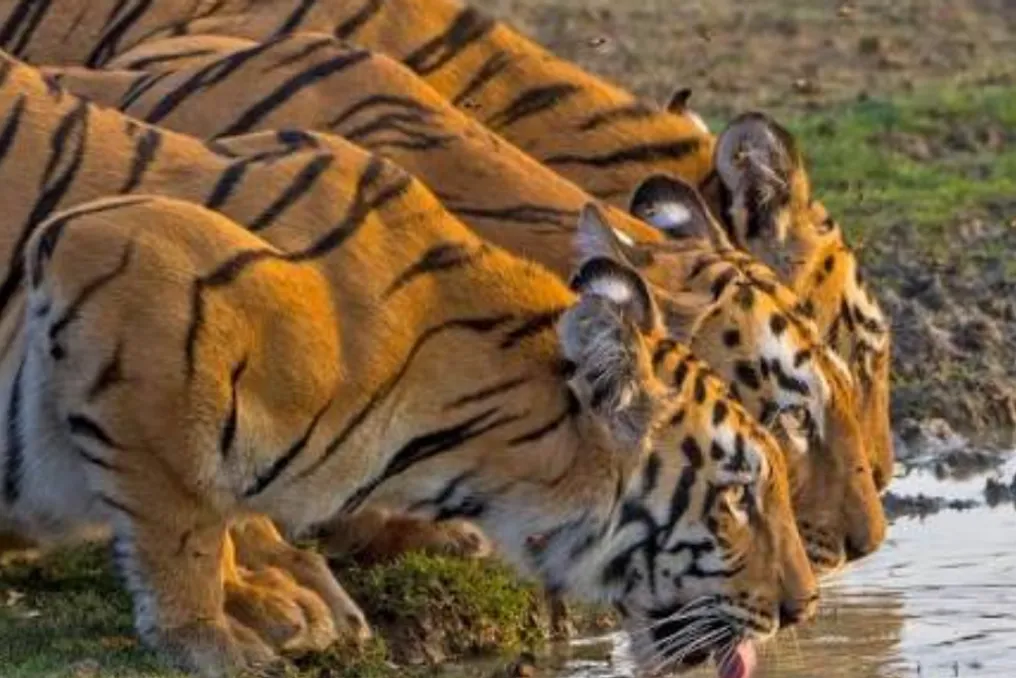
Most people picture tigers roaming dense tropical jungles. However, the world's largest cat has mastered landscapes far more diverse than commonly imagined. These places range from icy forests in Russia to tidal mangrove swamps in India, and from the high Himalayas to the tropical forests of Southeast Asia.
Similar stories
Popular
The Diversity of Tiger Habitats
For International Tiger Day, a journey is presented through amazing places that continue to provide refuge for one of Earth's most iconic predators. A tiger can move silently through tall grass, push through tangled mangrove roots during high tide, or leave tracks in snow at temperatures below minus 30°C. Despite external differences, all these animals belong to the same species.
Over centuries, tigers have evolved as masters of adaptation, surviving in such varied landscapes that they seem like homes to entirely different species. Although it is often assumed that they live exclusively in dense jungles, the tiger's range covers some of the planet's most exceptional ecosystems. These places are not only beautiful but are also among the most biologically rich and ecologically important landscapes on Earth. They also highlight an important fact: conserving tigers means protecting a striking diversity of ecosystems.
Specific Habitat Examples
Icy Forests of Russia
Perhaps the least expected place to find a tiger is snow. Nevertheless, the Amur (Siberian) tiger, the world's largest tiger subspecies, inhabits the coniferous and mixed forests of the Russian Far East, with a small population extending into northeastern China. In winter, temperatures regularly drop below minus 30°C, and the forests are covered in snow for months. Unlike their tropical counterparts, these tigers possess thick fur, large paws functioning as natural snowshoes, and an extra layer of fat to survive the harsh cold. Their lighter orange coloration surprisingly blends well with snowy landscapes punctuated by tree trunks and winter shadows. This is the northernmost extreme habitat of any wild tiger on the planet.
The Mangrove Kingdom of India
Consider the complete opposite. Instead of snow, tides change here. Instead of dry forest trails—muddy islands crossed by tidal creeks. The Sundarbans, spanning India and Bangladesh, is the world's largest mangrove forest and home to one of the planet's most unique tiger populations. Here, Bengal tigers have adapted to life among salt-tolerant trees, tidal channels, and muddy terrain. They are exceptional swimmers. As sea levels rise due to climate change, the Sundarbans is becoming one of the most vulnerable tiger habitats on Earth.
Endless Grasslands
Not all tiger landscapes are dense forests. Some consist of wide, open grasslands stretching to the horizon. In reserves such as Kaziranga, Manas, and Dudhwa, tall grass reaching four meters creates natural cover for predators. These floodplain ecosystems are extremely productive, supporting dense populations of deer, wild pigs, and buffalo—prey that sustains healthy tiger populations. Annual floods replenishing these grasslands also support one of India's richest wildlife landscapes, shared by rhinos, elephants, swamp deer, and hundreds of bird species.
Himalayan Foothills
The forests beneath the Himalayas represent another world. Protected areas such as Corbett, Rajaji, as well as parts of Bhutan and Nepal, combine river valleys, rocky hills, sal forests, and mountain streams. Tigers here move across steep terrain, requiring strength, agility, and endurance. According to scientists, as global temperatures rise, these high-altitude forests may become increasingly important for tiger conservation.
Tropical Forests of Southeast Asia
The tropical forests of Thailand, Malaysia, Myanmar, and Indonesia are among the oldest forests on Earth. Dense vegetation, tall trees, and year-round rainfall make them a complex environment for both predators and researchers. Tigers living here often have vast territories because prey density is lower than in the Indian grasslands. These forests are biodiversity hotspots where tigers coexist with leopards, bears, langurs, tapirs, and countless other species.
Dry Deciduous Forests
India's most famous tiger reserves, such as Bandhavgarh, Kanha, Pench, Ranthambore, and Tadoba, are located in dry deciduous forests. Unlike evergreen jungles, these forests change drastically depending on the season. In summer, leaves fall, creating open forest areas where prey animals are easier to spot. During the monsoons, the forests transform into lush green landscapes full of life. These habitats support one of the highest tiger densities in the world, proving that seasonal forests can be just as vital as tropical rainforests.
Swamps, Wetlands, and River Forests
Many tiger habitats are linked to water. Throughout India, Nepal, and Southeast Asia, river forests and wetlands provide year-round prey, dense vegetation, and reliable fresh water. These ecosystems also help regulate flooding, replenish groundwater, and support millions of people downstream. Protecting tigers in these areas often means preserving rivers that sustain both wildlife and human communities.
The Tiger as a 'Umbrella Species'
The tiger is often called an 'umbrella species,' and protecting it implies protecting everything under that umbrella. Every landscape where tigers live sequesters carbon, cleans water, supports pollinators, and provides thousands of other plants and animals. The snowy forests of Russia regulate northern ecosystems. The Sundarbans mitigates destructive cyclones. The grasslands of India support endangered rhinos and elephants. Tropical forests absorb enormous amounts of carbon while being home to indispensable biodiversity. Thus, saving these habitats means protecting much more than just one charismatic predator.
International Tiger Day is often marked by statistics: how many tigers remain, how many reserves exist, and how populations have recovered. However, perhaps the greatest conservation story lies in the astonishing places that still call it home. The tiger reminds us that resilience is embedded in nature's most unusual landscapes. Therefore, protecting the tiger means ensuring that these wonderful, vastly different yet equally vital worlds continue to thrive for future generations.
In cooperation with the Ecology and Climate Change Department of Navoi region and 'Falson Hunting Solutions' LLC, a total of 778 migratory birds were sent to nature reserves in the desert areas of Nurota and Navbahor districts.
Goal of the ecological initiative
Based on programs and legislative documents adopted in the environmental sector in recent years, special attention is being paid to preserving unique species, protecting desert ecosystems, and using natural resources rationally. This initiative is being carried out with the aim of preserving biological diversity in the country, protecting unique animal and bird species, and restoring their natural populations.
Expected results
Experts emphasize that the migratory birds released into nature are expected to increase in number through adaptation to new conditions and reproduction. This will not only help maintain ecological balance but also preserve rich natural heritage for future generations.
Every monsoon season, Mumbai is subjected to flooding, yet just a few months later, the same city faces water scarcity. This raises the question of how billions of liters of annual rainfall can prove insufficient.
The Singapore Example
Singapore previously faced a similar problem. Instead of viewing rain as a problem, the city overhauled its infrastructure to collect, store, and reuse rainwater gathered from rooftops, roads, and drainage systems. This has led to a reduction in the frequency of floods, increased water security, and the creation of a more sustainable lifestyle amid climate change.
Climate Challenges and Solutions
As climate change leads to increased precipitation in Indian cities, the key question may not be how quickly to drain rainwater, but how much of it can be conserved. Sometimes the most valuable resource is not scarce; we simply allow it to run off.
The article raises the question of the feasibility of implementing Singapore's rainwater management model in Indian cities.