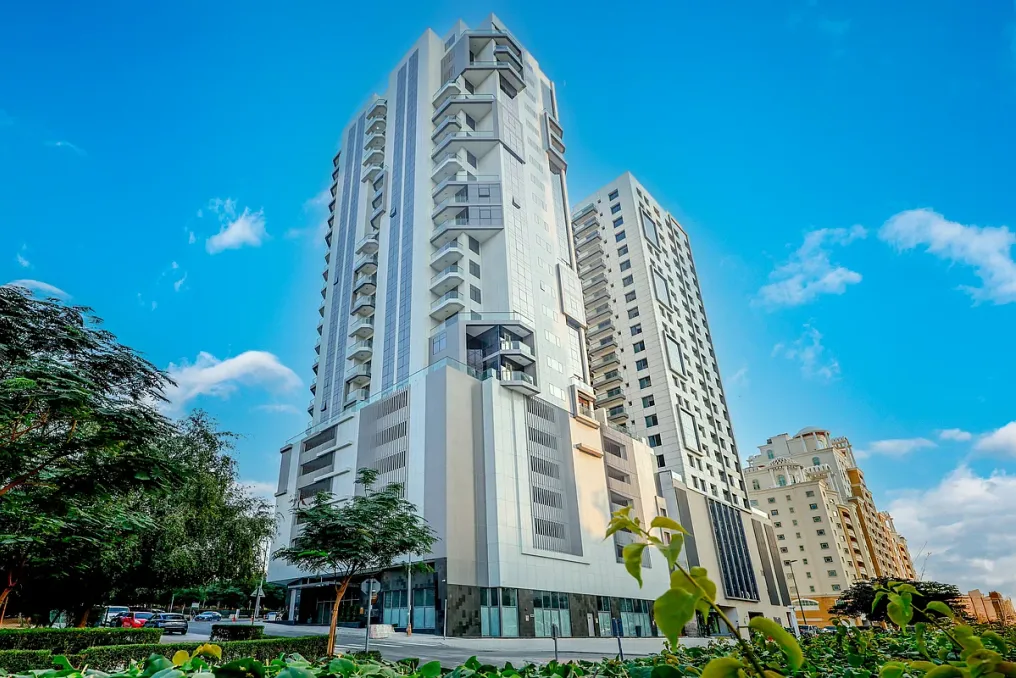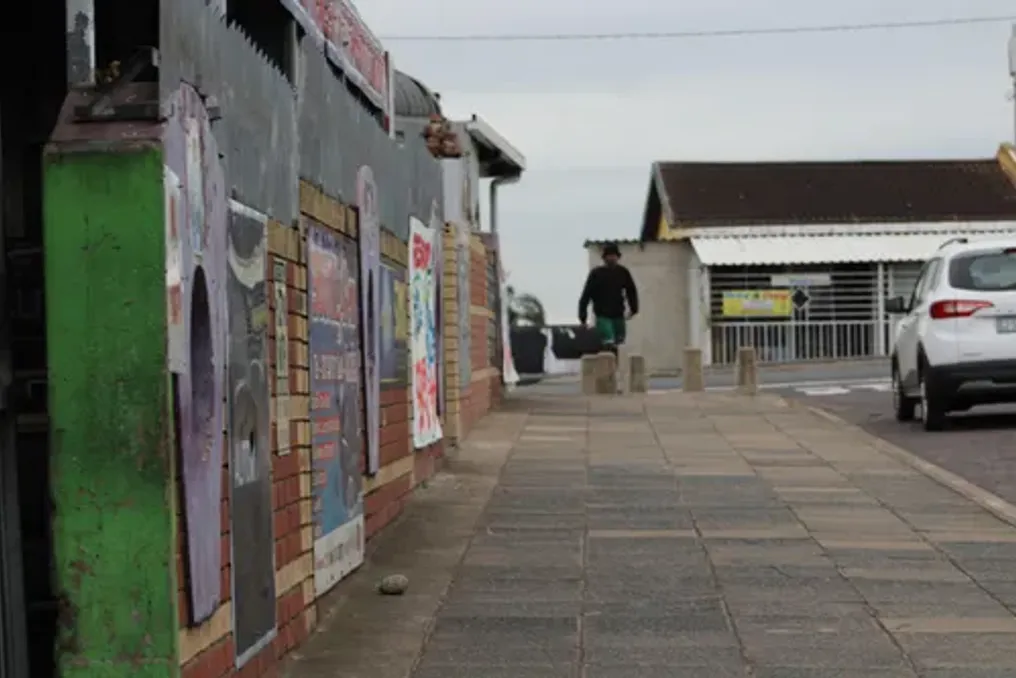
The value of buildings is determined not only by their location or design, but also by the communities, consumers, and businesses that use them. Consumer activity explains why the economies of rural and urban areas deserve more attention than they have previously received.
Formalization of the Economy and Demand
Andrew Koenig, CEO of Redefine Properties, argues in his analytical article 'Why Resilience in Real Estate Starts Long Before the Next Crisis' that the expansion of formal retail stores, banks, and service providers in these communities is driven not just by population growth, but by a more fundamental process—the stable formalization of economic activity and increased consumer participation.
According to Koenig, for investors, this goes beyond searching for the next retail opportunity. He emphasizes the need to recognize emerging demand and look beyond traditional commercial centers, paying attention to parts of the economy that have historically been underrepresented in institutional real estate portfolios.
Challenges in Rural and Urban Areas
Earlier this month, the National Youth Development Agency (NYDA) reported that decades after the start of democracy, economic opportunities remain concentrated in megacities. Meanwhile, many rural and urban communities continue to face shortages in infrastructure, weak transport links, fragmented land-use planning, and limited production investments.
The agency, established to address the country's youth issues, notes that spatial inequality affects almost every aspect of young people's economic activity. Young residents in rural and urban areas often incur higher transportation costs to access work, have weaker digital connectivity, face greater hurdles in obtaining financing, and operate in smaller consumer markets. These deficiencies reduce business competitiveness and limit opportunities for enterprise expansion.
Diversification Beyond Borders
According to Redefine Properties, this principle applies geographically as well. The company, which engages in property ownership, development, and management, states that diversification is not only about investing across borders. It is about creating exposure to different economic cycles and risk profiles.
The company points out that while South Africa remains their core market and the largest long-term opportunity, Poland provides stability, lower volatility, and a different economic cycle. They argue that together these markets form a more balanced portfolio than any single market could offer. However, they also note that building resilience requires maintaining flexibility to make strategic decisions when market conditions change.
Economic Activity as a Reflection of Real Estate
Redefine Properties believes that real estate is always a reflection of economic activity. The company asserts that buildings derive their value not only from location or design, but from the businesses, consumers, and communities that utilize them. Retail centers thrive when consumers continue to spend money, while industrial and logistics assets benefit from supply chain expansion and the movement of goods through the economy. Office demand grows when companies invest and create jobs.
In the view of the owner, developer, and property manager, understanding the direction of economic activity is as important as understanding the assets themselves. Koenig says this philosophy has shaped the evolution of their own portfolio over many years. He adds that despite significant differences between South Africa and Poland in their economic structures and stages of development, they share one commonality: both are fundamentally consumption-driven economies.
Financial Discipline and Energy
The company also emphasizes that financial discipline is equally important. It has been repeatedly pointed out that resilience in the real estate sector depends not only on asset quality but also on balance sheet strength. In an environment where capital has become more expensive and refinancing more difficult, maintaining financial flexibility opens up strategic opportunities. Companies with strong balance sheets can invest when chances arise, whereas those under pressure are often forced to make defensive decisions at inopportune times in the cycle.
Redefine Properties notes that nowhere is the link between sustainability and opportunity as evident as in South Africa's evolving energy landscape. For a long time, property owners viewed energy primarily as a risk management issue, investing in backup generators and alternative power sources to protect tenants from power outages. However, these same investments are increasingly generating entirely new commercial opportunities.
This is particularly visible in industrial and logistics assets. Their extensive roofs make large-scale solar generation commercially viable, and the relatively modest on-site electricity demand creates potential for participation in power purchase agreements and energy transmission schemes as South Africa's energy market develops. What started as a defensive investment is gradually turning into a new source of value.
Distinction Between Shocks and Shifts
Koenig argues that every market cycle creates new reasons for distraction. The task is to distinguish temporary shocks from permanent shifts in the economy. He concludes that long-term successful real estate enterprises will not necessarily be those who correctly predict every disruption. Rather, it will be those who enter each period of uncertainty already prepared, possessing resilient portfolios, maintaining financial flexibility, and remaining focused on the enduring forces shaping people's lives, work, consumption, and investments.