The reduction in the price of humanoid robots is transforming the entire supplier ecosystem, impacting component manufacturers further up the chain. Unitree Robotics has lowered the cost of its humanoid robot R1 from nearly 40,000 yuan to less than 30,000 yuan. Additionally, Songyan reduced the price of its Xiaobu Mi to approximately 9,000 yuan after receiving subsidies, while Xingchen introduced its industrial cable-driven robot starting from 89,900 yuan.
Market Forecasts and Government Support
In response to these changes, Morgan Stanley raised its forecast for Chinese humanoid robot shipments in 2026 from 28,000 to 50,000 units. Concurrently, the Ministry of Industry and Information Technology set a production target exceeding 100,000 units for the entire year.
Strategic Adaptation of Suppliers
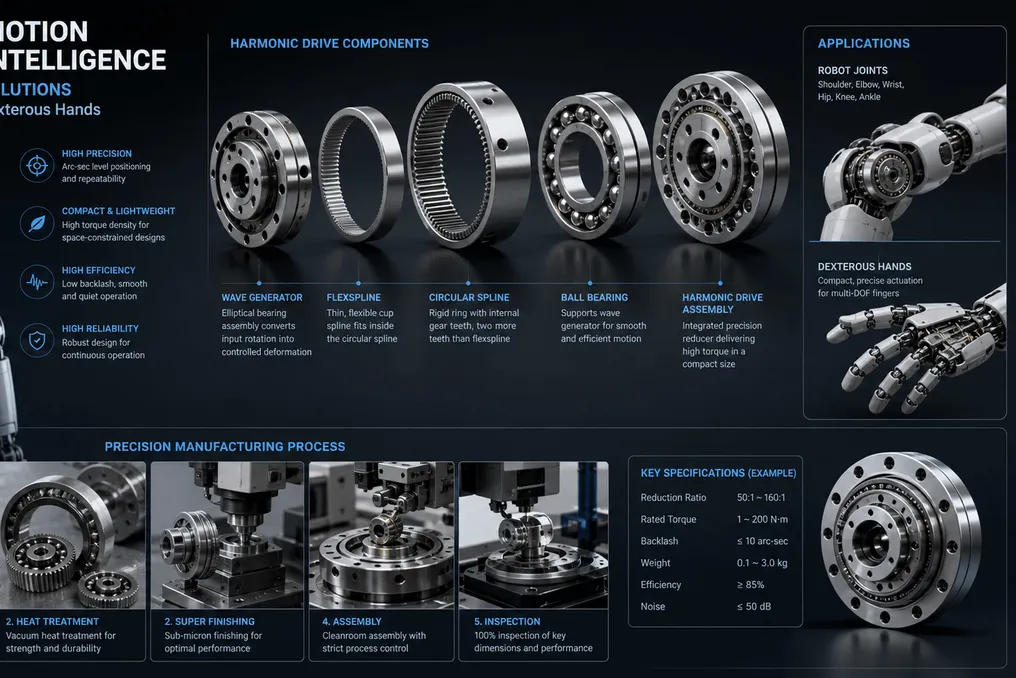
Price competition is forcing suppliers to expand their traditional boundaries. Leaderdrive, the only Chinese manufacturer of harmonic drives successfully mass-producing for humanoid robots, entered into a joint venture with the Swedish company SKF to develop high-precision bearings. Shuanghuan Drivetrain, a leader in RV reducer manufacturing in China with a market share exceeding 25%, expanded into Leaderdrive's harmonic reducer territory through its subsidiary, Huandong Technology. Microtransmission and drive system specialist Zhaowei Electromechanical announced an investment of 800 million yuan in the Shenzhen dexterous hand industrial park to commercialize its B20 product.
Reasons for Diversification and Market Pressure
The primary reason for supplier diversification is the shift by robot builders towards complete in-house development. Unitree demonstrated an improvement in gross profit from 44.75% in 2023 to 60.44% in 2025, according to its IPO prospectus, because over 90% of its motors, reducers, and controllers are developed in-house. The company also acknowledged that scaling up production has strengthened its bargaining power in procurement and optimized its cost structure. For other companies established after 2022 that lack eight-to-ten years of experience with quadruped robot hardware, dependence on external suppliers remains the only option; however, medium-term pressure to reduce costs will inevitably pass up the chain.
Impact of the Automotive Industry
Additional pressure comes from automotive manufacturers entering the robotics sector. Companies such as BYD, Changan, XPeng, and Xiaomi possess mature production capacities, significant influence over the supply chain, and distribution networks, which helps reduce the production costs of robots while simultaneously squeezing supplier margins. This dynamic reflects the evolution of the auto industry since 2023, where price wars have seriously affected the profitability of component suppliers. For instance, Zhongda Lide signed a long-term contract worth 3.2 billion yuan with Unitree, covering about 110,000 humanoid robots until 2027, demonstrating the scale of emerging supply chain relationships.
Future of the Supply Chain
To survive, suppliers are forced to expand their business horizons: moving from RV reducers to harmonic gears, forming joint ventures, and developing dexterous hands. Those who offer patented technologies that robot builders cannot effectively replicate are winning. The price war has transformed from a simple volume competition into a strategic repositioning of the entire humanoid robot supply chain, which is significant for the global robotics production ecosystem.