In Nagpur, one of India's fastest-growing cities, a vast green area spanning 46 hectares belonging to the CSIR-National Environmental Engineering Research Institute (CSIR-NEERI) can serve as an example of urban biodiversity conservation. This campus demonstrates potential for changing global approaches to nature protection.
The Potential of Institutional Campuses
Researchers from CSIR-NEERI, the Academy of Scientific and Innovative Research (AcSIR), and the Wroclaw University of Environmental Sciences and Life Sciences in Poland conducted a new study. They concluded that large, restricted-access institutional territories, such as research centers and universities, can contribute to global efforts to slow species decline. These spaces can function as official conservation areas known as Other Effective Area-based Conservation Measures (OECMs).
As the planet undergoes urbanization, traditional protected areas like national parks are proving insufficient to prevent wildlife extinction. By 2050, it is projected that about 600 million Indians will live in cities. Such massive expansion often leads to habitat fragmentation, depriving animals and plants of mobility. However, this study highlights that institutional campuses unintentionally act as biodiversity reservoirs.
Ecosystem Assessment Results
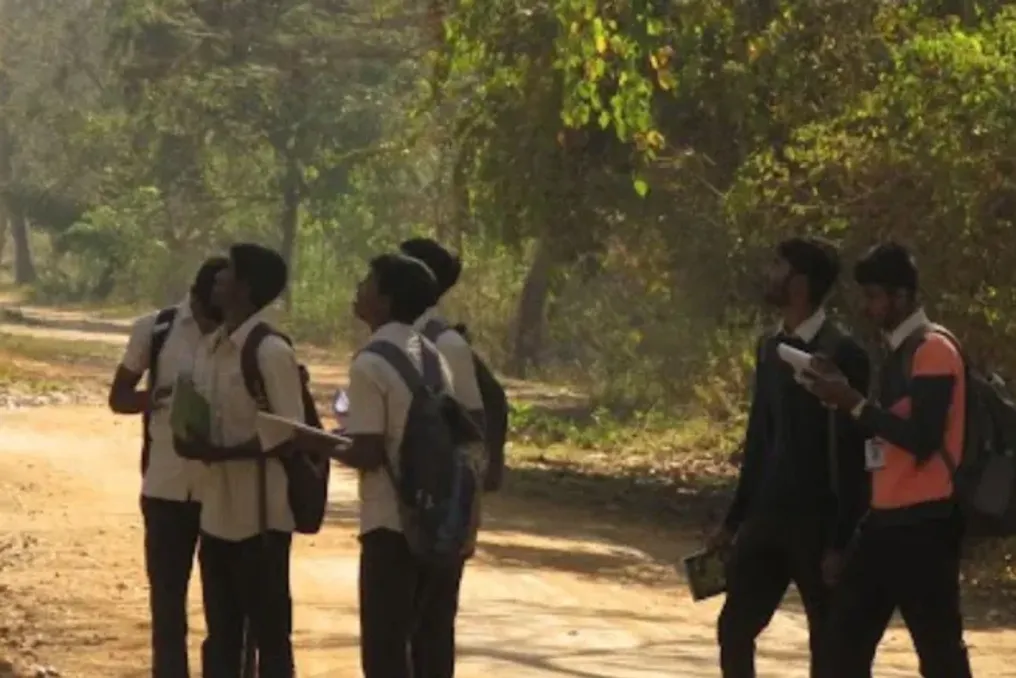
Due to limited public access, stable management, and a long history of protection, these territories often harbor more species than public parks or surrounding fragmented forests. The research team divided the 46-hectare CSIR-NEERI campus into a systematic grid and surveyed 172 different plots to detect every tree with a trunk diameter exceeding 10 centimeters. Their count revealed a thriving ecosystem comprising 1,744 individual trees representing 83 different species. Nearly half of the trees were native species, ensuring a balanced mix of indigenous and introduced flora.
The most common tree is the Yellow Flame Tree (Peltophorum pterocarpum), alongside the well-known Neem tree (Azadirachta indica). These trees help the campus function as a major carbon sink, absorbing greenhouse gases that contribute to climate change.
Microhabitats and Health Benefits
Researchers also studied the microhabitats associated with trees, or TreMs. These small features on trees, such as cavities, dead branches, and bark cracks, serve as vital shelters for birds, insects, and small mammals. Over 700 instances of deadwood and 366 cavities were found on the campus. Such elements are rarely present in meticulously managed urban parks, where parts of trees are often pruned for aesthetics. At the NEERI site, these niches and crevices provide structural complexity usually only found in mature forests. This complexity transforms the campus into an ecological corridor, allowing wildlife to move safely through the concrete jungle.
In addition to improving the ecosystem, the green space has had a positive impact on human health. The study found that the dense vegetation at the NEERI campus keeps the temperature in that area approximately 3°C lower than on surrounding city streets. This cooling effect is critically important for Indian cities facing record heatwaves. Furthermore, such spaces provide the necessary connection to nature for residents of densely populated areas, which has been shown to reduce stress and improve mental well-being.
Alignment with International Standards
Although it is known that campuses are excellent green spaces, this study is one of the first to assess a campus against the strict international OECM criteria set by the International Union for Conservation of Nature (IUCN). By demonstrating that the campus has secure land tenure, low levels of human interference, and a long-term monitoring plan, the researchers created a model for other institutions to contribute to the '30x30' goal—the global initiative to protect 30% of the Earth's land and sea by 2030.
Future Research Directions
The authors acknowledge that their findings are specific to this location: while the NEERI campus is an ecological success, not every college in India automatically meets these high standards. Some may have merely manicured lawns or lack sufficient mature tree density to support diverse microhabitats. Researchers emphasize the need for further comparative studies across different types of campuses to determine which ones truly qualify as high-value conservation sites. Moreover, the study focused predominantly on trees and their features. Future investigations must track other biodiversity, such as birds and insects, as well as soil health over many years to ensure these conservation benefits persist as the city grows around them.
Urban green spaces are crucial for a thriving ecosystem and improved human health. Recognizing that parcels of open land in some of our scientific and educational institutions are biodiversity refuges, India can expand its conservation network without the need for costly land acquisition. Incorporating these institutional lands into conservation efforts ensures that as cities grow, we do not lose the ecological anchors that keep our urban environments sustainable, breathable, and alive.