This website employs a specialized security service designed to prevent the actions of malicious bots. This page is displayed during a verification process that confirms the user is human and not an automated bot.
This website employs a specialized security service designed to prevent the actions of malicious bots. This page is displayed during a verification process that confirms the user is human and not an automated bot.
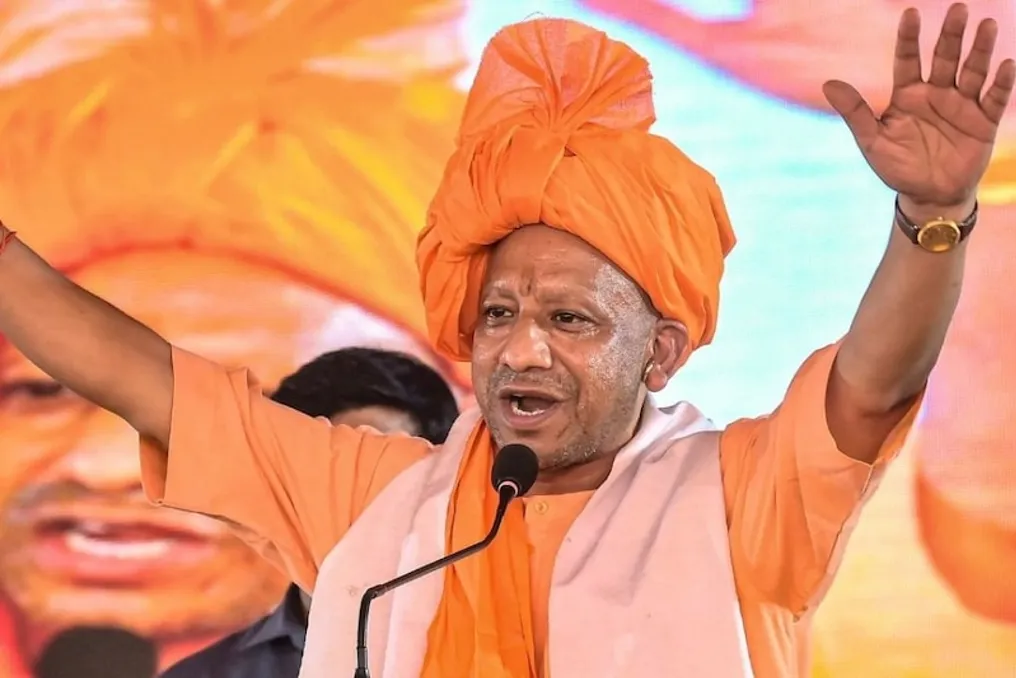
Chief Minister Yogi Adityanath inaugurated and laid the foundation stone for over 70 development projects worth more than 352 crore in Bahraich. During this event, he harshly criticized the Congress and SP parties, stating that the land of UP would not accept any monuments or fairs in honor of foreign invaders.
According to information from July 21 in Bahraich, the minister opened and laid the foundation for 70 development projects, totaling over 352 crore, designated for the constituencies of Mahsi and Nanapara. Furthermore, he presented certificates to beneficiaries of various government schemes.
Speaking at the event, he criticized the opposition, noting that works that were supposed to be completed in 1947 are now being implemented thanks to the double-engine government in Uttar Pradesh. The minister pointed out that the Congress and SP failed to give due respect to freedom fighters such as Maharaja Balbhudra Singh Chahalari and Maharaja Suheldev, who should have received recognition in India after gaining independence.
He accused these parties of having only promoted their own and their families' interests, rather than development, which led to the neglect of Bahraich and created an identity crisis in the state. The minister emphasized that past governments allowed the start of the Ghazi Miyan fair in honor of Salar Masud Ghazi, a foreign invader who allegedly came to plunder Ma Pateshwari Dham and trample India. He clearly stated that in the new India and new UP, events honoring any foreign conquerors will not be permitted. Expressing approval for the public of Bahraich for attempting to stop the Ghazi events, he promised to take firm measures to prevent such incidents from recurring in the future.
This news segment examines two key aspects: the evolution of Hostinger from Lithuania to a global level, and the contribution of LinkedIn's R&D center in India to the creation of global products.
Hostinger was founded in Kaunas in 2004 and initially operated as a web hosting provider. Over time, the company transformed into a comprehensive platform for creating and managing online businesses, focusing on AI-powered website building tools and business utilities. Hostinger CMO, Kristina Strimaitė, stated that AI will not replace people, but it will displace those who refuse to use it or show curiosity.
The company has achieved global reach, serving clients in over 150 countries without seeking venture capital. Kristina Strimaitė noted that globalization became inevitable due to the small size of their domestic market. In 2025, the company's revenue reached 275.4 million euros, representing a 51% increase compared to the previous year, marking the fourth consecutive year of growth exceeding 50%. India is Hostinger's largest market by active user count, surpassing Brazil, Indonesia, and the United States.
According to Strimaitė, founders should solve real problems, avoid the limitations of a small local market, and delegate operational tasks to AI to free up time for product development and customer interaction.
Over the past fifteen years, LinkedIn's R&D center in Bengaluru has undergone significant changes: it has evolved from a mere development hub into a place where genuine engineering work occurs, contributing to the creation of the company's global products. Malay Lakshmanan, Head of Engineering in India at LinkedIn, discussed the center's development, the impact of AI on product development, the company's efforts in developing AI talent, and the entrepreneurial culture within a large corporation in an interview with EnterpriseStory.
LinkedIn teams in India are now responsible for the full product development lifecycle for enterprises such as LinkedIn Sales Solutions. They create AI, data, and infrastructure-based platforms that support millions of users worldwide, playing a key role in shaping the company's next wave of innovation. Lakshmanan emphasized that Bengaluru is not only LinkedIn's largest R&D center outside of Silicon Valley but also a place where products for the entire world are created and future development directions are defined.
In the future, the main focus will be on integrating platforms using AI and data. This may manifest in assisting recruiters to accelerate the process through deeper integration of ATS (Applicant Tracking System) systems, embedding LinkedIn intelligence directly into hiring workflows, as well as ensuring better outcomes for marketers and sales teams through smarter and more interconnected user experiences.
For a long time, companies faced serious difficulties launching products in small towns of Bihar, verifying addresses in rural Odisha, or conducting surveys in remote villages of Chhattisgarh. Despite the rapid development of India's digital economy, reaching people on the ground remained a complex task. Although brands, governments, and NGOs could interact online, they often hit the barrier of physical last-mile access.
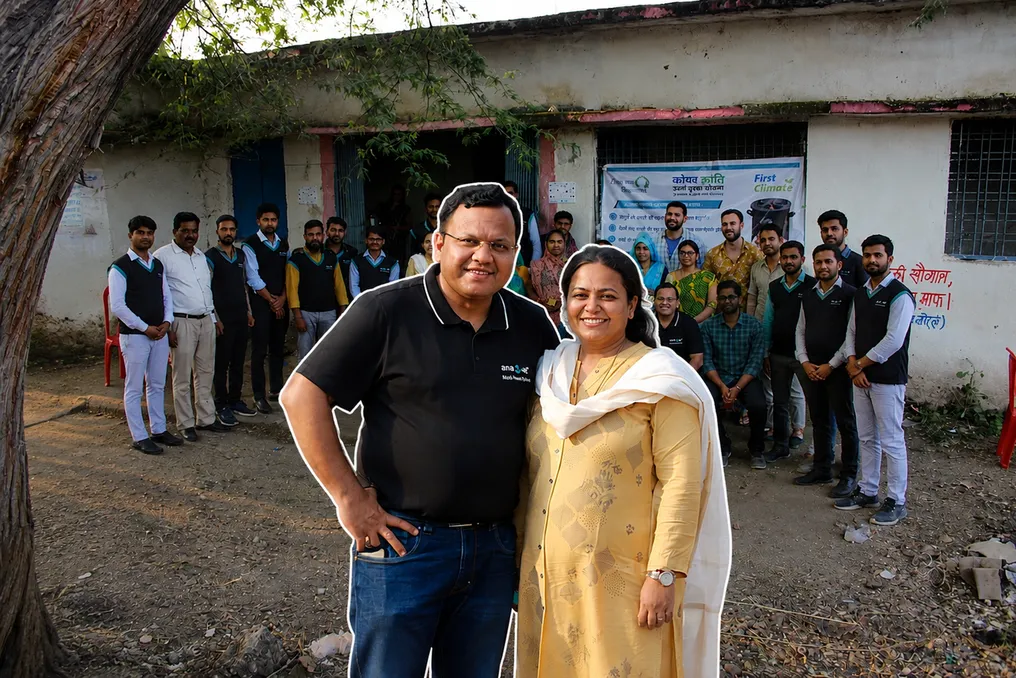
This gap inspired Govind Agrawal and Arti Agrawal to create Anaxee Digital Runners. The company, based in Madhya Pradesh, has become one of the largest networks of field workers on the last mile in India. Today, over 40,000 local young people work as Digital Runners, helping businesses and organizations reach communities across the country.
Govind, co-founder and CEO, notes that 'Anaxee was inspired by the huge information asymmetry and lack of trust existing in rural India.' He adds that while digital connectivity improved, brands, governments, and social organizations still struggled with physically reaching people in Tier-2, Tier-3, and rural markets. The goal was to solve this last-mile problem by creating a platform that provides access to any point in India through a reliable local network.
Initially, Anaxee did not start with the Digital Runner model. Its first project was biometric technology. Govind recalls that the early days of Anaxee Technologies were challenging because they were ahead of their time. A vein recognition technology—a biometric identification method scanning the unique pattern of veins under a person's skin—was developed and even received a US patent. However, scaling proved impossible due to the 2008 global financial crisis.
Instead of shutting down, the founders changed direction. They abandoned hardware and focused on building a distributed network of locals who could perform tasks on the ground using smartphones. Around 2016, this idea transformed into the Digital Runner model, which was based on two trends: the growing spread of smartphones and the large number of youth in small towns seeking flexible work near home.
Govind compares the Digital Runner to taxi platforms. He defines it as a 'Local Resident' or 'Son of the Soil'—a tech-savvy person living in a village or town who acts as an on-demand partner. Similar to Uber drivers, Runners use their smartphones to visit locations near their homes and perform tasks such as data collection, merchant outreach, conducting surveys, supporting brand go-to-market strategies, and assisting in large-scale outreach programs.
Tasks are received through the Anaxee Partner App, which has exceeded one million downloads on Google Play. Runners accept tasks within a five-to-ten-kilometer radius of their homes. Work can be diverse: address verification, store registration, household survey, or field data collection. After completing a task, they upload confirmation via the app. Payment is made after verification by the Anaxee quality assurance team.
Finding thousands of reliable people to support the network was another challenge. Govind explains that the breakthrough came from studying the Indian Aadhaar ecosystem. He noted that there were already nearly four hundred trained Aadhaar operators across India. This allowed them to realize that instead of building a field force from scratch, they could leverage an existing network. This knowledge enabled them to start operations in 26 states almost immediately.
Managing tens of thousands of field workers across India requires more than just manpower. Govind explains that Anaxee operates on a cloud platform consisting of mobile applications, web dashboards, and APIs. Digital Runners receive assignments on their smartphones, execute them in the field, and transmit data in real-time. Clients can track progress through dashboards, view photos, monitor locations, and analyze reports.
Every task goes through multiple verification stages. 'Every activity is recorded using GPS coordinates, timestamps, and photo evidence. Data undergoes multiple quality checks before approval. Digital Runners are paid only after successful verification. We also use automated calls and AI-based tools for verification, alongside human quality control processes.'
Before scaling, Anaxee had to prove the viability of its model. Instead of investing heavily in offices, transport, and permanent on-site staff, the company chose a lean approach. It relied on digital infrastructure and local partnerships rather than creating a traditional field workforce.
The initial pilot focused on developing the technological platform, attracting local partners, testing task distribution workflows, and verifying quality assurance processes, according to Govind. By building the system on the existing digital ecosystem rather than physical infrastructure, they were able to expand much faster and at significantly lower costs.
As demand grew, the company continued to invest in its mobile platform, cloud infrastructure, training systems, quality assurance, and payment mechanisms. Standardizing workflows and operating procedures allowed for efficient management of task distribution, verification, payments, and reporting for clients, even as the network expanded across India.
Today, Anaxee has created one of the largest distributed field networks in India, which includes: over 40,000 Digital Runners, operations in 540 districts, coverage of over 11,000 postal codes, and nearly 1.2 lakh villages. The Anaxee Partner App has over a million downloads. The platform supported retail expansion, merchant acquisition, government surveys, agricultural campaigns, medical initiatives, and climate change projects. During the pandemic, it conducted a vaccination awareness campaign called Project Suraksha. Recently, Digital Runners have also begun supporting the monitoring of carbon projects and conservation initiatives under the Anaxee Climate Center.
In 2021, the company received the National Startup Award from the Ministry of Commerce and Industry. However, for Govind, the true achievement lies elsewhere. His vision has always been to eliminate geographical barriers. Whether the company is launching a product, the government is implementing a welfare program, or an organization is trying to reach remote communities, he wants them to know that reliable local execution is possible anywhere in India.
Nipendra Kumar from Ballia district in Uttar Pradesh previously worked as an executive collector and then a bank correspondent. Seeking more flexible work, he joined Anaxee. He shared that after joining Anaxee, he earned about 50,000 rupees in just four months by performing market verification and order checks for brands like TTK Prestige. This experience helped him build confidence and communication skills without having to relocate for work.
For Ankita Kumar from Barabanki, the platform became a way to support his preparation for the UPSC exam. Discovering Anaxee through Facebook, he joined Project Suraksha and went door-to-door spreading information about COVID-19 vaccination. The flexible schedule allowed him to work in the mornings and study the rest of the day, while also helping cover book expenses during exam preparation.
Arjun Yadav, a medical student from the village of Bakhtiyarpur, balanced tasks with college studies and earned about 50,000 rupees over seven to eight months. Later, he introduced ten more people from his community to the platform, creating earning opportunities for others. Govind emphasizes that these stories demonstrate how the platform serves as a bridge, enabling local youth to become 'Sons of the Soil' who contribute to the local economy while achieving personal and professional success.
Govind and Arti aim for Anaxee to do more than just expand its network. Their goal is to change how organizations operate in rural India. Govind states that they intend to become the preferred platform for last-mile execution and intelligence gathering for organizations working across India. He summarizes his vision: 'We want to be the default partner for any brand or organization wishing to reach the last mile of India.'