NASA is implementing a distinct approach to study supermassive black holes using the Nancy Grace Roman telescope. This instrument will seek to identify these cosmic giants by analyzing the explosions that occur when stars are destroyed.
The Challenge of Detecting Ancient Black Holes
Black holes reside at the core of most galaxies, including the Milky Way, and some possess masses equivalent to millions or even billions of suns. However, a question persists among astronomers: how did these objects reach such vast sizes in such a short period?
According to a study published in The Astrophysical Journal, NASA's Nancy Grace Roman is scheduled for launch on August 30, 2026. Its function will be to observe supermassive black holes that existed approximately 11 billion years ago, aiding in reconstructing the formation trajectory of these celestial bodies.
Locating such entities is not trivial, given that black holes do not emit light themselves. Therefore, scientists rely on the light emitted by the material orbiting these objects before it is absorbed. Smaller ones attract less matter and consequently tend to go unnoticed.
Tidal Disruption Events (TDEs)
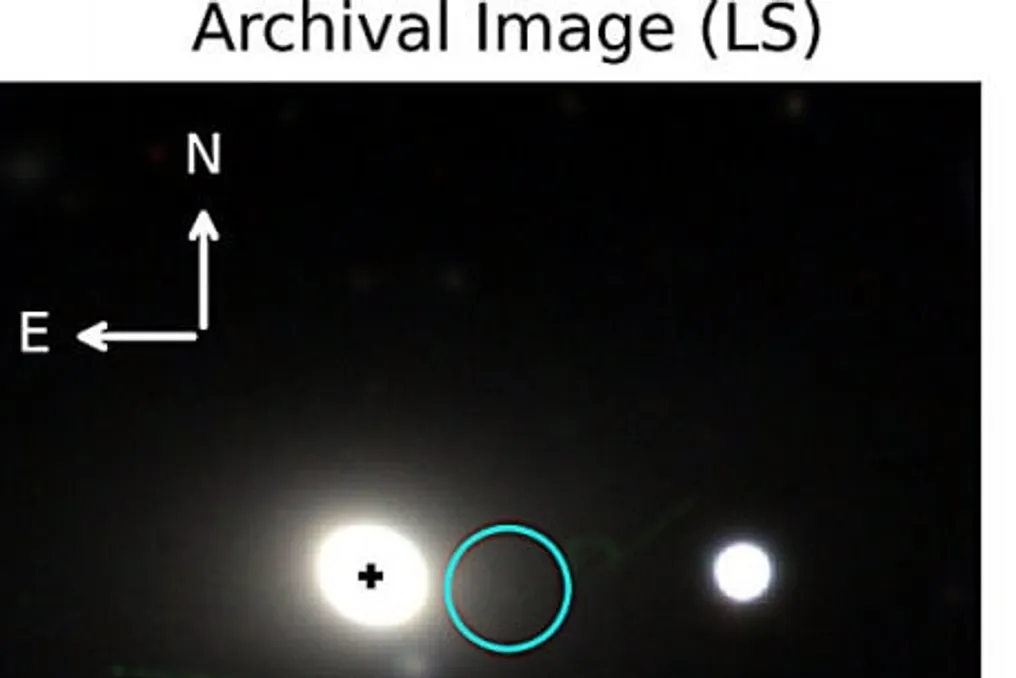
In this context come the so-called Tidal Disruption Events (TDEs). When a star approaches a black hole too closely, it can be torn apart, generating a temporary flare that surpasses the brightness of an entire galaxy.
Mitchell Karmen, a graduate student at Johns Hopkins University and lead author of the study, stated that the Roman Space Telescope will be a transformative agent for transient event science. He emphasized that due to the equipment's high sensitivity, it will be possible to detect multiple TDEs at 'greater distances and in cosmically older epochs than ever before.'
Space Observation Strategy
The mission's methodology involves repeatedly returning to the same area of space during its research at high latitudes. The monitored region covers about 18 square degrees of the sky, which is equivalent to approximately 90 full moons. This tactic increases the probability of capturing ephemeral phenomena.
Among the central objectives of the mission are: identifying TDEs in distant galaxies; recognizing smaller and older supermassive black holes; investigating the evolution of these objects throughout cosmic history; and comparing various models regarding the genesis of the first black holes.
It is important to note that not all black holes cause this type of explosion. Those with more than a billion solar masses swallow stars before there is any disruption. Those with masses between 100 thousand and 100 million times that of the Sun are the ones that produce the luminous signals detectable by telescopes.
Telescope Collaboration
Roman will primarily focus on near-infrared light, while the Vera C. Rubin Observatory will conduct measurements in visible light, allowing each to reveal a distinct facet of the Universe's history.
Researchers project that Rubin could record thousands to tens of thousands of these events annually, while Roman should identify up to one hundred. Despite being less frequent, these records will provide information about a very primitive phase of cosmic evolution.
Suvi Gezari, an associate professor of astronomy at the University of Maryland and co-author of the study, stated that simply counting these events across different redshift values—a metric representing different eras of universal history—will already allow for establishing crucial limits for the population of black holes with about a million solar masses.
The current expectation is to verify whether the observations made by Roman and Rubin corroborate the study's predictions, contributing to elucidating how these giants arose and evolved over billions of years.