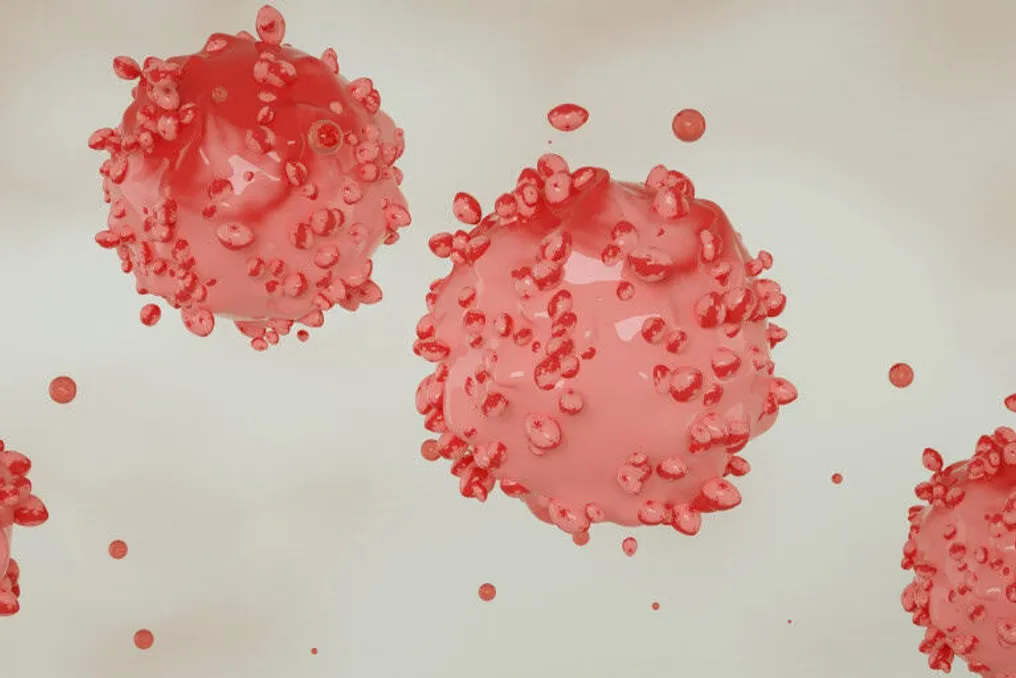
Researchers have created an innovative strategy to combat cancer by employing an enzyme from the CRISPR system. This enzyme has the ability to destroy the DNA of tumor cells and force them to self-destruct.
Mechanism of the therapy's action
The methodology, detailed in two articles published in the journal Nature, utilizes an enzyme that can be programmed to recognize a specific messenger RNA, such as one generated by a malignant cell. Upon locating this RNA, the enzyme fragments the entire cell genome. Scientists point out that this technique could constitute a new pathway to eradicate cells producing mutant proteins classified as unreachable by conventional drugs.
Development and initial applications
Yang Liu, a molecular biologist from the University of Utah School of Medicine in Salt Lake City (USA) and author of one of the studies, described the process as a 'molecular death switch that recognizes a specific RNA,' characterizing it as 'programmable chemotherapy.' The technology has already been applied in the development of an experimental treatment against head and neck cancers linked to human papillomavirus (HPV). This project is being led by Akribion Therapeutics, a biotechnology company based in Zwingenberg (Germany).
Clinical expectations and how CRISPR works
Paul Scholz, co-founder and R&D director at Akribion, predicts that the first results from clinical trials may be achieved by 2030. CRISPR systems are naturally found in bacteria and other microorganisms, functioning as an immune defense mechanism. They use RNA molecules to guide enzymes called Cas to the DNA of invaders, allowing for the cutting and destruction of this genetic material. Over ten years ago, scientists adapted this mechanism for gene editing, creating guide RNAs to direct Cas enzymes to specific locations in the genome.
Discovery of the Cas12a2 enzyme
About a decade ago, Ryan Jackson, a biochemist at Utah State University in Logan (USA), began studying the Cas12a2 protein. Initially, researchers expected it to behave like other gene-editing enzymes, but the results did not match predictions. Jackson reported accusing his students of contamination. Subsequently, his team and another group discovered that Cas12a2 exhibited distinct behavior: after recognizing an RNA sequence corresponding to its guide RNA, the enzyme began indiscriminately destroying the cell's DNA, halting its growth. In nature, this mechanism helps prevent the spread of infections between bacteria.
Targeting cancer mutations
The two teams involved in the studies adapted this mechanism to attack tumors caused by difficult-to-treat genetic mutations. One group programmed Cas12a2 to identify RNA produced by cells with mutations in the TP53 gene, which is affected in almost half of all cancer cases. The other directed the enzyme against RNA derived from a mutated version of the KRAS gene, whose altered proteins promote uncontrolled cell growth in some of the most aggressive cancers. In both studies, Cas12a2 showed high precision in eliminating only the cells carrying the mutations, even when the difference from normal RNA was only a single letter. Tests were conducted in human cells cultured in the laboratory and in mice, where the technique reduced tumors related to mutated TP53 and also those caused by HPV.
Future potential and safety challenges
Baojun Wang, a synthetic biologist from Zhejiang University in Hangzhou (China), emphasizes that there is still a long way between current experiments and a therapy available for humans, although he considers the work a 'remarkable' proof of concept for a promising technology. According to Yang Liu, the potential of Cas12a2 extends beyond tumors, potentially being applied in autoimmune and neurological diseases in the future, provided they are linked to the production of a specific RNA. Jingkun Zeng, a cancer biologist at the Gladstone Institutes in San Francisco, California (USA), and co-author of the TP53 study, believes that the technology will offer a great advantage over traditional chemotherapies because Cas12a2 acts only on cells with the target RNA, unlike many current treatments that attack rapidly dividing cells indiscriminately.
Limitations and next steps
Despite the advances, researchers identify crucial obstacles for clinical application. One challenge is getting Cas12a2 inside the cells, as it is a relatively large protein. It is also necessary to confirm that it does not harm healthy cells. Although the experiments show high specificity, eliminating only cells with mutant RNA, Rene Bernards, a cancer geneticist at the Netherlands Cancer Institute in Amsterdam (Netherlands), considered the result 'somewhat disappointing' because it did not eliminate all cancer cells, not even in lab culture. However, he assesses that a Cas12a2-based therapy could be used in combination with other oncological treatments to increase efficacy and reduce the risk of tumor resistance, concluding that the technology still holds great potential and requires refinement.