The website uses a security service to protect against cyberattacks. Performing a recent action triggered this protective system.
The website uses a security service to protect against cyberattacks. Performing a recent action triggered this protective system.
There are several actions that can lead to such a block. These include sending a specific word or phrase, using an SQL command, or providing incorrect data.
Users are advised to write to the website owner to report the block. When contacting them, you should specify what actions were being performed when this page appeared, and also provide the Cloudflare Ray ID, which is located at the bottom of the page.
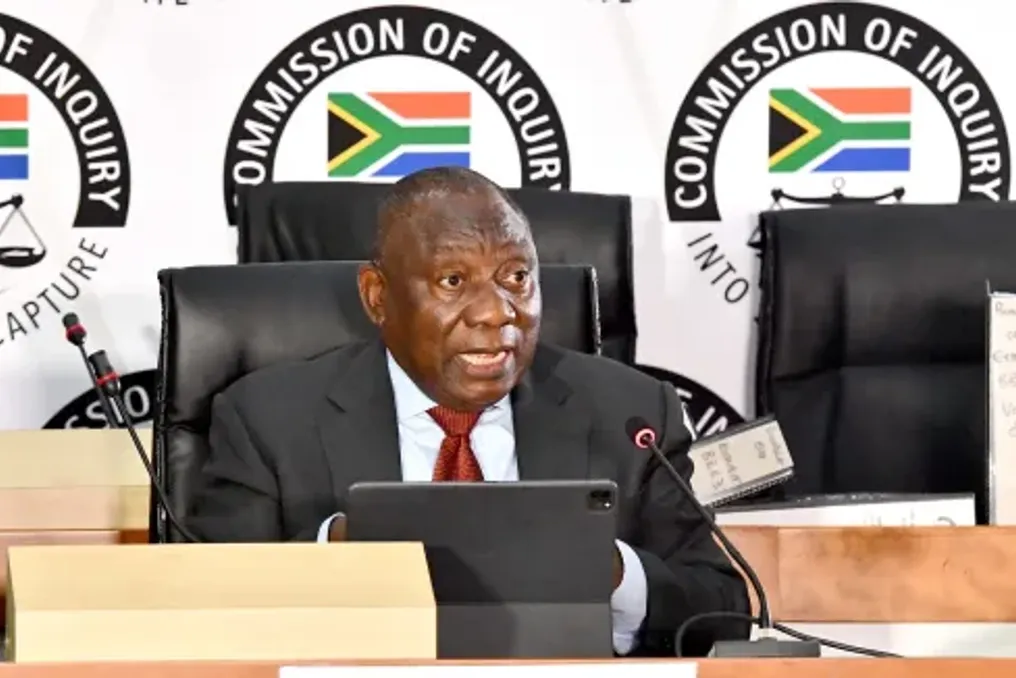
As the deadline for the Madlanga Commission approaches, critics are expressing concern that President Cyril Ramaphosa has not been summoned to give testimony before the retiring judge Mbuyiseli Madlanga. Authors argue that without the president's critical evidence, the commission's final report will be incomplete.
The Madlanga Commission, operating ahead of its final deadline of November 16, 2026, has highlighted serious issues within the criminal justice system. Over nearly a year, the commission has revealed how complex criminal syndicates allegedly infiltrated the upper echelons of the South African Police Service (SAPS), the National Prosecuting Authority (NPA), and even State investigative and intelligence agencies. The commission's work has been noted for positive aspects, including directions for criminal investigations and staff dismissals, yet a significant gap remains in the narrative.
This gap is linked to the absence of testimony from one individual whose constitutional duties place him at the center of the current crisis—President Cyril Ramaphosa. Since August 2025, the United Citizens Movement (UCM), led by the Progressive Citizens Congress (PCC), has regularly corresponded with the commission, insisting that the president be summoned as a key witness. However, their appeals have met bureaucratic evasion, ignoring the issue of presidential accountability.
The president is a central witness who previously appeared before the commission. The commission's charter explicitly requires an investigation into the role of 'any member of the national executive body responsible for the criminal justice system.' Although the rules allow for the summoning of any witness, Ramaphosa, who is subject to the State Security Agency (SSA), remains overlooked. This silence raises serious questions, especially in light of disputes over the dissolution of the Political Kill Team (PKTT).
Dismissed Police Minister Senzo Mchunu stated that he discussed with the president the intention and decision to liquidate the PKTT in 2024, and that Ramaphosa agreed to it. Dismissed National Commissioner of Police Fanny Masemola reported meeting with Ramaphosa in February 2025 to express dissatisfaction with Mchunu's directive to close a successful unit. Masemola claims the president appeared 'defeated' by this decision and seemed unaware of it. These versions contain internal contradictions.
The question arises: did the president deliberately pretend not to know about the dissolution of the effective PKTT when speaking with Masemola? If so, why? If Mchunu is correct, why would the head of state agree to the liquidation of a police unit fighting crime? These questions cast doubt on whether the president is aiding crime in the country. Without the president's testimony, there are only mutual accusations that serve the interests of the criminal networks that the PKTT is trying to expose.
Since the SSA reports directly to the president, and he receives weekly intelligence briefings, it is unlikely that he was unaware of corruption in the Security Sector before Lieutenant General Nlanhla Mkhwanazi made statements on July 6, 2025. If the president knew about the problems, why did he not take steps to stop them? These questions can only be resolved through the president's sworn testimony.
Ramaphosa's tenure is characterized by reliance on expensive investigative commissions that promise accountability but deliver little. A pattern is observed: extensive evidence, detailed reports, and then nothing. Real consequences and prosecutions remain minimal. Citizens are tired of this 'commissionalism,' which seems designed to manage political crises and stall time rather than ensure justice.
The president's testimony is necessary to answer a fundamental question: is the Madlanga Commission a genuine instrument of accountability or merely another means of protecting influential figures and maintaining the status quo. The investigation should not be limited to rank-and-file employees and dismissed generals; it must reach the highest levels, including the SSA director-general and the president. The public demands the truth from the president under oath.
The commission must use the full extent of its power to summon Ramaphosa before it is too late. Failure to do so will confirm the public's worst fears that in South Africa, there is one law for the powerful and another for ordinary citizens. The commission's final act will determine whether it becomes a triumph of justice or a tragedy of deliberate omission.
The Chairman of the Madlanga Investigation Commission, Mbuyiseli Madlanga, is leading the commission's work by carefully examining testimonies and evidence. During this week, serious questions arose regarding the reliability of police data and the handling of a large consignment of cocaine.
Over five days of hearings, the commission reviewed conflicting police records related to the disappearance of cocaine from the Hawks evidence warehouse. The legal basis for high-profile corruption investigations was also discussed, and strict deadlines for information disclosure were set before Karim attempted to postpone his testimony.
A significant portion of Friday's sessions was dedicated to Hawks assistant officer Mbongeleni Felix Mpangase. His two-day testimony concerned the confiscation of 27 kg of cocaine in June 2021 from a transport container at the CHS warehouse in Isipingo. The investigation seeks to determine what happened to the drugs after they were transferred to the Hawks evidence warehouse in Port Shepstone, where they subsequently went missing.
Mpangase, who previously worked in the Hawks Organized Crime Investigation Unit in Durban and now handles cold cases in Pietermaritzburg, admitted that despite over ten years of experience investigating street drug crimes, he had never been involved in a large-scale container interception. He told the commission: 'I have never been present at an interception of drugs of this magnitude from start to finish, neither at the port nor at the container terminal.'
Colonel Hawks Gavin Jacob's testimony regarding the disappearance of R200 million worth of narcotics stored in Hawks offices in KZN was thoroughly scrutinized by the commission. Mpangase stated that he requested Lieutenant Colonel Gavin Jacob to accompany the operation because he lacked experience in such intelligence-led operations. Mpangase explained that he stated the information required someone experienced and familiar with such operations.
Chairman Mbuyiseli Madlanga repeatedly questioned why Jacob bypassed experienced toxicologists in favor of staff without container interception experience. Mpangase replied that Jacob 'was not on good terms' with two specialized drug units but could not explain why other experienced members of his own unit were also not involved.
As his testimony continued, the focus shifted from his lack of experience to the accuracy of the official records documenting the operation. Commissioners questioned discrepancies between Mpangase's investigation log, SAPS registers, witness statements, and oral testimony, expressing concerns that some records might be false or misleading. One of the most acute points concerned SAPS register entry 13, which stated that the cocaine was issued 'for investigation,' whereas commissioners heard it was delivered directly to Hawks offices in Port Shepstone for storage. Co-commissioner Ceci Baloyi stated to the witness: 'You took them. You signed their issuance. You say they are being sent for analysis. We know that is untrue.'
Madlanga continued: 'The consequence of this... is that you entered a false record knowing it was false.'
Commissioners also explored contradictory accounts of who was present during the container search when forensic evidence was collected, who retained the investigation file, and how entries appeared in Mpangase's investigation log while Jacob was officially on leave. Although Mpangase conceded that he omitted some information from earlier statements, he denied intending to mislead the commission, asserting: 'If I omitted something, it might have been a mistake. There is nothing untrue in what I wrote.'
Another major development this week was the expected appearance of Karim, whose testimony was postponed after he submitted a medical certificate confirming his inability to appear before the commission. The situation took a dramatic turn when Head of Evidence Advocate Matthew Chaskalson SC revealed that informant reports alleged Karim was seen dining with a retinue at a West Cape mall and attending another social event, despite claiming severe illness. Chaskalson reported that the mall allegations were later corroborated by independent eyewitness accounts, prompting the commission to request CCTV footage, hospital records, and information from Karim's attending physician. The commission also noted that Karim has yet to provide information previously requested under notifications pursuant to Regulation 10.6, including details on auditors and financial reports pertaining to several of his companies.
Karim, a businessman from North West, came under intense scrutiny after allegedly being spotted dining at a Cape Town mall after requesting exemption from the Madlanga Commission due to health reasons. On Friday, his application for a postponement of testimony was deferred until the following week as commissioners decided they needed time to respond to documents submitted just hours before the scheduled hearing. Under the ruling, the commission must disclose mobile phone geolocation data, call data, and any other investigative materials it intends to rely on by next Friday. Karim is also seeking closed-door hearings for the postponement, arguing that the application contains confidential information regarding his health, family safety, and private affairs.
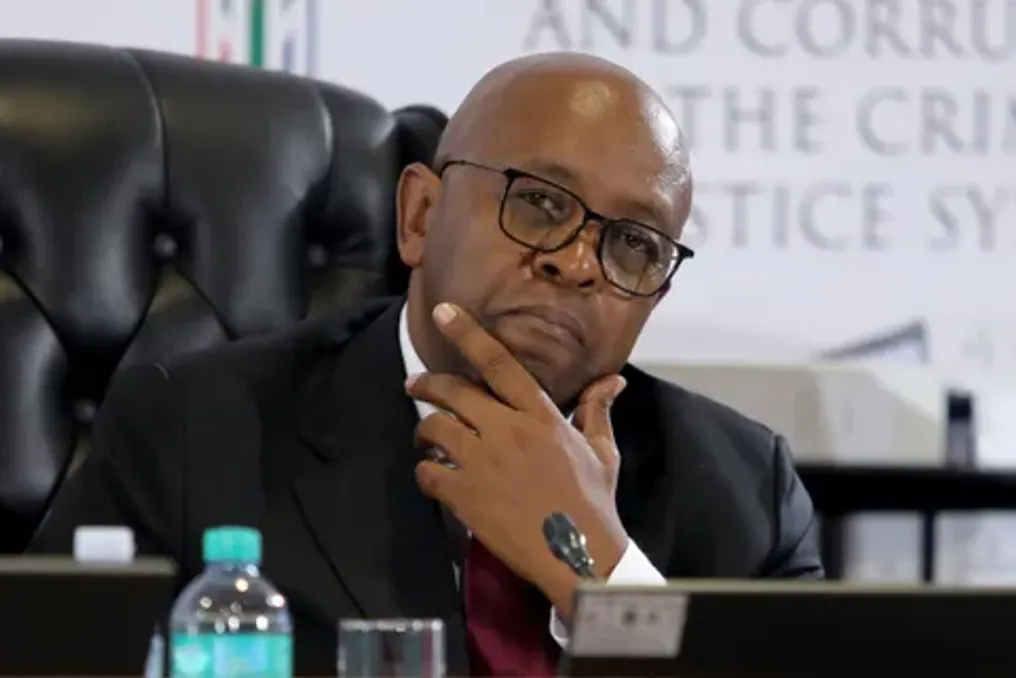
Earlier this week, attention was focused on the Independent Directorate Against Corruption (IDAC), where Senior Investigator Brian Padayache defended investigations that led to the arrests of Intelligence Service head Lieutenant General Dumisani Humalo and other senior officers. IDAC Senior Investigator Brian Padayache rejected claims that he was part of an alleged network linked to Major Ferroz Khan, stating that he had never known about any 'Khan cabal' operating within SAPS or IDAC. Padayache insisted that the appointment of civilian Dineo Mokhele to a senior position in the Intelligence Service was aimed at 'capturing' the unit. However, commissioners repeatedly questioned his legal justification and the investigators' sufficiency of evidence when bringing corruption charges. He also defended IDAC's decision to investigate criminal complaints filed by National Colored Congress leader Fadiel Adams, despite the SAPS Legal Services opinion that the allegations were too vague and largely based on hearsay. Padayache argued that investigators had a duty to conduct further inquiries rather than dismissing complaints, as they contained leads requiring examination. The commission is expected to resume work on Monday with a new witness.