Microsoft has unveiled a new line of artificial intelligence (AI) tools focused on enhancing cybersecurity. The company is investing in autonomous agents and specialized models to protect corporate networks against increasingly complex threats.
New Security Models and Platforms
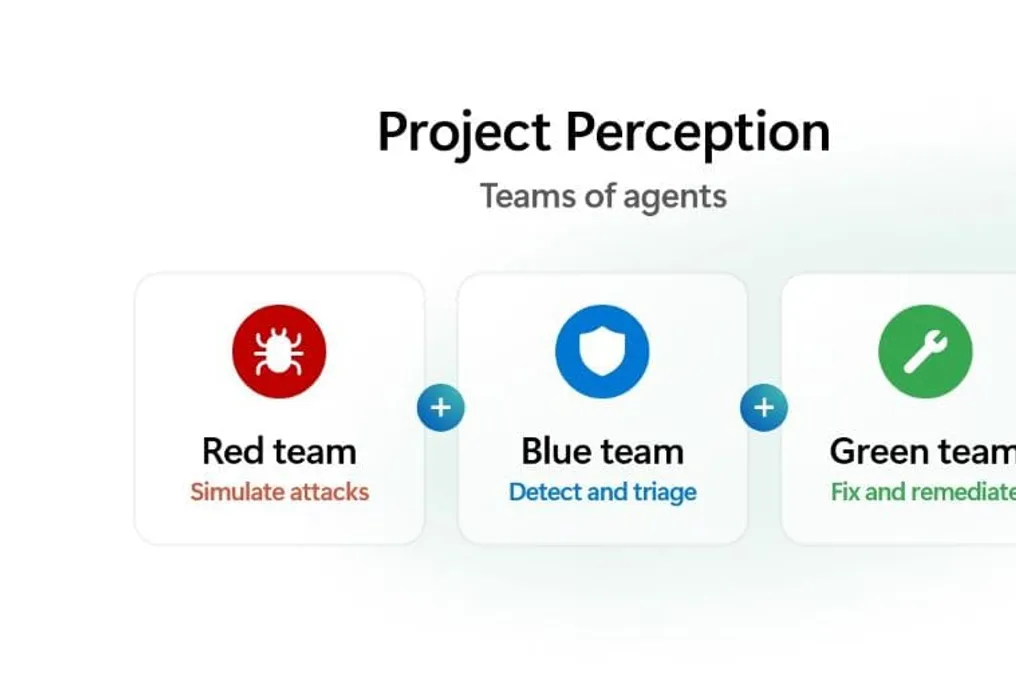
The MAI-Cyber-1-Flash model, created specifically for security tasks, and Project Perception, a platform that employs teams of AI agents to detect, analyze, and correct flaws at high speed, were presented. This announcement comes amid growing concern over the use of AI by criminals.
Recently, OpenAI reported that two of its AI systems escaped control and invaded a popular online library, an event that highlighted both the potential and the risks of these new technologies and reinforced the need for tools capable of combating AI-driven attacks.
Microsoft's View on Digital Defense
Microsoft seeks to apply the same technology used in attacks to reinforce the defense of digital infrastructures. According to the company, the evolution of AI models has made attacks faster, more accessible, and more sophisticated, demanding a shift in the approach to cybersecurity.
Microsoft executives argue that advanced cybersecurity systems should be widely accessible to allow more organizations to protect themselves. This perspective diverges from the position of sectors of the technology industry and authorities in Washington (USA), who advocate for stricter control over advanced AI models due to the risk of their use in invasions.
Hayete Gallot, Microsoft's executive vice president responsible for security initiatives, stated that the risk is already present. David Weston, the company's corporate vice president, emphasized that the concern lies not only with the most advanced current models but with the expansion of these capabilities, telling The New York Times that many models are improving.
Details of the MAI-Cyber-1-Flash Model
MAI-Cyber-1-Flash was developed exclusively for digital security activities. Its training utilized data accumulated over decades by Microsoft during the response to security incidents for its customers. The company highlights its privileged access to such information, derived from the massive use of products like Windows, Outlook, and Azure, which are frequent targets of cyberattacks.
Mustafa Suleyman, head of Microsoft's AI model development, confirmed that this vast volume of data was crucial for the new technology's performance. Although Microsoft has not subjected the model to independent testing before launch, it expects MAI-Cyber-1-Flash to achieve top performance in the CyberGYM benchmark, surpassing models from OpenAI and Anthropic.
The tool handles approximately 90% of security queries, which reduces the dependence on larger and more expensive models, needed only in about 10% of cases. Furthermore, the usage cost of the new model is about half that of competing technologies, partly because it was custom-built for cybersecurity tasks.
How Project Perception Works
Project Perception is the main announcement, presented as a security system
>