Enigma has successfully raised $71 million in a seed funding round, with the funds intended to accelerate the creation of foundational models designed for robotics.
Enigma has successfully raised $71 million in a seed funding round, with the funds intended to accelerate the creation of foundational models designed for robotics.
Josh Matter, CEO of Enigma, noted that this investment is a strong confirmation of confidence in the company's mission—bridging the gap between the complex physical world and the increasingly digital reality. The round was co-led by Index Ventures and Ribbit Capital, and supported by Conviction Partners and several prominent figures from companies such as OpenAI, Anthropic, DeepMind, xAI, Cognition, and Wiz.
This round concludes just 11 months after the company's founding and marks one of the largest seed rounds for a company operating in the field of physical AI. The secured funds will be used to significantly expand the team of researchers and engineers, increase computational power, and implement AI-based technologies across more operational environments.
The new funding will allow Enigma to strengthen its AI research and expand the infrastructure necessary for training increasingly sophisticated robotics models. The company also plans to conduct larger-scale real-world deployments to gather valuable interaction data, which will help improve future versions of its technologies.
Enigma believes that one of the main challenges in the industry lies in the methods of human-machine interaction. The company asserts that robots become significantly more useful when people can instruct them naturally, without the need for complex programming or lengthy demonstrations.
To realize this vision, Enigma has developed over 100 patented robotic systems operating at facilities in California and Israel. These systems perform various demonstration tasks, including painting, fencing exercises, and simple laboratory experiments. The company has provided access to many of these robots to online users, allowing people worldwide to interact with them remotely. According to Enigma, such interactions generate valuable training data that contributes to improving both user interfaces and core AI models.
Enigma's approach focuses on understanding how ordinary users attempt to control robots naturally. Instead of relying solely on expert demonstrations, the company studies various communication methods. According to the company's calculations, if robot training is too burdensome, consumers will prefer to perform tasks themselves rather than use automation. This research is intended to overcome one of the biggest hurdles to the adoption of robots in the market.
One advantage of the company's platform is that its systems are capable of working with various types of robotics, rather than being tied to a single manufacturer. This strategy, independent of specific hardware, may allow businesses to integrate intelligent automation without replacing their existing robotic fleet.
Investors view Enigma's research-oriented strategy as a major opportunity in the rapidly evolving physical artificial intelligence market. Rather than rushing commercial products, the company is building its own datasets on human-robot interaction for future technological development. It is forming datasets that enable more natural interaction between humans and robots through artificial intelligence. The company is confident that this knowledge will become its competitive advantage as robotics adoption accelerates across various industries globally.
The tech startup Genius AI has raised $44 million in investment to capitalize on the growing demand in the personal interaction-focused service economy. With this Series D funding round, the company's valuation reached $1.15 billion.
Venture firm Lux Capital led the round. Other investors included Bessemer Venture Partners, Imaginary Ventures, L Catterton Growth, 2048 Ventures, and StepStone Private Ventures. These funds will allow Genius AI to shift its focus from beauty booking software to autonomous artificial intelligence tools for a wider range of in-person services.
The company, formerly known as GlossGenius, was founded in 2015 by identical sisters Danielle and Leah Cohen-Shohet. They initially created GlossGenius to help salon owners, aestheticians, and spa operators manage their daily operations. Danielle independently learned programming and wrote the initial code, and over time, the software became a dominant force in the market, helping small businesses process payments, book clients, and promote their services.
The company is now changing its name to Genius AI, signifying a broader mission. As Genius AI, the platform will support all in-person professionals. It is planned for use in medical spas, physical therapy centers, fitness studios, injections, and health clinics.
The physical service economy in the United States includes about eight million businesses generating over $2 trillion in annual consumer spending. Although studies show that business owners spend nearly 36% of their working time on administrative tasks, Genius AI aims to completely eliminate this bureaucratic burden. The platform goes beyond simple assistance tools and transforms into an autonomous AI agent capable of handling complex tasks end-to-end, freeing up business owners to interact with clients.
The company demonstrates impressive growth and operational scale. Currently, the system is used by over 125,000 businesses across half of the US zip codes. Genius AI reports that its platform is approaching $200 million in annual revenue. To date, the company's tools have helped clients save over 112 million hours of administrative work. To deepen penetration into the healthcare sector, the company has added full HIPAA compliance, allowing physical therapists and clinical specialists to securely store sensitive patient data. This gives Genius AI a significant advantage over traditional tools lacking privacy protection. As artificial intelligence automates office work, human care becomes even more valuable, as skilled professionals like masseuses and trainers provide care that computer code cannot replicate. The new funding is planned to be used to expand software development and increase the engineering team.
Gritt has successfully raised $26 million in investments that will be used to scale infrastructure automation using artificial intelligence. Obvious Ventures led the round, with participation from Union Square Ventures, Active Impact Investments, and existing investors, including First Round Capital, Climactic, Congruent Ventures, and VSC Ventures.
With this new injection of capital, Gritt's total funding has reached $32.4 million. The company plans to use the acquired capital to expand its operations and further develop an intelligent robotic platform designed for complex outdoor construction environments.
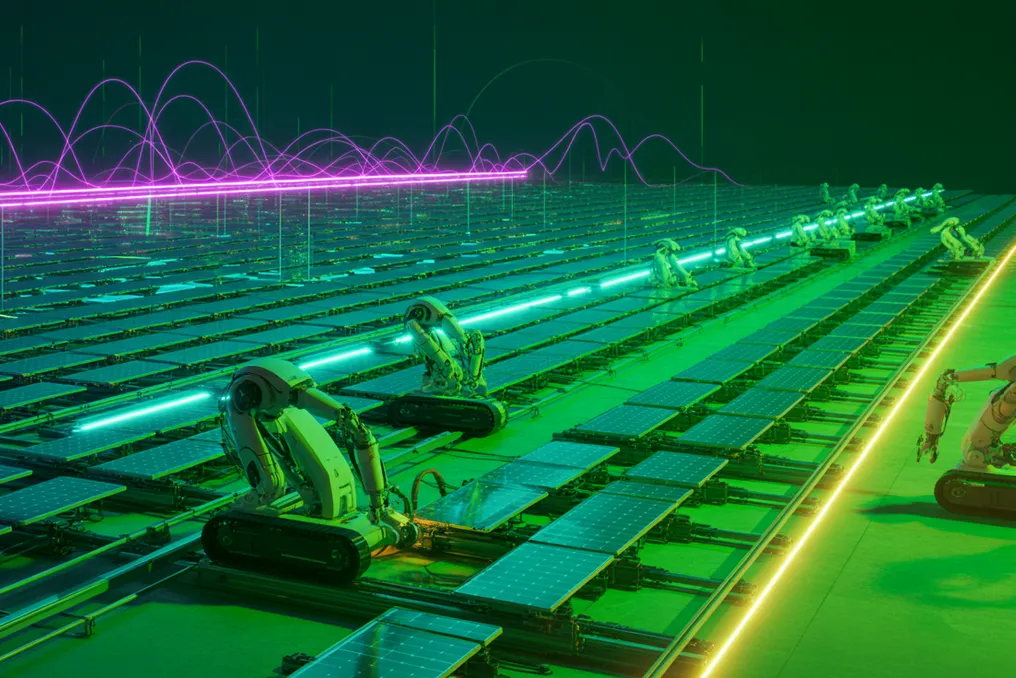
Founded by Punith Puri and Vishal Dugar, Gritt develops robotic systems to automate construction equipment. Its AI-based system can autonomously perform tasks such as material handling, assembly, placement, inspection, and project planning. Gritt's technology integrates with existing equipment on sites, allowing contractors to apply automation to their machinery and ensuring safe collaboration between robots and humans.
CEO Punith Puri noted that automating outdoor construction is more complex due to changing weather conditions, terrain specifics, and other unforeseen factors. He emphasized that their 'Physical AI' is specifically designed for such tasks, enabling the acceleration of construction for solar, bridge, and road projects, as well as large infrastructure projects like data centers, with robot support.
The company's platform continuously improves through learning from every completed project. Tasks that previously required months of system setup can now be adapted in just a few days, allowing robots to perform high-precision work on various construction sites. In addition to automation, Gritt collects real-time data from sites, including information on completed work, material movement, and changes in site conditions. This information helps project managers make faster decisions and optimize schedules.
The company has already implemented its systems in several large American construction firms involved in industrial-scale solar panel installation. According to Gritt, their robots have independently installed tens of thousands of solar panels without a single failure. Demand for automation is supported by industry challenges: it is expected that over 40% of the US construction workforce will retire by 2031, and the sector's overall productivity is declining, forcing companies to turn to AI and robotics to solve labor shortages.
Obvious Ventures stated that Gritt is creating a new category of physical AI by implementing intelligent automation in one of the most demanding industrial environments. Investors believe that the company's ability to learn after each deployment gives it a long-term competitive advantage. Gritt's long-term goal is to transform AI into a comprehensive object condition analysis platform that tracks resource usage, identifies potential workflow obstacles, and assists project managers in making real-time decisions. Ultimately, the startup aims to reduce manual labor for construction workers and allow contractors to accelerate the implementation of large-scale infrastructure projects, believing that intelligent robotics will become an integral part of modern construction.
Inspecting the internal parts of a ship's hull, fuel tank, or nuclear reactor is among the most risky tasks in heavy industry. Typically, such work requires shutting down equipment, erecting scaffolding, and sending a person into a confined, dangerous space where fatal accidents are common.
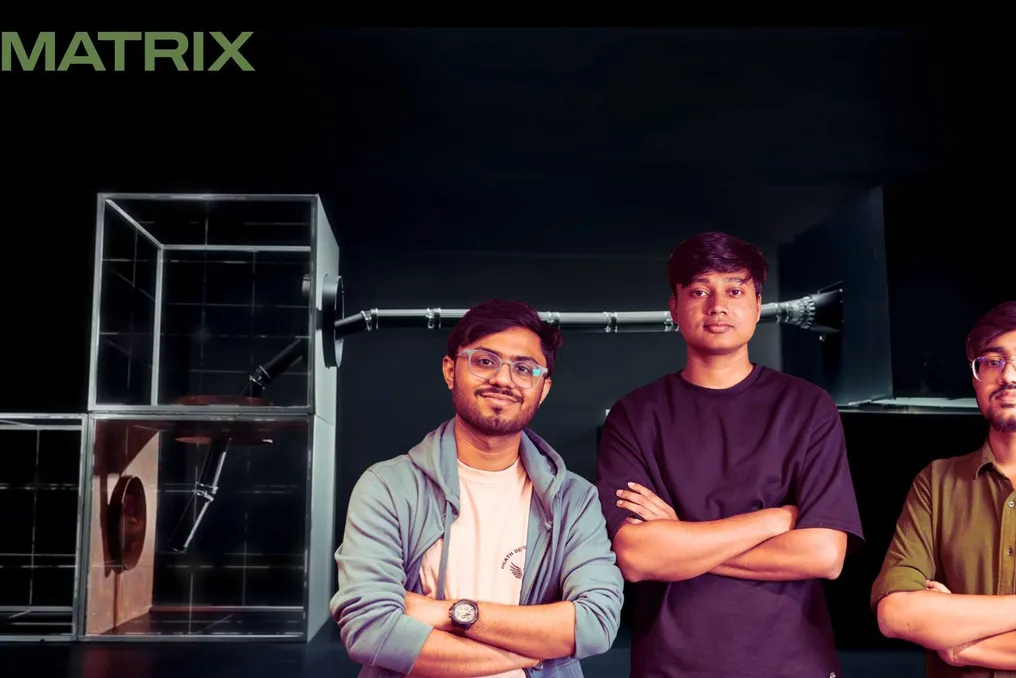
Startup Armatrix, based in Bengaluru, is creating robots to perform these tasks. These machines are equipped with snake-like manipulators that are flexible enough to penetrate narrow, winding areas inaccessible to rigid industrial robots.
The existing method is slow and expensive. Taking a fuel tank or reactor out of service halts production during inspection. For a long time, the industry viewed maintenance as a reactive measure performed after a failure, rather than a preventive one.
The company was founded in 2024 by three engineers from IIT Kanpur: Vishant Dave, Prateek Awasthi, and Ayush Ranjan. Dave, who serves as CEO, defines the company's goal as transitioning from costly reactive maintenance to a proactive model that eliminates downtime and human entry into hazardous zones.
The core product is a hyper-redundant robotic manipulator ranging from three to five meters in length, 50 to 150 mm wide, and possessing over 22 degrees of freedom. This flexibility allows it to navigate through a series of hatches located at right angles to each other, reaching places that humans or traditional manipulators cannot access.
The construction is entirely mechanical, consisting of links, joints, and cables, while the motors, electronics, and computing equipment are housed in a separate sealed unit, remote from the danger zone. Artificial intelligence operates the hardware, providing real-time route planning and digital twin simulation, allowing the manipulator to adapt while moving through unpredictable industrial layouts.
The manipulator is designed for active operations, not just inspection. Its tip accepts modular end-effectors—tools that can be swapped for different tasks, enabling the same machine to conduct surface inspection in one cycle and perform repairs in another.
Armatrix has developed a working prototype of a three-meter manipulator. The company plans to deploy its robots in two ways: leasing them as a service to most clients, and selling them directly to customers such as the defense industry, where intellectual property and security regulations make leasing impractical.
The startup targets the shipbuilding, oil and gas, nuclear energy, and aviation sectors, where inspection and maintenance still rely on human entry into confined spaces. The market is vast: global spending on robotic maintenance reached approximately $41 billion in 2023 and is projected to reach $150 billion by 2032.
A small number of companies worldwide are developing robots for this specific problem, and even fewer are located in India. Armatrix argues that a domestic system can serve Indian shipyards and refineries more cheaply than imported counterparts while maintaining the confidentiality of defense work within the country.
Currently, Armatrix is pre-revenue, transitioning from prototypes to initial pilot implementations with industrial clients, and the company has about 13 employees. The immediate goal is to demonstrate the platform's functionality in real inspection assignments before expanding the manipulator's scope of application.
In February 2026, the company raised $2.1 million in a seed round led by pi Ventures, with participation from Inuka Capital, Boundless Ventures, Boost VC, Turbostart, and gradCapital. These funds will be used to complete the manipulator's development, expand the engineering team, and conduct initial pilot projects. The founders' broader goal is to create globally competitive industrial robots from India.