Itaú Unibanco is integrating artificial intelligence into its operations, announcing the adoption of generative AI in its official application, named ia.i, on July 27th.
Itaú Unibanco is integrating artificial intelligence into its operations, announcing the adoption of generative AI in its official application, named ia.i, on July 27th.
With this new feature, customers will be able to use a text field to ask questions and receive detailed answers, which will include suggestions for new financial products and services. The institution emphasizes that 76% of its customers already intensively use digital channels.
João Araújo, Director of Strategy, Customer Lifecycle, and Artificial Intelligence, highlighted that previously there was no dedicated space for the customer to interact directly with the institution, preventing them from describing their needs. Now, the experience within the application is automatically built, presenting data, graphs, and tables according to the user's individual demand.
The consumer can type any request, such as asking about their average ticket, requesting help to analyze monthly expenses with Uber by comparing periods, asking for a comparison between cards like The One and Mastercard Black, or questioning what their financial habits reveal about them.
Access to ia.i is being gradually released to 300 thousand customers starting from this date. Tecnoblog has been following this digital transformation for over two years, and this update expands the conversational AI project, allowing the user to initiate transactions similarly to how they do with assistants like Alexa and Siri.
It is relevant to mention that Itaú's WhatsApp has allowed Pix transactions initiated by text or audio since 2024, and Itaú Emps offers financial consulting for small businesses. Since the implementation of AI, there has been an increase in the problem resolution rate in customer service, rising from 20% to 30%.
Carlos Eduardo (Cadu) Mazzei, the bank's technology director, explained that the data gathered by various areas of Itaú were structured and began to be treated as an internal product of the company. He also emphasized that there are limitations and legal aspects that must be strictly observed, given the high level of regulation of the banking sector in the country.
The bank developed an internal platform where AI solutions are created to serve different channels and areas. Itaú confirmed the use of both open and closed models and maintains contact with large industry companies, including OpenAI, Anthropic, Google, and AWS. The Itaú Intelligence project includes the use of short-term and long-term memories and the orchestration of multiple models.
Since the creation of this platform, Itaú has registered a 65% decrease in costs related to generative AI. The Itaú Institute of Science and Technology (ICTi), which has over 195 researchers, contributed to the bank's evolution towards a data-driven model.
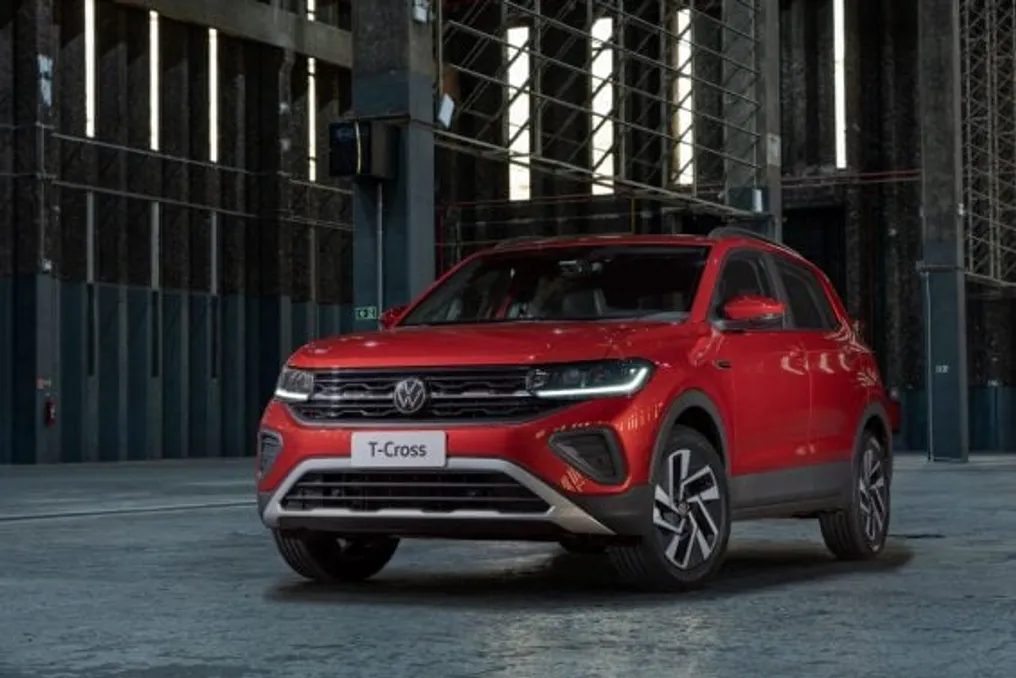
The Volkswagen T-Cross, which entered the 2027 lineup, has received a significant mechanical modification: the adoption of an eight-speed automatic transmission. This change was confirmed by the manufacturer and reported by journalist João Anacleto.
The eight-speed transmission was implemented exclusively in models equipped with the 1.0 turbo engine. The Highline and Extreme versions, which use the 1.4 turbo engine, retain the six-speed gearbox. Currently, the T-Cross is the only vehicle to receive this upgrade, as the Nivus, also in the 2027 lineup, remains with the previous transmission.
The performance data for the 2027 T-Cross available on the manufacturer's website remains unchanged compared to the previous line, showing acceleration from zero to 100 km/h in ten seconds and reaching a top speed of 192 km/h. Although fuel consumption has not yet been disclosed and may have changed, the eight-speed transmission installed in the compact SUV is the Aisin AWF8F35, known internally by Volkswagen as AQ300. This same gearbox is already used in models such as the Taos, Caoa Changan CS75, and Volvo vehicles.
In addition to this technical update, the 2027 T-Cross has not undergone other structural changes; the equipment set remains the same, although the limited editions Seleção and Rock In Rio have been discontinued. The Volkswagen T-Cross consolidated its position as the best-selling passenger car in Brazil in June and holds the title of best-selling SUV in the country since 2023. Its last revision was a facelift in the 2025 line, which introduced a redesigned dashboard and improvements in finishing.
The transmission replacement should be progressively extended to other models equipped with the 200 TSI engines. Volkswagen had already announced the nationalization of the 1.5 TSI Evo as a replacement for the 1.4 TSI, which may justify the retention of the six-speed gearbox in the more powerful versions of the T-Cross.
Apple concluded the stock market session this Monday, the 27th, as the corporation with the largest global market value, surpassing Nvidia. This event represents an inversion in positions between the iPhone manufacturer and the leader in semiconductors for artificial intelligence (AI).
Nvidia's shares suffered a 5% decline on the day, which reduced its market capitalization to US$ 4.77 trillion (equivalent to R$ 24.5 trillion). This drop occurred amid a general decline in AI stocks, driven by investor apprehension regarding the high costs associated with expanding AI infrastructure.
In contrast, Apple's shares showed a 1% increase, raising its market value to US$ 4.95 trillion (R$ 25.4 trillion). This rise comes just before the company's quarterly results announcement, scheduled for Thursday, the 30th.
Previously, Nvidia had held the title of the world's most valuable company since June 2025, a period when it had taken over from Microsoft. In October, the chip manufacturer momentarily reached a market capitalization of US$ 5 trillion (R$ 25.6 trillion).
Analyzing the accumulated performance for 2026, Nvidia's shares registered a modest advance of only 4%, while Apple's stocks demonstrated significant growth of 24%.
Investors have favored Apple's approach, which opts not to invest massively in capital expenditures aimed at AI, preferring to rent computing capacity instead of building its own infrastructure. Despite this, even with Nvidia's sales growing expressively for the third consecutive year due to AI, some investors are redirecting their focus from graphics processing units (GPUs) to data center infrastructure components, such as memory chips produced by companies like Micron, SK Hynix, and Sandisk.
Apple is scheduled to present its third fiscal quarter results on Thursday. On that occasion, the company should report for the first time the financial impact caused by the global shortage of memory chips driven by AI, a situation that forced the company to raise the prices of the Mac and iPad in June.
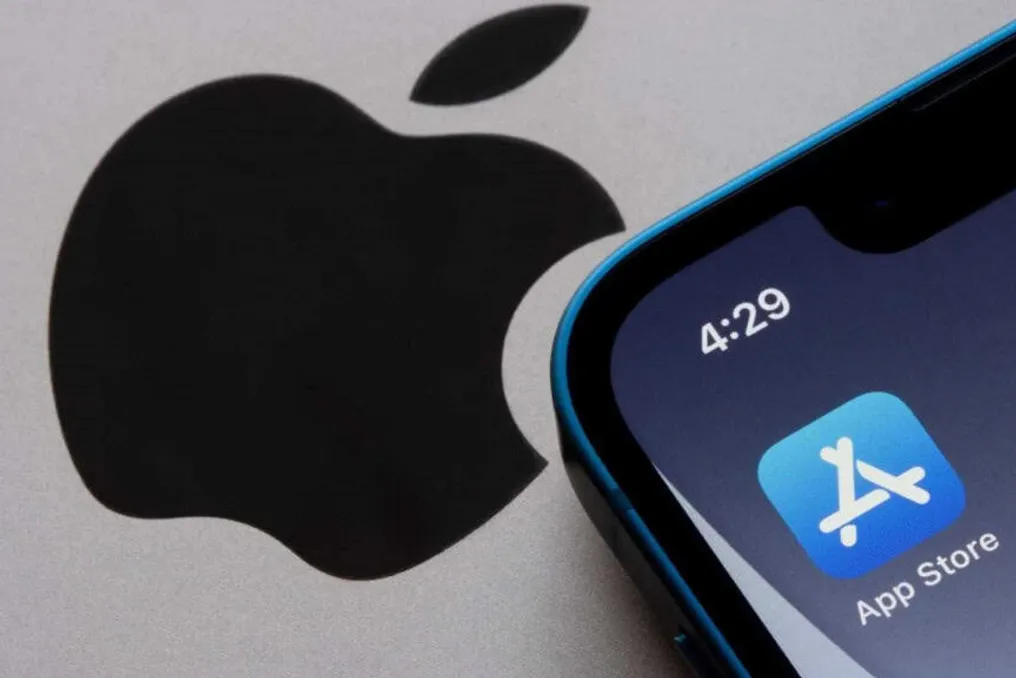
A fraudulent scheme involving a fake cryptocurrency wallet has put the security of the Apple App Store under judicial scrutiny. Three individuals claim to have suffered losses exceeding US$ 1.8 million (equivalent to about R$ 9.18 million) after installing deceptive software.
According to information released by Macrumors, the lawsuit filed against Apple questions the effectiveness of the store's review system in blocking access to an irregular application, reigniting the debate over the security guarantees offered by the corporation.
The lawsuit was filed in the Northern District of California. The plaintiffs report downloading an application called Sparrow Wallet, which aimed to imitate an established Bitcoin wallet. Although the official Sparrow Bitcoin Wallet was not available for iPhone, consumers chose to install the fake version through the App Store and subsequently transferred their Bitcoins to this fraudulent platform.
The financial damages detailed in the petition include: James Ramirez, who claims to have lost approximately US$ 875 thousand (about R$ 4.46 million); Christopher Ellis, who reports a loss of about US$ 840 thousand (approximately R$ 4.28 million); and Jalen Delgado, who states having lost about US$ 120 thousand (approximately R$ 612 thousand).
The plaintiffs argue that Apple failed by allowing such an application to reach users. Additionally, the accusation uses the company's own discourse as support, which emphasizes the control of the App Store as an extra layer of protection.
The controversy goes beyond the scam itself, as it questions one of Apple's argumentative pillars in discussions about the functioning of the App Store: the premise that a closed store, with prior app verification, provides greater security. The action points out that the company generated an expectation of trust by stating that programs available on the platform are subjected to checks before being released.
The lawsuit also mentions criticisms made by Craig Raw, creator of the Sparrow Bitcoin Wallet. The plaintiffs maintain that the developer had issued warnings that fake applications using the wallet's name remained accessible in the Apple store. The three users are seeking a jury trial, restitution of the lost amounts, and the implementation of more explicit risk alerts within the platform.
In a statement, the company declared that applications attempting to disguise themselves as others violate its guidelines and informed that it had taken immediate measures to remove them. The company also stated that, at the moment, there are no fake copies of the Sparrow Wallet available on the App Store.
Apple also mentioned an internal analysis of its ecosystem, indicating that it rejected over 371 thousand app submissions in 2025 that were copies of other programs, spam, or intended to deceive users. This lawsuit forces the company to face a central question: if the strict control of the App Store is presented as a security benefit, incidents like this serve to contest the extent of that protection in practice.