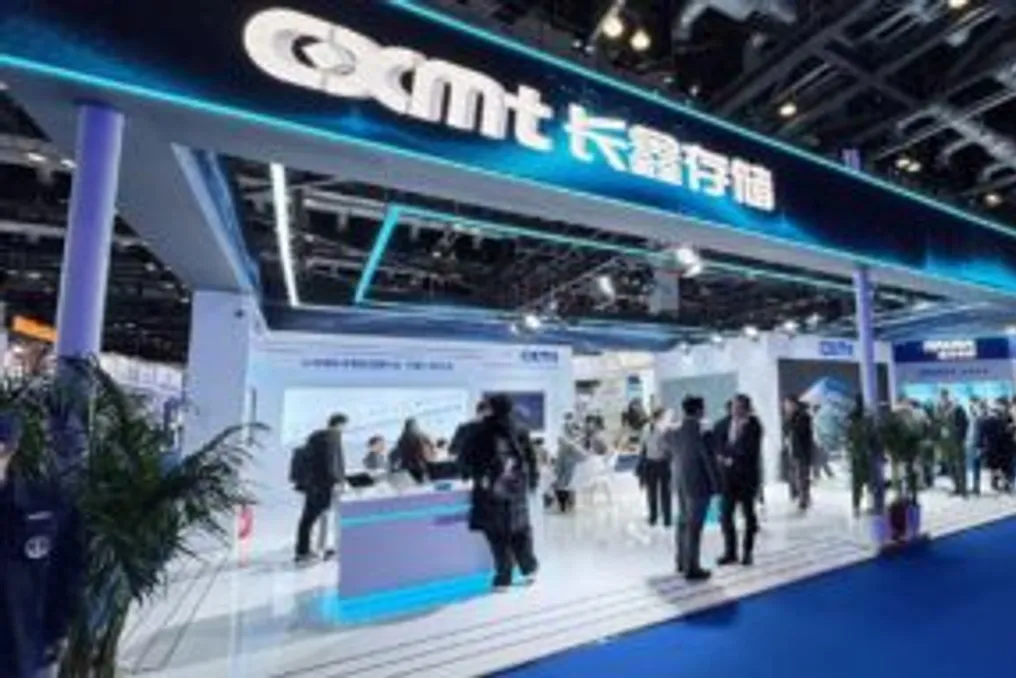
CXMT, the Chinese memory manufacturer, conducted its Initial Public Offering (IPO) on the Shanghai stock exchange this Monday, July 27th. The performance of its shares was notable, achieving an approximate appreciation of 470% around noon local time.
Chip Scarcity Scenario
This IPO success is largely attributed to the current context of memory chip shortages. CXMT, founded in 2016, is currently the largest memory chip producer in China, focusing mainly on manufacturing DRAM modules. This type of component is particularly scarce due to the rapid expansion of data centers dedicated to artificial intelligence applications.
The scarcity scenario has driven significant market values in leading industry companies, such as Samsung Electronics and SK Hynix, both Korean, and Micron, American. Micron, for example, temporarily surpassed Tesla and Meta in June 2026, reaching a market value close to US$ 1.4 trillion. It is relevant to note that these three companies hold about 90% of the global DRAM production, indicating a dependency, even from Chinese companies.
Chinese Market Expectations
Investor expectation is that CXMT can consolidate itself as a prominent Chinese representative in this competitive market. This positioning would not only strengthen the technological independence of the Chinese industry against the United States but could also establish the country as a global benchmark in DRAM chip production.
Company Financial Valuation
Headquartered in the Chinese city of Hefei, CXMT began its IPO at a price of 8.66 yuan per share but closed trading with each share trading at 49 yuan, representing an appreciation of approximately 470%. Due to this performance, the company was valued at 3.3 trillion yuan, equivalent to R$ 2.5 trillion.
Market analysts point out that CXMT's strong performance was partially influenced by the fact that only 7% of the shares were traded during the IPO, which intensified the demand effect on supply. However, this high demand reflects the hope that the company fulfills its role as the main Chinese player in the memory segment. The company itself has already announced that it will allocate the funds obtained from the IPO to research and development, as well as the expansion of its chip production capacity.