Binance Alpha is preparing to become the first platform to support trading of the AEON token (AEON). The official start of trading is scheduled for July 27, 2026, at 10:00 Coordinated Universal Time (UTC).
Binance Alpha is preparing to become the first platform to support trading of the AEON token (AEON). The official start of trading is scheduled for July 27, 2026, at 10:00 Coordinated Universal Time (UTC).
To celebrate this listing, Binance is launching an exclusive airdrop for users who have accumulated points. To participate, one must have a minimum of 245 Binance Alpha points. Each eligible user will receive a reward of 250 AEON tokens.
To receive the tokens, users must go to the Alpha Events section in their Binance wallet once the claim window opens. Binance has stated that if the airdrop pool is not fully distributed at the 245-point threshold, the required point level will automatically decrease by 5 points every 5 minutes until the pool is exhausted or the event ends.
The participation process involves several steps. First, open the Binance application and navigate to the Binance Wallet section. Next, find the event by going into Binance Alpha, and then into Alpha Events, to locate the official AEON (AEON) campaign when trading opens on July 27, 2026, at 10:00 UTC. Users must ensure they meet the minimum threshold of 245 Binance Alpha points (or the reduced requirement if the point system automatically decreases). After that, click 'Claim' to secure the airdrop, keeping in mind that this action will deduct 15 Binance Alpha points from the user's balance. It is important to confirm receipt within 24 hours, otherwise, the reward will be forfeited.
It should be noted that the reward is subject to a 'first come, first served' principle, and the pool may run out before the point requirement reaches the lowest level. It is also emphasized that AEON is an early-stage asset within Binance Alpha and is not available for spot trading on Binance; future spot listing is not guaranteed. Users are advised to follow official Binance channels for updates.
AEON is a universal cryptocurrency settlement layer designed to connect crypto liquidity with traditional payment systems. According to CoinMarketCap, the protocol is developed to enable seamless payments to sellers, whether they are regular users or autonomous artificial intelligence agents. This allows for online cryptocurrency spending as easily as offline spending.
AEON aims to eliminate the complexity of navigating between different blockchains, exchanges, and wallets. The protocol's infrastructure manages all processes in the background, ensuring intelligent payment routing, instant asset conversion at the point of sale, and real-time settlement verification for sellers.
The AEON QR Pay system integrates with major crypto exchanges and wallets. The advantage is that making a purchase does not require locking funds or transferring them to a separate AEON account. The service supports payments to over 50 million merchants worldwide, covering emerging markets including Vietnam, the Philippines, Nigeria, and Brazil.
AEON is designed not only for humans but also for autonomous AI agents. Within established permission limits, AI agents can independently pay for goods and services, allowing for the automation of workflows such as booking flights and hotels, purchasing data streams, or accessing paid developer APIs.
The maximum total supply of AEON tokens is 1,000,000,000. The protocol operates on the BNB Smart Chain (BSC), and the contract address is 0x277Add739C6E0477616948357Af9e79FE1Ec9B80. Users are reminded that Alpha assets carry higher risk and volatility compared to tokens already listed on the Binance spot market, so they must conduct their own research (DYOR) before participating.
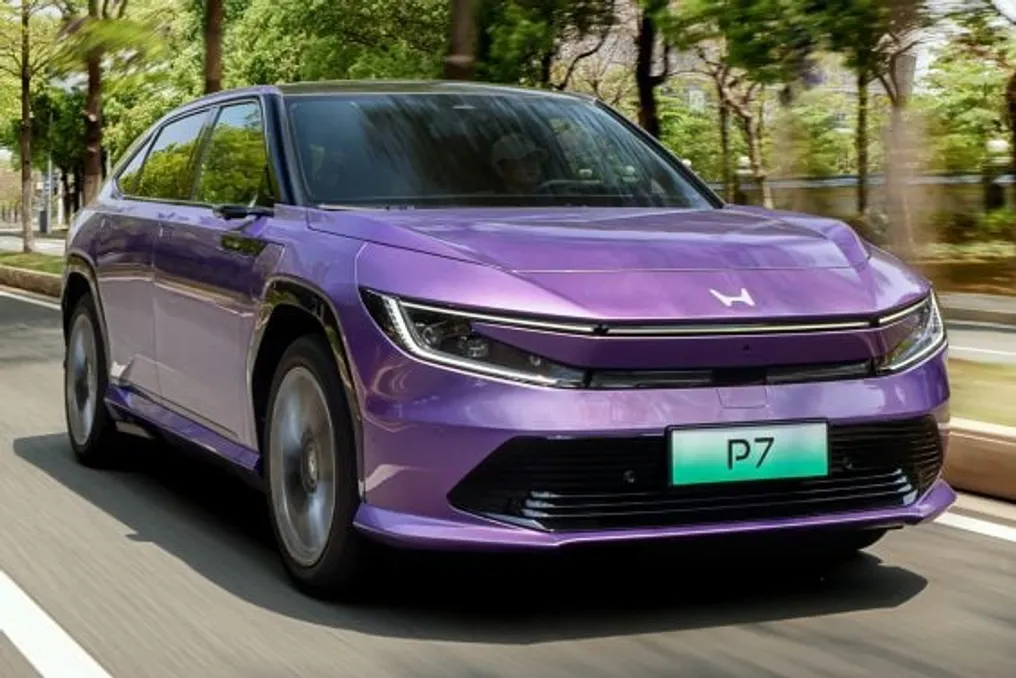
Honda and the Chinese state-owned group GAC have formalized the renewal of the GAC Honda Automobile contract, a collaboration that the Japanese automaker has maintained in China since 1998. This new agreement, announced by Honda China on July 20, extends the partnership's validity until 2038, maintaining a 50% equity split for both parties.
The initial contract, set to last 30 years, would have ended in 2028. With the renewal signed in early July, ten years are added to this term, totaling twelve years if counted from the signing date. This extension is significant because there were recent market speculations that Honda might be withdrawing from China.
Doubts about Honda's permanence were based on financial results: in the first half of 2026, GAC Honda recorded deliveries of 68,318 vehicles, representing a sharp drop of 55.8% compared to the same period last year. In June, sales reached 14,099 units, a setback of 53%, while production plummeted by over 83%, settling at only 5,201 cars.
Industry analysts in China suggested that negotiations might have stalled due to GAC's pursuit of greater control over the venture. This scenario is not isolated; brands resulting from joint ventures between international automakers and Chinese groups are rapidly losing relevance under the pressure of price wars and the growth of local manufacturers specializing in electric and hybrid vehicles. Data from the CPCA association indicates that retail sales of these brands fell by 34% in June compared to the previous year. Furthermore, another major contract, that of SAIC-GM, which is also completing 30 years, has its expiration scheduled for June 2027 and is currently under negotiation.
The previous partnership format relied on technology transfer from Japan to China. However, the new arrangement involves joint operation in various areas, including product definition, research and development, and supply chain management. This marks a transition from a 'receiving technology' model to a 'co-creating technology' model, which the Chinese press has dubbed the era of 'joint ventures 2.0'.
By 2027, GAC Honda plans to launch three new models: an updated version of the Accord, a vehicle equipped with Honda's fifth-generation i-MMD hybrid system, and an internally developed car using an electrified platform specifically aimed at the Chinese consumer. The operation, initially named Guangzhou Honda, was established in July 1998 and constituted Honda's first joint venture for automotive production and sales in China. The factory located in Guangzhou, Guangdong province, began operations in March 1999 and has already accumulated deliveries of over 11 million vehicles, covering sedans, SUVs, minivans, and electric models.
In terms of corporate composition, GAC holds 50% of the shares, Honda Motor holds 40%, and the Japanese company's Chinese investment arm accounts for the remaining 10%. For the Brazilian public, GAC is not unknown, as it began commercial operations in Brazil in 2026 with the Aion UT and Aion V electric models, in addition to the GS3 SUV, and plans to start local production from 2027.
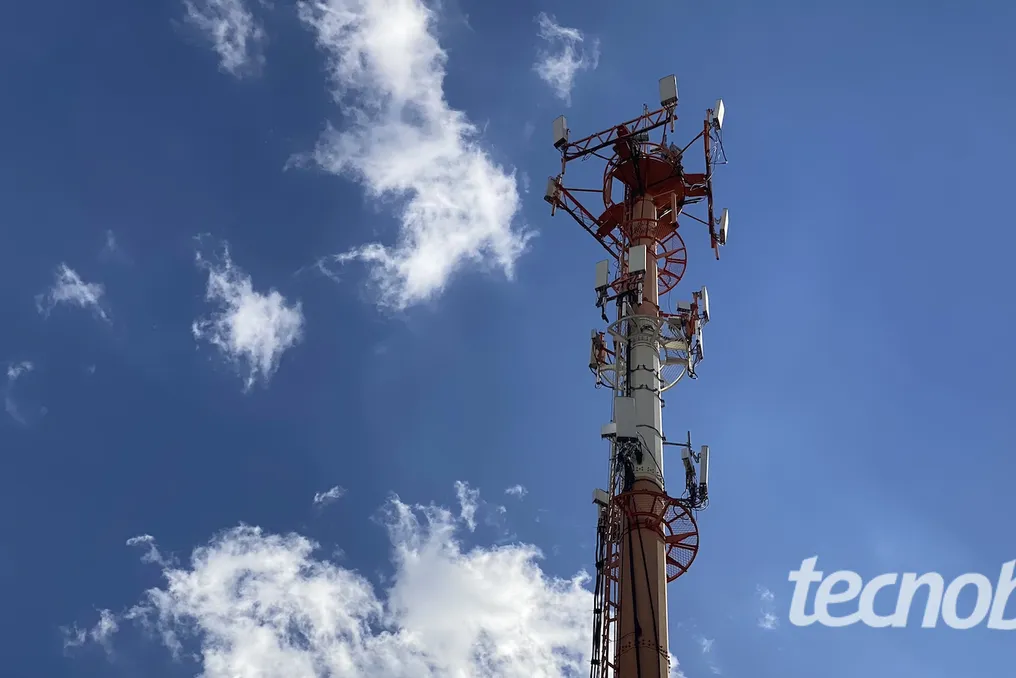
Vivo has expressed its intention to deactivate its legacy 2G network as quickly as possible, as maintaining this infrastructure in Brazil has become economically unviable. During a press conference to present its financial results this Tuesday (28), CEO Christian Gebara stated that the shutdown of the old network aims to reduce high operational costs and free up frequency spectrum, with the ultimate goal of boosting 4G and 5G services.
Despite the urgency expressed by the board, Vivo has not yet released a definitive schedule for the end of second-generation service, facing several impediments. The biggest challenge lies in the vast number of corporate devices that still rely on the old signal to operate.
Although the 2G signal may be associated with slowness, it remains crucial for the Internet of Things (IoT) segment. May data shows that while 4G holds 64.4% of lines and 5G reaches 23.9%, 2G still represents 6.7% of the business connection market. It is notable that the second-generation network surpasses the participation of 3G, which currently accounts for only 5.1% of the market.
This persistence of 2G is mainly maintained by the corporate sector. As explained by Gebara to the portal Convergência Digital, the need for 2G use by common users is minimal, but devices such as fleet trackers, smart meters from energy concessionaires, and old credit card terminals remain linked to the obsolete network.
In practice, these numerous customers need to physically migrate to more modern technologies before the operator can remove the antennas. To mitigate this problem, the National Telecommunications Agency (Anatel) intervened, signaling its intention to suspend the approval of mobile phones and devices limited to 2G or 3G. This measure aims to curb the entry of outdated devices into the national market, forcing the industry to adopt more modern standards.
Even with these actions, the market continues to support the old format. Manufacturers continue to release basic and low-cost devices, such as the Nokia 123 Shield phone, which comes from the factory using the GSM standard, indicating that the 2G ecosystem is still active.
While the complete shutdown does not occur, large telecommunications companies have found a financial alternative in infrastructure division. Vivo maintains a joint network usage agreement, called RAN Sharing, with TIM, which allows them to share operational costs.
In the specific context of GSM (2G), this agreement is deeper, involving the decommissioning of one company's legacy network. Instead of each company maintaining its own tower in the same location, generating higher energy consumption and duplicated maintenance, one of their antennas is deactivated. In this way, customers with devices restricted to the GSM signal begin to use the other operator's 2G network entirely, eliminating structural redundancy.
Ultimately, the market strategy of Brazilian operators points toward a gradual shutdown. This allows the frequency bands currently wasted by 2G ghost traffic to be fully released. With these virtual lanes available, modern connections will receive more traffic bands, ensuring greater capacity, stability, and speed to meet the increase in data consumption in the country.
Turkey has the potential to secure a supply of one million barrels of oil per day through an agreement established with Iraq. This pact was recently discussed between Erdogan and Iraqi Prime Minister Ali al-Zaidi in Ankara.
During his visit to Turkey, Ali al-Zaidi participated in talks with Turkish leaders on various topics, including security, trade, energy, transport logistics, and water resource management, in addition to discussing joint infrastructure projects between the two neighboring countries.
During a joint press conference with Al-Zaidi, Erdogan emphasized that the current focus is to formalize a comprehensive energy cooperation agreement as soon as possible, aiming to benefit both nations. He mentioned that a previous agreement regarding the Kirkuk-Ceyhan pipeline had expired.
Additionally, Erdogan informed that the Turkish state oil company, TPAO, will acquire a 15% stake in BP Energy Company of Kirkuk Limited, according to a separate share transfer agreement signed the same day.
Ali al-Zaidi, who assumed the post of Prime Minister in Iraq after a period of deadlock following last year's parliamentary elections, made his trip to Ankara after visits to Washington and Tehran.
In a prior context, following Al-Zaidi's meetings with US President Donald Trump earlier this month, American companies signed partnerships and agreements with Iraq, totaling approximately 60 billion dollars. These agreements include initiatives to establish alternative routes for shipping oil from the Persian Gulf.
One of the projects under review involves the construction of a pipeline that would connect Basra, located in southern Iraq, to Haditha, in western Iraq, and subsequently to the port of Ceyhan in Turkey, and to the port of Baniyas, located on the Syrian coast.
The meeting in Ankara took place while Turkey was actively engaged in negotiations to end a conflict that has persisted for decades with the Kurdistan Workers' Party (PKK), whose fighters are mainly concentrated in northern Iraq. Last year, the PKK declared its intention to demobilize and dissolve as part of reconciliation efforts.
Turkey plans to implement legislation to support these peace efforts, which should include limited amnesty, allowing certain militants to return to Turkish territory. Erdogan reinforced his commitment, stating: 'We are in constant dialogue with our Iraqi brothers to ensure that our process of a Turkey free of terrorism and our vision of a terrorism-free region become a reality.'
The PKK has maintained an armed insurgency since 1984, resulting in tens of thousands of victims. Turkey, the United States, and the European Union classify this organization as terrorist.
Ali al-Zaidi has a scheduled visit to Saudi Arabia on Thursday, at a time of high tension, given that the kingdom accused Iraqi militias supported by Iran of carrying out drone attacks against its territory. The Iraqi leader committed to disarming non-state armed groups in Iraq by the end of September, although this deadline seems challenging due to the refusal of some more influential militias to hand over their weapons.