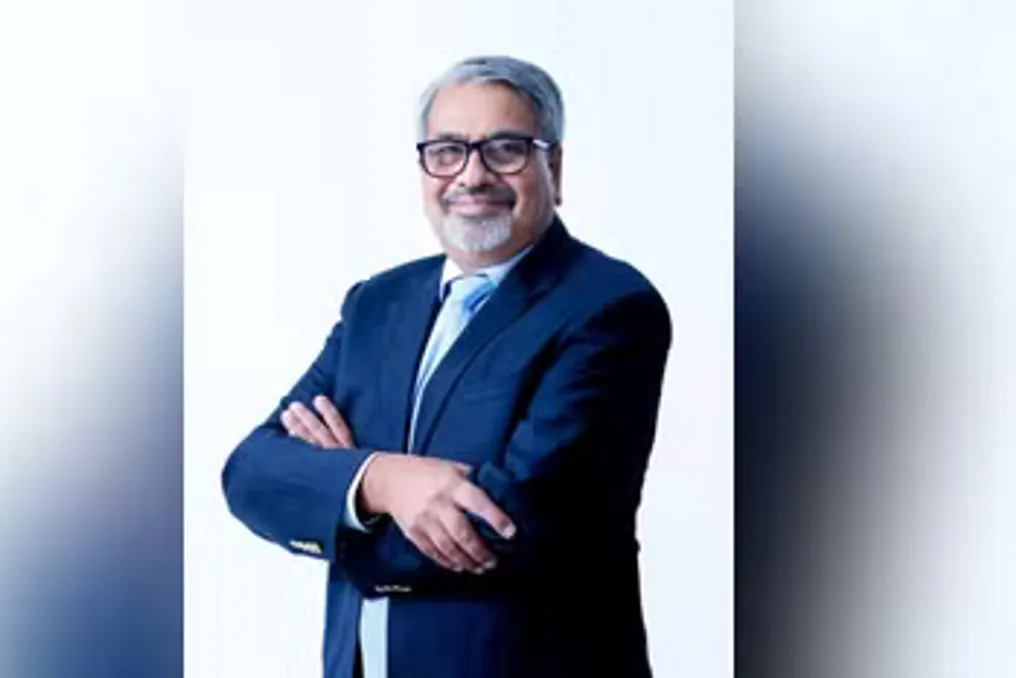
The total revenue of the Tata Group in the financial year 2026 (FY26) increased by 7.8%, reaching 16,24,030 crore rupees, while profit after tax grew by 51.9%, amounting to 1,70,525 crore rupees. These figures were presented by company head N. Chandrasekaran.
Shareholder Report
In his address to shareholders in the annual report of Tata Sons, the primary investment holding company of the Tata groups, Chandrasekaran noted that 2026 was marked by geopolitical conflicts and an unprecedented cycle of global investments in artificial intelligence. He emphasized that overall, FY2026 was a good year from a financial performance perspective for the Tata Group.
Tata Sons Results
Chandrasekaran reported that Tata Sons' revenue grew by 9.1% to 42,367 crore rupees in FY26, and profit after tax increased by 21.8% to 31,961 crore rupees. Furthermore, the board of directors of Tata Sons recommended paying a final dividend of 1,10,717 rupees per share, subject to shareholder approval.
Long-Term Strategies and Projects
The group head noted that Tata Group's revenue in FY26 is 2.1 times higher than in FY20, and profit is 5.4 times higher, reflecting sustained and significant transformation efforts across the organization. He also mentioned that all existing enterprises demonstrated strong results in both revenue and profit. However, the British luxury car manufacturer JLR faced a cyberattack in the second quarter of FY26, leading to a five-week production halt, although production returned to near normal levels by the fourth quarter.
In his letter, Chandrasekaran provided shareholders with information on new group projects such as Tata Electronics, Tata Digital, Air India, and Agratas, which are reportedly under the close attention of Tata Trusts Chairman Noel Tata. He compared the current ventures to how the founders of the Tata Group made 'bold, even ill-conceived at the time bets that turned out to be exactly what the nation needed.'
Innovation and Industry Future
Chandrasekaran stated that the next industrial revolution is being created right now, and its building blocks include silicon, connectivity, energy, and security. He noted that Tata Electronics is on track to become the first integrated player across the entire electronics product chain. In four years, the company has become the fourth highest revenue-generating Tata Group company with an income of 1,31,082 crore rupees, and nearly two-thirds of its workforce of 86,466 people are women. Operating profit has already reached the break-even point. In 2025, the company manufactured 12% of the total volume of phones released by the global leader.
Emphasizing that microchips are the new steel, he stated that the entire modern economy, including phones, cars, airplanes, hospitals, power grids, and AI systems, depends on them. He added that a country unable to produce its own semiconductors will always depend on others for the most fundamental element of the modern economy. He stressed that creating an ecosystem that includes suppliers, talent pipelines, and research links is a complex task.
Development of Digital and Energy Verticals
Regarding Tata Digital, he noted that the company is successfully navigating numerous complexities. He mentioned that in FY26, Tata Digital recorded a loss of 4,974 crore rupees, but the company's ambitions are vast, and progress is beginning to show. Over four years since its launch, it has achieved a cumulative Gross Merchandise Value (GMV) of 46,515 crore rupees.
In aviation, Chandrasekaran explained that the recovery of Air India is a long process requiring fleet modernization, training, service transformation, and network expansion. He believes that the transformation of Air India should be viewed as a five- or ten-year endeavor, considering supply chain disruptions and the need to modernize outdated systems and culture.
Concerning Agratas, the high-performance battery manufacturing enterprise, he clarified that it is an integral part of the group's broader strategy towards energy—designing, developing, and manufacturing high-quality, high-efficiency, sustainable batteries for electric mobility and energy storage.
Role of Technology in India
Refuting the notion that software companies will lag behind AI, Chandrasekaran stated that India's technology industry has secured its global position by successfully integrating powerful new technologies into the world's most demanding institutions. He believes that AI represents the most significant opportunity for corporate IT. However, he specified that for organizations to leverage AI capabilities, it is not enough to simply access the technology; they must organize their data and integrate it into decades-old IT systems.