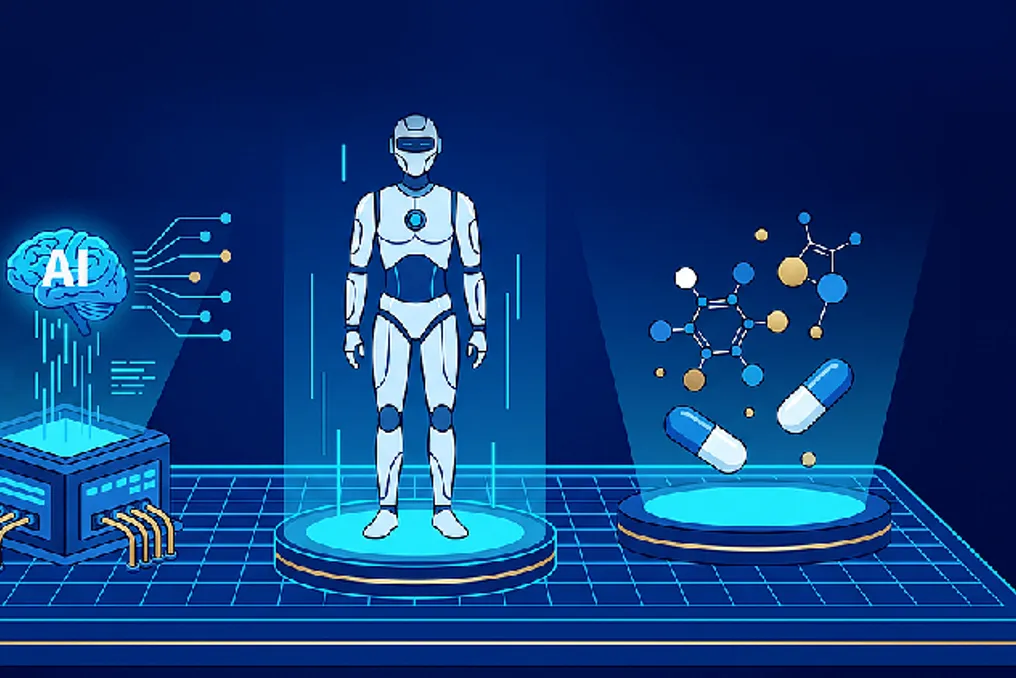
China's export portfolio is undergoing rapid evolution as a new generation of high-tech products emerges as key drivers of foreign trade. While electric vehicles, lithium-ion batteries, and solar cells were previously considered China's export 'new trinity,' robots, artificial intelligence (AI), and innovative pharmaceuticals have gained momentum in the first half of this year, earning the title of the 'new new trinity.'
Shift in Export Paradigm
Analysts note that this shift reflects a fundamental change in the basis of Chinese export competitiveness. According to Pan Yazhe, a digital economy researcher from Galaxy Securities China Institute for New Development, the previous 'new trinity' was based on manufacturing capacity, where advantages went to those who could ensure large-scale production and cost reduction.
Pan emphasized that the 'new new trinity' operates under a completely different industrial logic. These are industries that intensively utilize knowledge and technology, whose competitive advantage stems from continuous research and development and constant technological iteration. Value creation has shifted from traditional factor inputs to innovation-driven growth.
Expansion of Chinese AI Influence
China's AI industry is expanding its influence far beyond simple software exports. According to data from OpenRouter, a global AI model aggregator, Chinese large language models processed 36.11 trillion tokens in the third week of July, exceeding the previous week's figure by more than 30%. These models have held the world's top spot for weekly usage for twelve consecutive weeks.
Industry observers point out that AI exports now encompass a wide range of digital capabilities, including algorithm development, model deployment, and AI agent applications—areas often difficult to capture in standard trade statistics. Chinese AI technologies are currently being used by users in 141 countries and regions.
Robots in Manufacturing and Services
Chinese robots are also strengthening their positions in overseas markets, moving from demonstration technologies to practical application in industry and services. On production lines, industrial robots can tighten a screw in just five seconds with precision and speed surpassing experienced workers. In the energy sector, robots are used to repair high-voltage power lines, minimizing the need for dangerous manual operations.
Concurrently, service robots are becoming increasingly intelligent. At exhibitions, they can understand voice commands, move autonomously, and deliver requested items. In smart pharmacies, robots from different manufacturers can share the same AI platform for medication sorting, paving the way for 24-hour automated pharmacies.
Growth in Robotics Exports
Trade data indicates rapid growth in the sector. In the first half of 2026, exports of cleaning and intelligent bionic robots reached 18.09 billion yuan (approximately 2.7 billion US dollars). Total industrial robot exports amounted to 6.29 billion yuan, an 18.6% increase compared to the same period last year, reaching 141 countries and regions. The export of surgical robots increased threefold to 480 million yuan, and their markets expanded from 23 to 49 countries and regions.