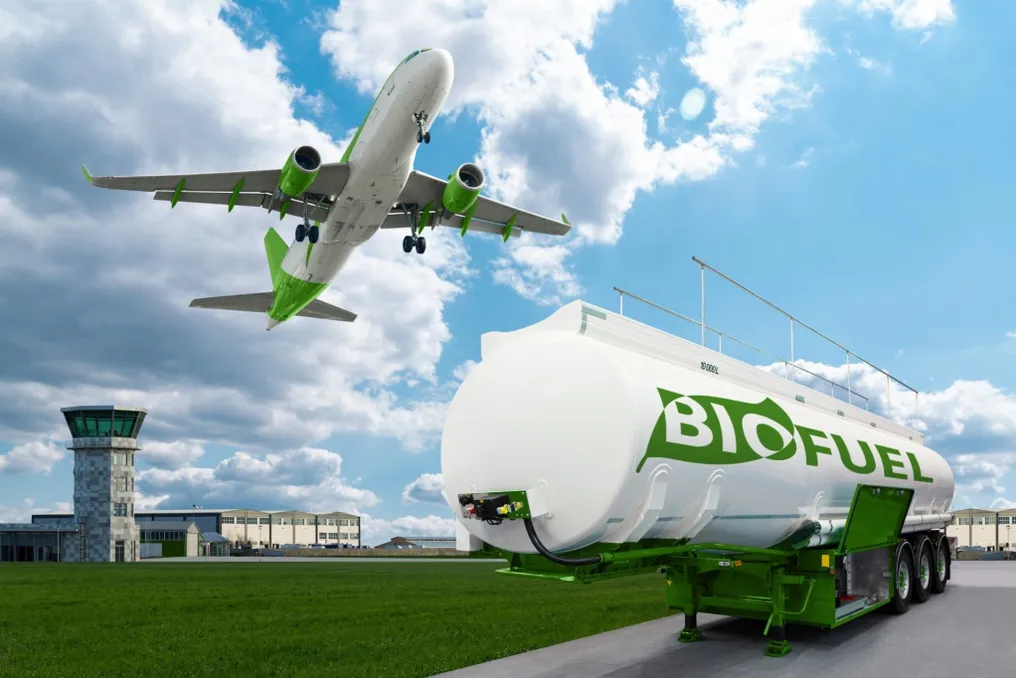
A major investment project is launching in the Khorezm region of Uzbekistan, which involves the creation of a biofuel production plant utilizing hydrogen technologies. The total investment for this project amounts to $6.1 billion.
A major investment project is launching in the Khorezm region of Uzbekistan, which involves the creation of a biofuel production plant utilizing hydrogen technologies. The total investment for this project amounts to $6.1 billion.
A memorandum of strategic cooperation concerning this project was signed in the United Arab Emirates between the Emirati company Allied Biofuel Holding and Deem International Engineering. The construction of the plant is planned to take place from 2026 to 2030, with the enterprise reaching full production capacity by the third quarter of 2030.
Production will be carried out by processing sorghum, which is transformed into fuel using hydrogen technologies. This method allows energy to be extracted from plant raw materials instead of oil, contributing to reduced air pollution. Annually, the plant is designed to produce 110 thousand tons of aviation biofuel, 300 thousand tons of sustainable aviation fuel, and 5 thousand tons of green diesel.
It is planned that 70 percent of all produced products will be sold on the domestic market, while the remaining 30 percent is intended for export. Muhammad Alfalasi, CEO of Deem Engineering, noted that this new plant will serve as further confirmation of the partnership between Uzbekistan and the UAE. He emphasized that both countries are already actively cooperating in the fields of energy, industry, agriculture, and infrastructure, and the biofuel plant in Khorezm will continue this joint activity.
The website uses a security service to protect against cyberattacks. Performing a recent action triggered this protective system.
There are several actions that can lead to such a block. These include sending a specific word or phrase, using an SQL command, or providing incorrect data.
Users are advised to write to the website owner to report the block. When contacting them, you should specify what actions were being performed when this page appeared, and also provide the Cloudflare Ray ID, which is located at the bottom of the page.
Chevrolet has launched the new Trailblazer High Country Midnight, a special edition of the SUV that has been designed with factory preparations to increase its capability on off-road terrain while maintaining comfort. This model incorporates specific suspension, all-terrain tires, and a darkened design, positioning it as the most off-road oriented configuration in the line.
The most notable aspect of this version is the suspension, which is equipped with springs and shock absorbers specifically designed for a seven-seater vehicle. This setup can raise the body by up to 30 mm, increasing the ground clearance to 320 mm. Furthermore, there have been improvements to the approach angle (now 30.1°) and departure angle (24.8°).
According to Chevrolet, all these modifications have been duly approved and have passed rigorous validation processes by the manufacturer, including durability, structural tests, and electronic system recalibration.
To optimize performance on different surfaces, the version uses Michelin LTX Force tires. These tires are designed to provide excellent traction on gravel, mud, and dirt without compromising performance when the vehicle travels on asphalt. The manufacturer claims that the SUV demonstrates less oscillation on uneven surfaces, greater control during curves on low-grip surfaces, and more stability on difficult terrain.
Under the hood, the Trailblazer Midnight continues to use the Duramax 2.8 turbodiesel engine. This engine generates 207 horsepower and 52 kgfm of torque, coupled with an eight-speed automatic transmission and a 4x4 system with low range. According to INMETRO data, fuel consumption is 8.7 km/l in the city and 10.2 km/l on the highway.
In addition to the mechanical improvements, the special series features a distinct look. Components such as the grille, emblems, roof rack, mirrors, door handles, and 18-inch wheels receive black finishing, creating a striking contrast with the exclusive Sharkskin body paint. The package also includes a front bumper extender with LED lighting, visible tow hooks, reinforced underbody protection, and a dark-finished exhaust.
Inside, while retaining the High Country trim, the Midnight receives exclusive seat upholstery and details in dark caramel tones.
The technological package follows the standard of the top-of-the-line version. The SUV is equipped with an 8-inch configurable digital dashboard and an 11-inch MyLink multimedia center. It offers native Wi-Fi connectivity for up to seven devices, in addition to support for OnStar services, the myChevrolet app, and compatibility with Android Auto, integrating with Gemini artificial intelligence.
In terms of safety, the model features autonomous emergency braking with pedestrian detection, forward collision warning, lane keep assist, blind spot monitoring, rear cross-traffic alert, rearview camera, parking sensors (front and rear), six airbags, and a five-year warranty.
Chevrolet announced that the initial production of the Trailblazer Midnight will be limited to a limited series of approximately 100 units. With this addition, the SUV line now consists of the LT version, primarily aimed at direct sales, the High Country, focused on sophistication, and the new Midnight, directed towards more intense off-road use.
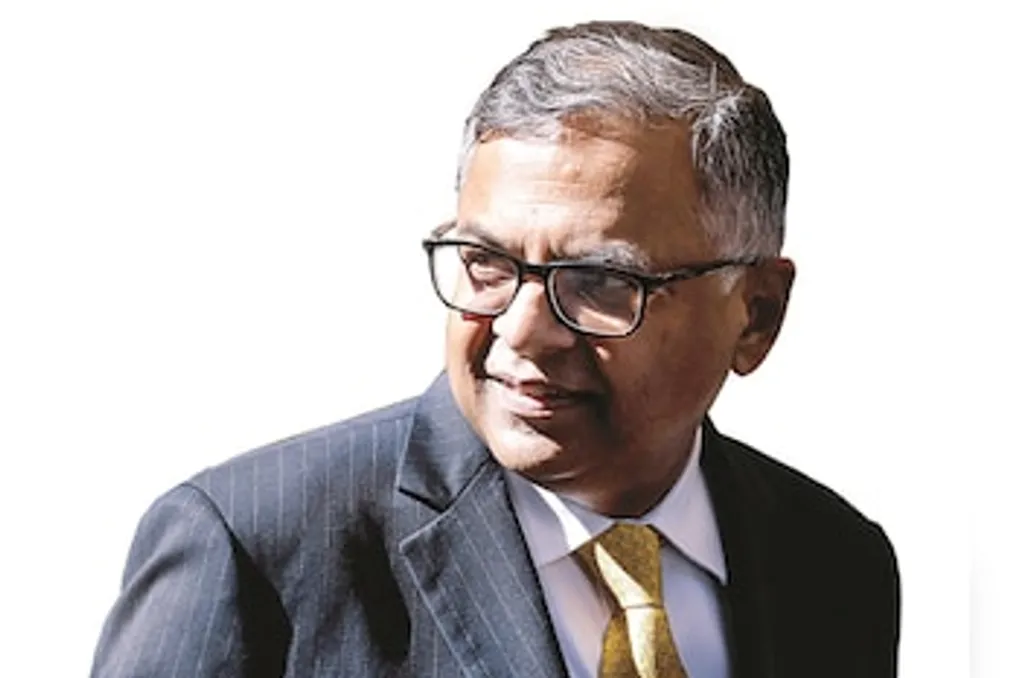
According to Tata Sons Chairman N. Chandrasekaran, the process of transforming the airline Air India is lengthy and will take five to ten years. He justified this by citing the need to overcome long-standing disruptions in the supply chains of key components, as well as the requirement for capital repairs of outdated systems, changes in corporate culture, fleet renewal, and the development of a large number of qualified aviation specialists.
Despite significant progress achieved, Chandrasekaran emphasized that any major airline is historically built over decades, not within a few quarters. In the fiscal year 2025-26, Air India faced three external challenges: airspace closures, rising fuel prices due to the Middle East conflict, and currency fluctuations, in addition to the AI171 flight incident, making this year one of the most difficult for the company. In his letter to the Tata Sons Annual Report for 2025-26, he noted that Air India teams demonstrated resilience and adaptability at every stage.
Tata Sons took control of the loss-making Air India from the government in January 2022 and launched an ambitious transformation plan. Chandrasekaran expressed his belief in the future, noting that by 2047, on the centenary of Indian independence, an Indian citizen will fly on an Air India aircraft assembled using Indian components and chips, protected by Indian defense systems. He believes that the success of such institutional building transforms it into ordinary national life infrastructure.
As Air India Chairman, Chandrasekaran stressed that a country with a population of 1.4 billion and one of the world's fastest-growing economies deserves a world-class flagship carrier. He added that fleet renewal, staff training, service transformation, and network expansion are part of the long journey to revive Air India. According to data, narrow-body aircraft for domestic routes have undergone repairs and received positive customer feedback. The repair of wide-body aircraft is expected to be completed by the end of fiscal year '28. The Net Promoter Score (NPS) improved from -35 in FY23 to +42 in June 2026.
In the fiscal year 2025-26, Air India's revenue decreased to 71,870 crore rupees from 78,636 crore rupees in the previous fiscal year. Air India's net loss was 15,367.75 crore rupees, while Air India Express's loss reached 6,767.29 crore rupees in the last fiscal year. The Air India Group includes Air India and Air India Express. The report also stated that the transformation of Air India aims to create a carrier that connects India with the world, provides jobs in aviation, tourism, and logistics, and turns India into a global aviation hub, rather than just a transit market.