The automotive world has received several updates, including the introduction of a new safety car in Formula 1, the creation of a sports division by Subaru, and the return of the Mercedes-Benz G-Class Cabriolet to the production line.
The automotive world has received several updates, including the introduction of a new safety car in Formula 1, the creation of a sports division by Subaru, and the return of the Mercedes-Benz G-Class Cabriolet to the production line.
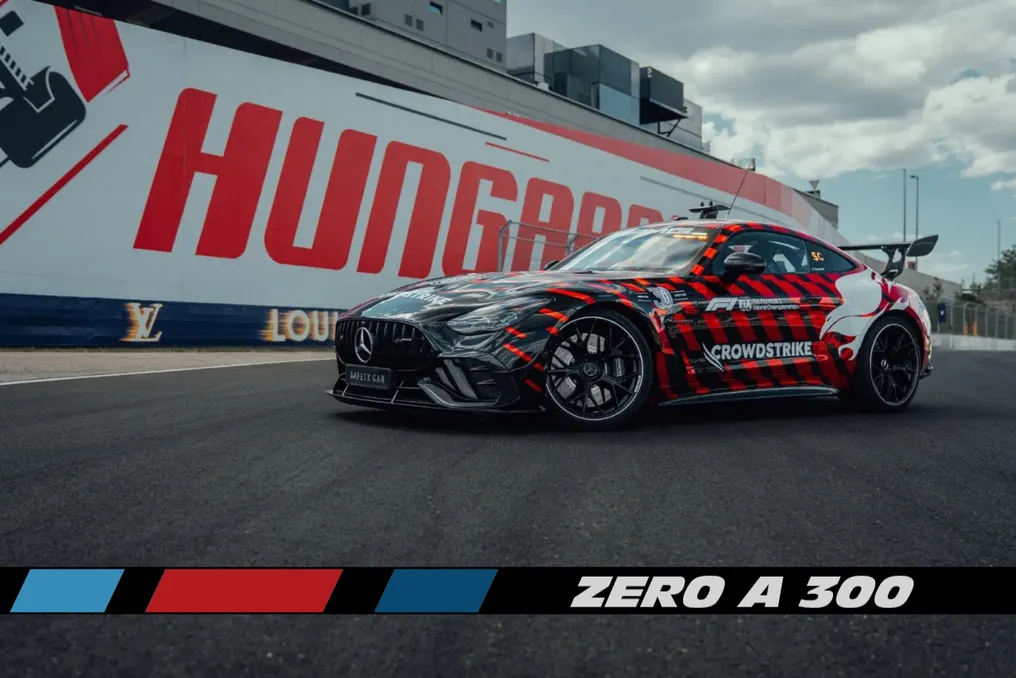
Although the new safety car has not yet been deployed, Formula 1 implemented a new flag called the 'virtual safety car,' which was recently used at the Hungarian GP. The new vehicle was present in the pits, ready to enter the track when necessary. This replaces the old AMG GT Black Series, which was discontinued three years ago.
The successor is the AMG GT 63 Pro 4Matic+, representing the most extreme version of the coupe, offering 612 hp and 86.7 kgfm. A significant innovation is that it features all-wheel drive, making it the first safety car with this characteristic. Aerodynamically, the car has been enhanced, with the safety lights now integrated into the rear wing, replacing the old structure on the roof. The strobes have been disguised in the air intakes, headlights, and taillights. The aerodynamic package has also been modified with a new front splitter, canards, and a redesigned underbody to optimize airflow.
Bernd Mayländer will remain at the wheel, assisted by GPS and telemetry screens from the race direction. To celebrate Mercedes' 30 years supplying support cars for Formula 1, the coupe will feature a black paint job with red graphics and will be fueled with a special 100 octane fuel, composed of 40% sustainable components, mixing e-fuel and ethanol.
Subaru recognized that its sports line had lost prominence in recent years, despite the existence of the BRZ and WRX. The STi, in particular, generated nostalgia, and rumors about including a hybrid powertrain were not well received by the target audience.
In response, the brand established the Product Innovation Headquarters, which houses the Sports Vehicle Planning Office. This new team has the exclusive mission of developing sports vehicles. Tetsuro Fujinuki, Subaru's technical director, stated that the company decided to change its approach because the previous method had become bureaucratic and inflexible due to repetitive meetings with similar proposals.
This new team is already working on three new models bearing the STI engineering badge, all planned with a manual transmission. Among them are a more powerful version of the WRX, an enhanced sports version of the BRZ, and a new hot hatch that could revive the brand's tradition in the segment, possibly named Impreza TX.
To realize these projects without exorbitant costs, Subaru adopted intensive digital processes, which, according to Fujinuki, accelerated development and allowed engineering to take bolder risks. The financial stability derived from global sales of volume models, such as the Forester and Outback, supports this purely enthusiast line, indicating that manual transmissions and gasoline sports cars still have a future, despite emission and electrification challenges.
The Chevrolet S10 Trail Boss was officially made available in Brazilian dealerships for the price of R$ 341,290. This version is positioned between the Z71 and High Country (R$ 348,790), aiming to compete with the Ford Ranger Tremor and cater to those looking for a robust off-road pickup truck without relying on external lift kits.
The Trail Boss's differential lies in its suspension engineering, developed in collaboration with the Australian Ironman 4x4. The setup involved reforming 17 components to raise the front end by 30 mm, increasing the ground clearance to 32.4 cm. The approach angle (32.5°) and departure angle (22.9°) were significantly improved to handle obstacles without damaging the undercarriage. To ensure safety with the new height, the brand adjusted the sensors and front camera of the ADAS package, as well as electronic aids that compensate for the absence of mechanical locking in the rear differential.
The engine remains the 2.8 Duramax turbodiesel with 207 hp and 52 kgfm of torque, coupled with an eight-speed automatic transmission and 4x4 with low range. Aesthetically, it adopts a more aggressive look, dispensing with the chrome of the High Country, featuring a darkened finish on the grille, bumpers, and 18-inch wheels, which use Pirelli Scorpion All Terrain all-terrain tires. Internally, the model retains the features of the most expensive version, including the digital dashboard integrated into the 11-inch multimedia system, as well as exclusively upholstered seats and a factory-equipped bed with a tubular rack and protector.
The Mercedes-Benz G-Class, known as a status icon, maintains its essence as a capable jeep for difficult terrain. Like other vehicles such as the Jeep Wrangler and Land Rover, it offers open variants, a feature the G-Wagen had until 2013.
The decision to discontinue the convertible in 2013 occurred alongside the end of the two-door body style, which required an almost artisanal assembly line and had smaller margins than the four-door model. However, the demand for open and luxurious utility vehicles persisted, driving independent conversion projects in the collector market.
The confirmation of the return came through the official Mercedes-Benz profile on Instagram, which released a teaser showing details of the new model. The retractable canvas roof with electric operation has been maintained, folding over the rear according to the traditional standard. The main change is the adoption of an unprecedented four-door configuration, unlike the old two-door Cabriolets with short wheelbases, which alters the proportions of the iconic silhouette and increases practicality.
Mercedes has already confirmed the launch for the North American market, and the utility vehicle is expected to be equipped with a V8 engine. Although the technical details and debut date remain secret, the teaser signals the official return of the canvas roof to the G-Class after 13 years.
The McLaren P1, a milestone in the supercar era, is notable for its 916 hp hybrid twin-turbo V8, which set a new performance benchmark for hypercars. Its aesthetic is considered elegant and harmonious compared to current models in the segment.
Even more exclusive is the McLaren P1 GT, a street edition based on the P1 GTR, of which only four units were produced by Lanzante. One of these examples will be auctioned at the Monterey Car Week in August by RM Sotheby’s.
The P1 GTR served as inspiration for Lanzante, which transformed the track monster into a road-homologated machine, using a Longtail body with an extended rear, reminiscent of the competition F1 GTR. The example going to auction is number 3, characterized by black paint, five-spoke silver wheels, and extensive carbon fiber application on the exterior and interior.
To make the track car usable in daily life, the British preparer included comfort items absent in the original version, such as air conditioning, electric windows, multimedia center, carpets, and more comfortable seats. However, the power under the hood remains the same, with the hybrid twin-turbo V8 unit delivering 986 bhp (1,000 hp). With 8,825 km driven, the model is expected to be one of the most coveted items at the Monterey Car Week in August, with expectations of million-dollar bids.
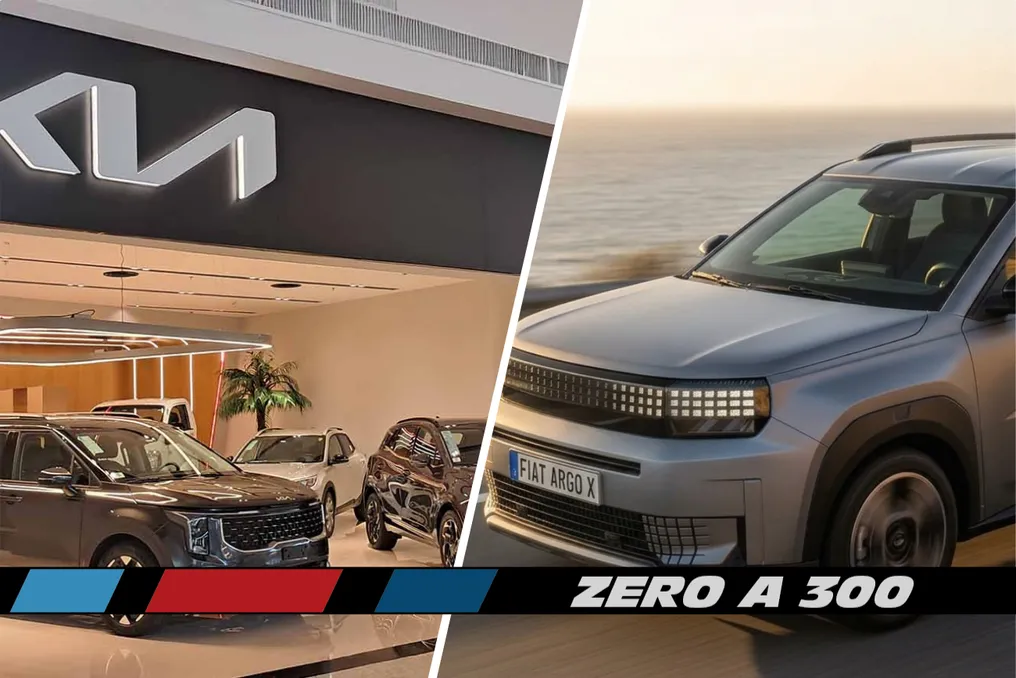
The history of Korean brands in Brazil is about to change significantly, as Kia Motors' headquarters negotiates with the Federal Government to assume direct control of its operations in the national territory. This move concludes a 34-year period during which representation was managed by the Gandini Group.
This transition goes beyond a simple administrative change; it involves forgiving a billion-dollar debt inherited from Asia Motors, Kia's former subsidiary, which had received federal incentives in the 90s to build a Topic and Towner factory that was never realized. In return, Kia's headquarters proposes a real productive investment, aiming to build a second industrial complex, possibly in Piracicaba/SP or Sorocaba/SP, with the potential to generate 5,000 direct jobs.
Kia's new structure, scheduled to operate starting in 2028 using the K3 modular architecture, is crucial for the group. It will allow not only the nationalization of Kia models but also unlock the production of new generations of Creta and i20, in addition to supporting the future development of pickups and compact cars in collaboration with General Motors. Currently, the Hyundai factory in Piracicaba is already operating at the limit of its annual capacity of 215,000 vehicles.
Historically, Hyundai and Kia entered Brazil in the 90s as separate entities, with the Gandini Group responsible for Kia (with models like Besta and Sportage) and the CAOA Group for Hyundai. After Hyundai acquired Kia in the global market in 1998, Brazil maintained a fragmented structure, while operations were unified elsewhere in the world. In 2024, Hyundai began organizing this scenario by taking control of its sales and imports from CAOA, paving the way for complete unification under the headquarters.
Additionally, Fiat officially confirmed that the Brazilian version of the Grande Panda will be named Argo X. Although the name suggests a link to the Fiat Argo, which has been on the market for almost ten years and is based on the Punto platform, the Argo X will use an entirely new platform called Smart Car, shared with other Stellantis vehicles, such as the Citroën C3 and Basalt, and the future Fiat Grizzly. The brand positions it as a hatchback with compact SUV characteristics.
Herlander Zola, Stellantis CEO in Latin America, justified the name choice, explaining that it aims to capitalize on the familiarity of the Brazilian public with the Argo, while the X suffix reinforces the 'mini-SUV' image. Zola also mentioned that this strategy helps reverse the perception that Fiat quickly discontinues its vehicles, which could affect resale value. By naming the new model Argo X, Stellantis protects the resale value of the current Argo and establishes the model as part of a product family.
Despite popular desire for a name like Uno, Fiat opted for Argo X because it believes associating the new vehicle with the popular Brazilian car could harm the brand's image, positioning the Argo X one step above the Argo, which will serve as the entry-level model.
On another front, Ford Racing revealed the first sound of the Coyote V8 engine that will be used in its Hypercar/LMDh for Endurance competitions, such as the 24 Hours of Le Mans and WEC, starting in 2027. Unlike the EcoBoost 3.5 V6 biturbo used in the Ford GT, Ford developed a naturally aspirated 5.4 V8, derived from the Mustang's Coyote, optimized for the rigor of endurance races. The engine was developed in Michigan, USA, and according to Dan Sayers, the choice of the naturally aspirated engine aims to simplify the setup, minimizing failure risks.
Testing of this prototype will begin at various European circuits next month, preparing it to compete alongside major names such as Ferrari, Toyota, Porsche, and Cadillac. Meanwhile, the McLaren F1 GTR belonging to Pink Floyd drummer Nick Mason will be auctioned by RM Sotheby’s in August in California during Monterey Car Week. The car is estimated to sell for over US$ 35 million, which would make it the most expensive McLaren F1 in history. Finally, Chevrolet launched the S10 Trailboss in Argentina, an off-road version with raised suspension and Pirelli Scorpion All Terrain tires, and there are expectations that it will arrive in Brazil soon.
The motorsport world mourns the passing of Miguel Crispim Ladeira, known as Crispim, who died on Sunday (19th) at the age of 85 after multiple organ failure while hospitalized for an extended period.
Under the guidance of Jorge Lettri in the official Vemag team in the 1960s, Crispim achieved incredible results using small one-liter three-cylinder DKW engines. He was also the preparer of the legendary Carcará prototype, which broke the 212 km/h barrier in 1966, setting a South American speed record. This feat was a marvel of engineering, achieved while working with a piston that had already failed during training.
For decades, Crispim left his mark in Formula Super Vee, Formula Ford, at the famous Boxer workshop (alongside Chico Lameirao), and participated in the development of the national sports car Lobini H1. Recently, he published his memoirs in the autobiography 'Nasci Mecânico' (2025). The publication FlatOut extends its deepest condolences to Crispim's family and friends.
Although manual gearboxes are becoming increasingly rare in standard cars, niche sports models can maintain their relevance, as seen with Henessey, Pagani, Porsche, and Ferrari. McLaren potentially could join this trend. According to information from The Supercar Blog, Woking employees are preparing for the presentation of their new model—the McLaren P50. Rumor has it that to satisfy a certain group of clients who value McLaren's design and performance but desire a more engaging experience, the car will be equipped with a clutch pedal.
The publication does not provide sources, limiting itself to stating 'we learned,' yet the statements made are confident, albeit sparse. It is said that the new McLaren with a manual gearbox will be more expensive than the W1, part of the line started by the McLaren F1 and priced over 2 million US dollars, and that its production will be limited to fewer than 100 units. It is also claimed that the car will be presented to the public at 'The Quail, A Motorsport Gathering' event during Monterey Car Week in California on August 14, 2026.
It is unknown whether the proposed new McLaren will have a true manual gearbox or if it will be a shift and neutral simulator, similar to what Ferrari does with the 12Cilindri Manuale. If it turns out to be the latter, it will be an interesting surprise.
Recall studies showing that multimedia screens make cars increasingly dangerous. However, it seems this will not prevent manufacturers from continuing to invest in larger and more sophisticated displays that may further distract drivers. The new Freelander 8, which will be the first model from the newly created Jaguar Land Rover sub-brand, unveiled its interior, and the most striking element was the huge 46-inch multimedia panel.
In fact, there are two panels: a central multimedia unit, which is very large in itself—15.6 inches; and a panel above it, spanning the entire width of the dashboard and functioning as the instrument cluster. It also displays additional information such as GPS navigation, clock, weather forecast, and onboard computer functions. Below the central multimedia unit is a small series of physical buttons for functions like hazard lights, windshield heating, and audio volume, but apparently, all other controls will be focused on the screens. Furthermore, a third screen is provided for rear passengers.
The technological look is complemented by the overall minimalist cabin design, with atmospheric lighting in 256 colors (similar to gaming PC RGB equipment!) and an aromatic diffuser that, according to the Freelander description, will accurately reproduce the scent of a 'traditional English manor.' It should be noted that the new Freelander 8 will be a hybrid, using the internal combustion engine solely as a range extender, equipped with two electric motors—one on each axle, providing a total output of 561 hp. A fully electric drive version is also planned. This clearly differs from the traditional Freelander, although the classic-inspired visual style, including the sloping C-pillar, looks interesting.
The new generation Volkswagen Amarok is approaching launch, and thus it is appearing more frequently on the streets, albeit in disguise. Recent photos published by Argentina Autoblog show that it will have a completely different silhouette compared to the usual one. If the more straight shapes, high hood, more vertical windshield, and thin pillars give it a more 'Chinese' style, it is not accidental: the next generation Amarok is the result of a partnership between Volkswagen and Chinese SAIC; essentially, it is a VW version of the Maxus Terron 9 pickup. Naturally, it retains the current VW visual identity, including dual-level headlights and a LED strip running across the front end. Nevertheless, the bumpers and taillights look identical to the Chinese model.
The shared platform means that the new Amarok will have a semi-monocoque construction, combining a frame with passenger car elements such as the suspension. While Volkswagen has not disclosed details about the powertrain, only stating that the new Amarok will be hybrid. Although specific information is lacking, Volkswagen might present the new Amarok in Barretos during the rodeo festival at the end of August. The brand has previously held promotional events during this event.
A prototype of the new Toyota Hilux, in the final development stage, was spotted almost without camouflage, displaying almost the entire body, including the brand and model logos. Photos were received from the Guru dos Carros website. The pickup had sensors and a long exhaust pipe directed into the cargo bed, indicating the start of certification testing. This process should take about six months, predicting the release of the ninth generation in early 2027, depending on the production schedule at the Zarate plant in Argentina.
Although Toyota decided to reuse the proven IMV technical base and central cabin structure—including pillars, roof, windshield, and doors—the exterior front end will undergo a radical modernization. It is this deep plastic molding at the front combined with new technologies that leads the manufacturer to view the project globally as a full generational change. The main innovation under the hood is the introduction of a 48V mild-hybrid system installed on the 2.8 turbo-diesel engine. This technology uses a small 0.2 kWh lithium-ion battery and an auxiliary motor of 16 hp, which replaces the traditional generator and starter. The goal is to reduce emissions and smooth acceleration by working together with the improved start-stop system. Since the electrical assistance is localized and only operates below 1000 rpm (without direct wheel movement), maximum performance figures do not change: they remain 204 hp and 50.9 kgm of torque, always controlled by a six-speed automatic transmission. In the future, the portfolio will be supplemented by an unprecedented 100% electric version, the production of which has also been confirmed in Argentina for the Brazilian market. Plug-in hybrid versions, although often mentioned in industry rumors, remain speculative and have no release date in the country.
Bugatti has confirmed the end of production for the W16 Mistral hypercar, marking the end of an era for this model. The last of the 99 units was completed in the brand's workshop located in Molsheim, concluding the line of the roadster equipped with an eight-liter, four-turbo, 16-cylinder engine, based on the Bugatti Chiron.
This last Mistral features a relatively subtle color palette, combining two shades of off-white (Pearl and Sparkle) on the body, while the interior uses beige leather called 'Magnolia' and 'Grey Carbon Matt' gray. The vehicle received exclusive touches ordered by the owner through the Bugatti Sur Mesure program, such as a falcon sculpture on the gear lever (replacing the usual elephant) and hand embroidery on the door trims, which pay homage to the front ends of the Veyron and the Mistral itself, referencing the manufacturer's W-configuration 16-cylinder lineage.
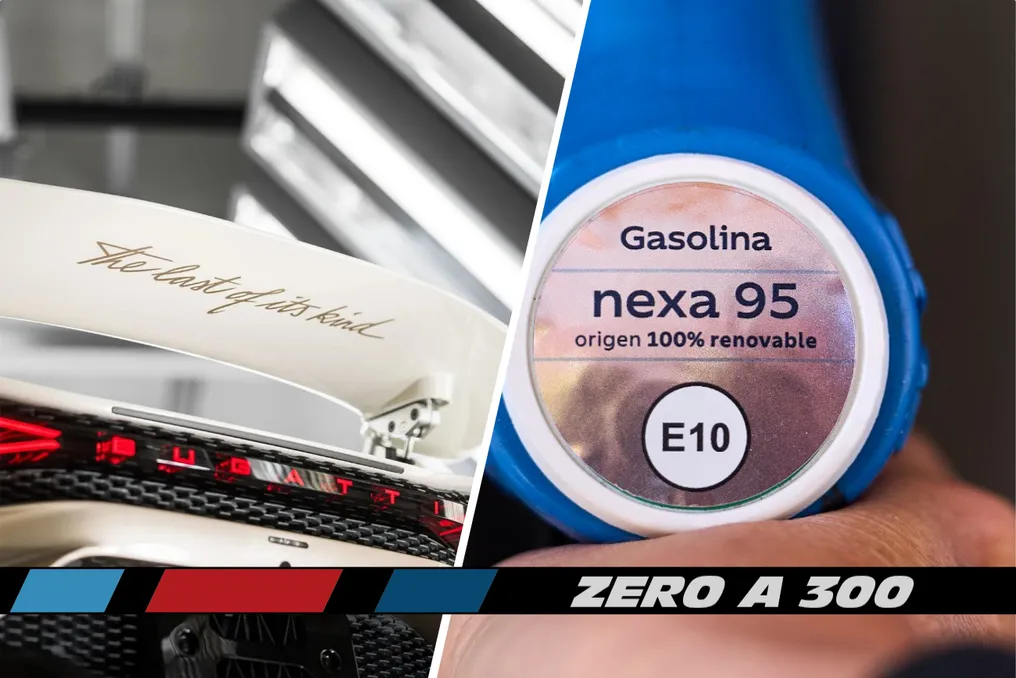
On the center console and the movable rear wing, the phrase 'The last of its kind — The last of its species' was engraved. Although the Mistral number 99 is the last of the official series, the Bugatti Solitaire program allows customers to order a unique one-off unit using the Chiron monocoque or the eight-liter quad-turbo W16 engine, while stock is available. These customized models have a power output of 1,600 hp and a torque of 163.1 kgfm.
In parallel, Toyota and BMW are testing a renewable gasoline developed in partnership between the oil company Repsol and Bosch. This fuel, called Nexa 95, aims to help address the ban on combustion cars in Europe, differing from synthetic e-fuels because it is produced from organic waste.
The logic behind Nexa 95 is that the carbon dioxide emitted from the exhaust would be offset by what the organic raw material absorbed during its life cycle, resulting in a reduction of over 70% in greenhouse gas emissions compared to traditional fossil gasoline. A significant advantage is that Nexa 95 is a 'drop-in' fuel, capable of directly replacing gasoline at the pump without the need for mechanical modifications or reprogramming of existing engines. For six months, a fleet of approximately 20 vehicles will be fueled exclusively with this new fuel, under monitoring by a digital telemetry system provided by Bosch.
The text reflects on the situation, pointing out that Brazil has had a similar solution for decades with ethanol, a green fuel used since the 1970s, which today makes up more than 30% of the national fleet, making it one of the cleanest in the world, even before the global climate concern.
At an event held on the 16th, MG introduced the electric hatchback MG4 Urban to the Brazilian market. With an initial price of R$ 129,990, the vehicle is positioned at the base of the brand's lineup, competing with models such as Dolphin Mini, Geely EX2, and GAC Aion UT.
Manufactured in Horizonte (CE), the MG4 Urban has dimensions of 4.39 meters in length, 1.84 m in width, and a wheelbase of 2.75 m, making it larger than the standard MG4, which starts at R$ 169,990 in the Comfort version. It also surpasses its competitors in trunk space, offering 477 liters, compared to 230 liters for the Dolphin Mini and 375 liters for the EX2.
MG offers the MG4 Urban only with an electric motor, but with two battery options. The 42 kWh version generates 150 hp, accelerates from 0 to 100 km/h in 9.6 seconds, and achieves up to 299 km of range. The 54 kWh battery delivers 160 hp, completes acceleration in 9.5 seconds, and travels up to 358 km on a single charge (Inmetro data). In European WLTP tests, the figures are 320 km and 415 km, respectively. Both batteries support fast DC charging, allowing travel from 10% to 80% in about 30 minutes.
There are three trim levels. The entry-level version, MG4 Urban Comfort 43 kWh, costs R$ 129,990 and includes LED headlights and taillights, a roof rack, 16-inch wheels, and automatic one-zone air conditioning. In terms of technology and safety, it features a 7-inch digital dashboard, a 12.8-inch multimedia center, 7 airbags, and the ADAS package with 15 driving assistants.
Above it, the MG4 Urban Luxury 43 kWh, for R$ 139,990, adds 17-inch wheels, heated front seats and steering wheel, ambient LED lighting, and a 360-degree camera system, in addition to electric seat adjustment and wireless charging.
At the top of the line, the MG4 Urban Luxury 54 kWh, valued at R$ 149,990, maintains the same comfort and safety features as the 43 kWh Luxury version, differing only in the larger battery capacity.
V12 engines seem to be in a comeback phase, and the newcomer Nilu27 serves as proof of this. Two years ago, the manufacturer presented the Nilu, a futuristic-looking hypercar with a classic proposal: naturally aspirated V12 engine, no hybrid assistance, manual gearbox, rear-wheel drive, and a light weight estimated at 1,200 kg.
Expectations were high, given that the Nilu27 had disclosed impressive figures at the time: over 1,000 hp, 11,000 rpm, and 1,200 kg. Although technically possible, the figures seemed excessive. However, a recent video published on the Nilu27 YouTube channel shows the V12 running on the workshop bench, demonstrating a powerful sound.
The V12 engine was developed by Hartley Engines, a company based in New Zealand. Configured in a 'hot V' with an exhaust manifold between the cylinders and individual throttle bodies, the 6.5-liter engine appears robust and represents an auditory alternative to the growing wave of electric hypercars. The project is led by designer Sasha Selipanov, who has prior experience at Lamborghini, Bugatti, and Koenigsegg.
The Nilu features a minimalist cockpit, with analog gauges, many metal components, seats integrated into the carbon fiber monocoque, and a highlight on the seven-speed manual gearbox. Nilu27 plans to send the engines from New Zealand to its factory in Germany, where the development and testing of the Nilu take place. Initially, 15 track units will be produced, with the possibility of homologation for 54 street models if the process is successful.
Aston Martin has also collaborated with developer Infinity Ward and publisher Activision to include an exclusive vehicle in the first-person shooter game Call of Duty: Modern Warfare 4. This vehicle is the Aston Martin Dreadnought, described by the brand as the 'ultimate high-performance tactical SUV.'
Visually, the Dreadnought resembles a futuristic Humvee, incorporating design elements inspired by Aston Martins, such as the front reminiscent of the late 1970s V8 Vantage, notably in the grille shape and headlight arrangement. Although it is a virtual vehicle, Aston Martin ensured that it has the sound of its V12 engine and that its physics were developed in conjunction with the brand's engineering department to realistically simulate the behavior of an Aston Martin, even in war scenarios.
The name of the car also originates from historical British combat vehicles, such as the HMS Dreadnought ship. Like the ship, the Dreadnought in CoD: MW4 includes reserve fuel tanks, ammunition compartments, and armor against heavy ordnance. Beyond the gaming universe, Aston Martin will present a full-size replica of the Dreadnought at the Fanatics Fest, a sporting event held in New York this weekend, while the game will be released in October of this year.