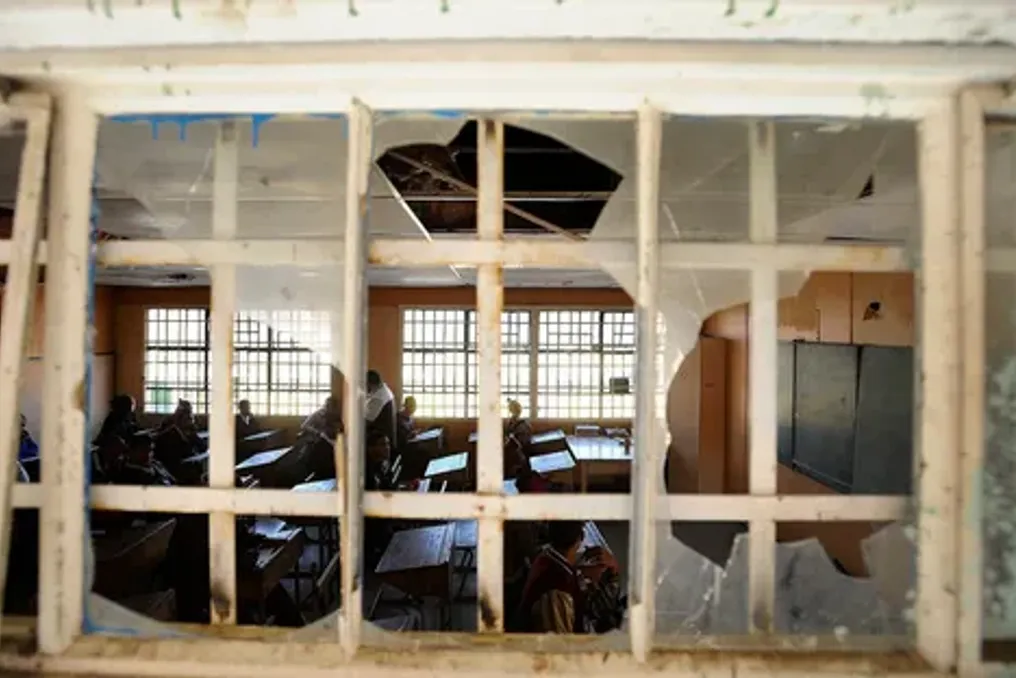
The Western Cape Education Department (WCED) will incur expenses exceeding R2.1 million to cover damage caused by 67 incidents of theft and vandalism across 57 schools following the winter break.
Main Targets of Criminals
The primary targets of the attacks were the school feeding program kitchens and computer labs. Last year, during a similar period, 46 schools were subjected to theft, and R1 million was spent on repairing damage from vandalism and theft. This represents an increase compared to the previous year, which recorded 45 incidents in 39 schools.
Education Department Comments
A WCED representative, Brona Hammond, noted that the recent occurrences represent significant losses for the department. She reported that reports collected from eight education districts during the June/July holiday period showed 67 incidents in 57 educational institutions, many of which resulted in substantial financial losses. The total estimated cost of these incidents currently exceeds R2.1 million, although the final amount has not yet been determined.
The highest number of incidents was registered in the Metro Central area, where 14 schools reported theft or acts of vandalism. Hammond specified that the main targets were the feeding program kitchens and computer rooms. Among the most frequently stolen or damaged items were electrical cables, internet and Wi-Fi cables, intercom cables, electrical wiring, CCTV cameras, air conditioning systems, motorized gates, gas cylinders, light fixtures, and copper pipes. In some cases, perpetrators even stole school shoes and vegetables from school gardens.
Additional Damage and Cooperation
Furthermore, some schools reported secondary damage after deliberate damage to water infrastructure, she added. Hammond emphasized that such incidents are not merely criminal acts but demonstrate a complete disregard for a public institution meant to serve children and create opportunities for youth.
The WCED representative highly praised the work of the police and security personnel, whose vigilance and prompt response contributed to successful interventions during the holidays. The department provided subsidies for additional security at 430 schools during the break, which led to some successes. Examples included the police arresting three suspects at Metro East Primary School following reports of suspicious activity, and at Metro Central High School, suspects were detained during an incident thanks to the quick reaction of security services and SAPS.
In another Metro Central high school, security staff confronted intruders overnight, and stolen gas cylinders were recovered. Hammond concluded that while security itself cannot always prevent criminals from accessing parts of the school, it underscores the critical importance of vigilance, rapid reporting, and a strong partnership between schools, security providers, SAPS, and local communities. The department is currently contacting schools to settle damages and implement appropriate repair and replacement procedures.
Teachers' Union Stance
Ridwan Ahmed, CEO of the National Association of Professional Teachers of South Africa (NAPTOSA), expressed the view that the education sector is already under pressure, and now budgets will have to be stretched even further. He noted that education is already facing immense pressure as schools cope with limited budgets, staff reductions, and growing demands, while teachers are forced to do more with fewer resources.
Ahmed stressed that every rand spent on restoring damage or replacing stolen infrastructure could have been directed towards improving teaching, supporting students, or educational resources. As an NAPTOSA representative, he stated that protecting schools cannot rest solely on the shoulders of the Western Cape Education Department. School safety is a shared responsibility requiring joint efforts from communities, parents, law enforcement agencies, municipalities, businesses, and education stakeholders. A school valued and protected by its community is less likely to become a target.