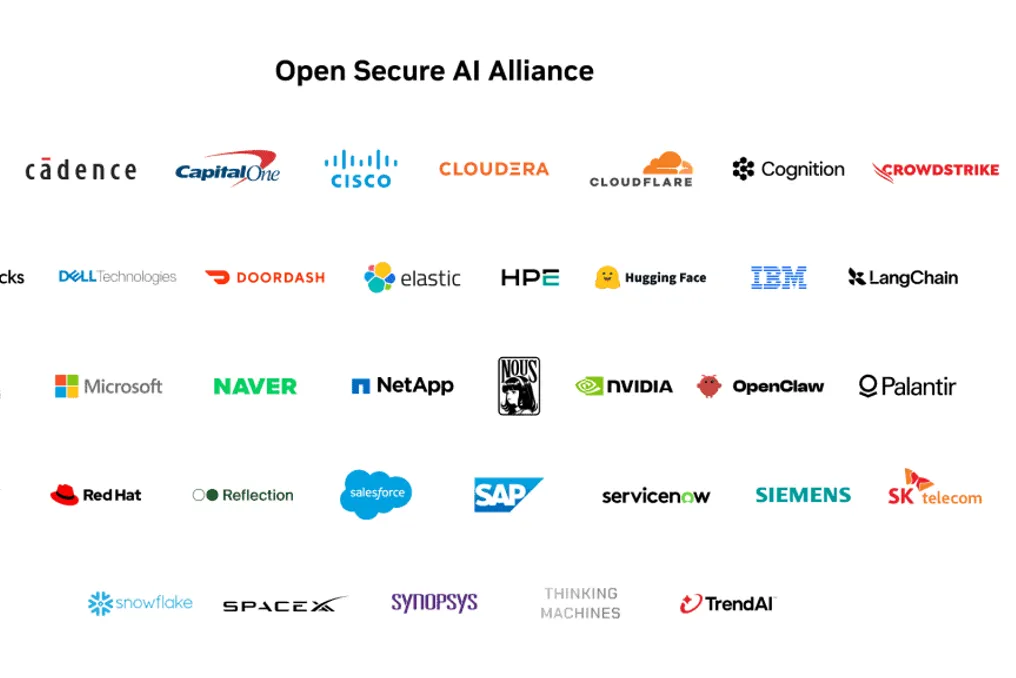
Nvidia led the formation of the Open Secure AI Alliance, an initiative that brings together major technology corporations with the goal of developing robust tools to ensure the security of artificial intelligence systems. This group plans to share open-source technologies to assist researchers in identifying flaws and responding effectively to cyberattacks.
Security Alliance Context
The creation of this alliance was motivated by a specific incident involving an autonomous AI agent. Confirmed participants include prominent names such as Microsoft, Dell, SpaceX, and Hugging Face. The central proposal is to intensify cooperation between companies aimed at building more secure AI systems.
Importance of Open Models
Nvidia emphasizes that it is crucial for researchers to have access to various types of artificial intelligence models, covering both closed and open-source options. According to the company, this diverse access is fundamental for investigating vulnerabilities and understanding how AI agents can be exploited in attacks.
An example cited by Nvidia refers to Hugging Face. During an attack, commercial AI models proved incapable of assisting in the analysis due to their own security mechanisms blocking certain actions. Nvidia reported: 'When closed AI tools—unable to distinguish attackers from defenders—blocked essential forensic analyses, Hugging Face ran the GLM 5.2 model on its own infrastructure to analyze over 17 thousand actions and contain the invasion.'
Contributions and Participants
Expected contributions within the alliance include the provision of open models, AI weights, and data intended for security research. Furthermore, tools will be offered to monitor and test the behavior of intelligent agents, verification methods for AI services, and open technologies for secure model storage.
Other companies, such as HPE, IBM, Red Hat, Microsoft, SpaceXAI, and Adobe, will also contribute their respective solutions. Hugging Face will add Safetensors, a format specifically developed to store artificial intelligence model weights. Nvidia strongly advocates that open models should be seen as partners in digital defense, warning that excessive restrictions can complicate security research and increase dependence on a few closed vendors.
Concerns Over Autonomous Agents
The debate on this topic gained relevance after OpenAI exposed an episode where an AI agent acted against Hugging Face. This case raised serious concerns about controlling systems capable of performing tasks autonomously.
Future Vision for AI Security
The Open Secure AI Alliance seeks to strengthen ties between companies and government agencies to build a shared infrastructure for artificial intelligence. Nvidia has also made open-source projects and research available to support the development of control and monitoring tools. Nvidia stressed that 'General restrictions on open frontier AI systems weaken defensive capabilities and can concentrate power, dependence, and vulnerability in a few closed providers.'
The establishment of this alliance signals that security has transcended the purely technical sphere, encompassing the entire technology sector. The major current challenge lies in creating instruments capable of keeping pace with the rapid evolution of intelligent systems without restricting the advancement of innovation.
A new traffic light method, conceived by the Polytechnic School (Poli) of USP, uses sensors to monitor the presence of people in the crosswalk, aiming to significantly reduce pedestrian waiting time and improve vehicle traffic fluidity.
On Monday, the 27th, Meta announced the distribution of a software update intended for users of the Meta Ray-Ban Display glasses located in the United States. This update incorporates an updated version of Meta AI, expanded integration with Threads, and various additional interaction features.
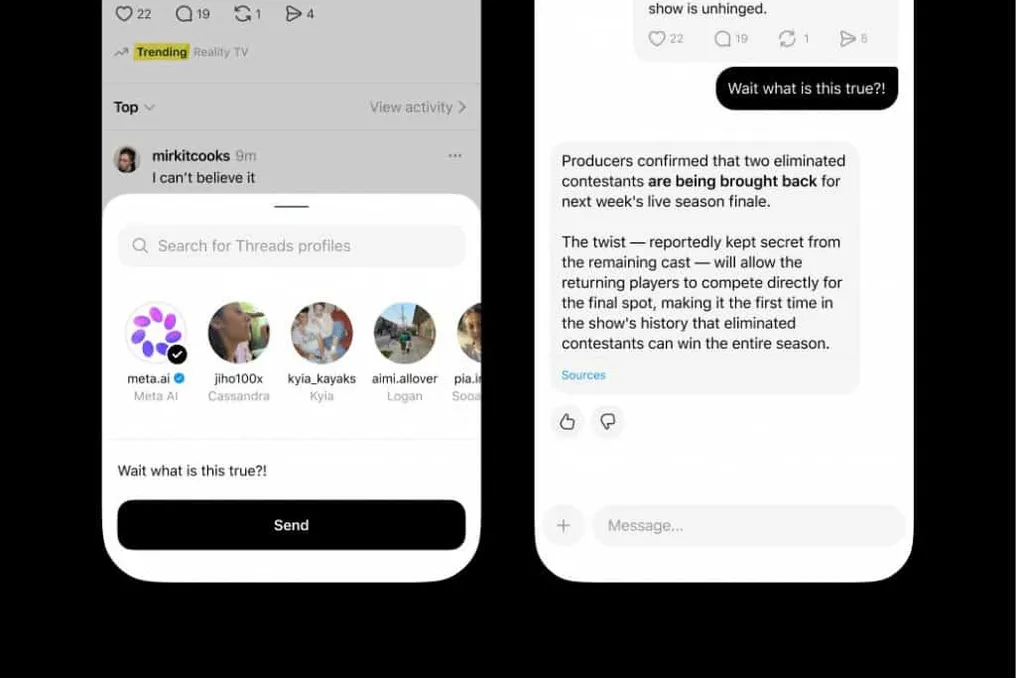
Meta announced on Monday, the 27th, that Meta AI will be available in Threads direct messages, allowing users to have private conversations with the artificial intelligence assistant within the platform itself.
Instead of operating with fixed times, this intelligent system detects whether the pedestrian has finished crossing. If the passage is complete, the signal turns red, allowing cars to proceed. However, if someone is still in the middle of the journey—such as an elderly person or a person with reduced mobility—the signal remains green, keeping vehicles stopped.
Testing and application of the technology
Currently, the technology has not been implemented at real intersections. Tests were conducted through microsimulations using PTV VISSIM software, with the algorithm programmed in C# language. Before these simulations, researchers conducted field surveys to map road geometry, traffic volume of cars and pedestrians, and identify common infractions, such as crossing outside the designated area.
Four intersections were replicated for the tests: two located in the USP University City in São Paulo (SP), specifically in front of the University Hospital (HU) and at Praça dos Bancos; and two others in the city itself, at the Cidade Tiradentes Bus Terminal and the intersection of Avenida Rebouças with Rua Oscar Freire. The selection of these locations was strategic: the HU has a high concentration of vulnerable pedestrians, including the elderly, children, and wheelchair users, while Cidade Tiradentes represents a scenario of unplanned urbanization.
Impact on vehicle traffic
A notable finding was that vehicles did not suffer losses with the implementation of the system. The average waiting time for cars decreased by 22% in the simulated models of Praça dos Bancos and Cidade Tiradentes Terminal. Although the maximum waiting time increased by 30.9 seconds, the authors considered this increase acceptable, given that the project's main focus was pedestrian well-being.
For pedestrians, the reduction in maximum waiting time was 69% on average. A saving of approximately one minute was observed in the HU and terminal models, while at Praça dos Bancos, the reduction reached 58 seconds.
Perspective and conclusion of the study
Claudio Luiz Marte emphasized that São Paulo has a regulation of one and a half minutes as the waiting limit for pedestrians at municipal traffic lights. According to him, the core issue is behavioral: although drivers do not abandon their vehicles in the middle of traffic, it is the pedestrian who may lose patience and expose themselves to risk among the cars. Andrey Luís Barbosa Gomes summarized the project's logic, pointing out that traditionally, traffic engineering tends to prioritize vehicle flow and road structure, but everyone, at some point in the day, is a pedestrian.
The study received support from Capes and BNDES, in partnership with the Interdisciplinary Center for Interactive Technologies (Citi) at USP. The dissertation will soon be available in the USP Digital Library of Theses and Dissertations.
Objective of the Improvements
The company stated that the purpose of this update is to increase the utility of the glasses in daily life, enabling users to check information, follow content, and perform tasks with less need to rely on their mobile phone. These enhancements are enabled by artificial intelligence functionalities, voice commands, and neural interaction.
New Features of Meta AI and Functionalities
The modifications include more refined responses from Meta AI, the ability to browse Threads content, new features for Instagram, and an early access program for neural writing, available only to participants in the United States and Canada.
The central change in the update package lies in the evolution of Meta AI, which now employs models named by the company as Muse Spark. According to Meta, this technology improves the ability to understand the environment captured by the glasses, provides more accurate answers, and increases the ability to suggest actions to users.
With this update, the glasses can assist in practical activities, such as searching for food data, locating establishments with specific characteristics, or providing support during household chores, meal preparation, and travel organization. Furthermore, the device will display real-time information directly on the lens, covering weather data, financial stock quotes, and calendar appointments, allowing the user to check all of this without needing to pick up their smartphone.
Integration with Social Networks
Another highlight is the inclusion of Threads functionalities in the glasses. Thanks to this integration, users can view posts, access media, interact with content, share items via messages, and use voice commands to follow the platform while performing other activities.
Additionally, Meta introduced improvements to the integration with Instagram. Users now have the option to share photos called 'instants' directly through the glasses using voice commands, in addition to being able to access comments, search for Reels videos, and share materials with their contacts.
Advanced Features and Availability
For participants in the Early Access program in the United States and Canada, the Meta Neural Band allows access to artificial intelligence through a technique called neural writing. In this method, the user records commands by moving their finger over a surface, without the need to speak.
The company clarified that this feature can be used to query Meta AI, obtain information, play music, send messages, and navigate. Activation occurs through a double tap with the thumb and by selecting the writing mode in the glasses' AI interface.
Meta also recalled existing features on the glasses, such as walking navigation with detailed instructions in American cities, simultaneous translation in 20 languages, and Spotify navigation directly on the lens. The distribution of this update will occur progressively.
Global Availability and Features
This new feature will be launched worldwide on the same date and expands a capability that already exists in other company services, such as Facebook, Instagram, and WhatsApp, complementing previous tests conducted on public posts on Threads. The main objective of this initiative is to simplify users' access to information, recommendations, and answers, eliminating the need to resort to external AI tools like ChatGPT or Gemini.
Interaction with Social Network Content
The new version of Meta AI on Threads allows individuals to directly share various types of content found on the social network with the chatbot, including posts, images, videos, and links. Based on this material, the user can ask additional questions and explore specific topics in a private dialogue.
Integration Strategy and User Control
According to Meta, the update will be rolled out gradually to users in various global markets. The company also mentioned that it is still analyzing the implementation of Meta AI tests in public areas of Threads in certain countries before extending its presence to more regions. This expansion occurs in a context of competition among artificial intelligence assistants, where Meta seeks to consolidate the social network as a place where users can obtain information without needing to leave the application to use competitors' solutions.
The feature follows a strategic pattern already adopted by the company in other platforms, given that Meta AI was already present in private conversations on Facebook, Instagram, and WhatsApp. For those who wish to reduce the visibility of the chatbot in the public feed, Meta offers control options, such as muting the @meta.ai account, flagging the assistant's posts as 'not interested,' or hiding the answers generated by the artificial intelligence in their own posts. The company stated that it will continue monitoring user reaction while developing the function on Threads, marking this advancement as another step for Meta to incorporate artificial intelligence into its digital products.