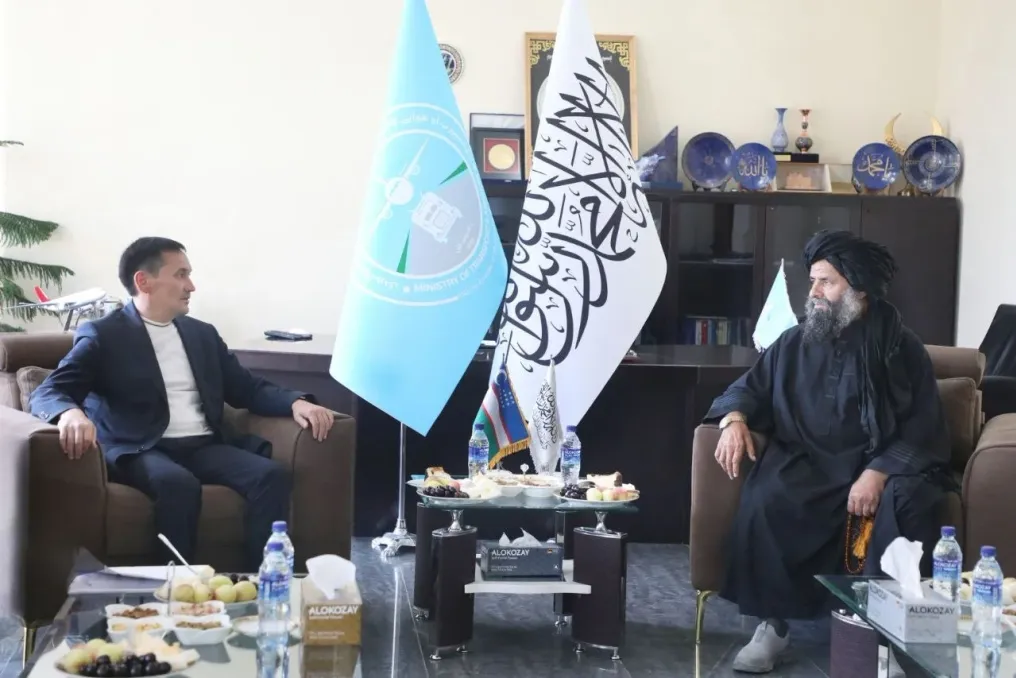
The Ministry of Transport of Uzbekistan reported that on July 26 in Kabul, negotiations took place between the Minister of Transport of Uzbekistan, Ilhom Makhmurov, and the Minister of Transport and Aviation of Afghanistan, Muhammad Fazil Mazlum.
The Ministry of Transport of Uzbekistan reported that on July 26 in Kabul, negotiations took place between the Minister of Transport of Uzbekistan, Ilhom Makhmurov, and the Minister of Transport and Aviation of Afghanistan, Muhammad Fazil Mazlum.
During the meetings, the parties discussed the development of road communication between the two states. Special attention was paid to creating more favorable conditions for national carriers, as well as optimizing the tariffs charged to Uzbek carriers in Afghanistan.
As a result of the negotiations, it was decided to hold the next meeting of the Interdepartmental Working Group before August 10, 2026. The goal of this meeting will be to discuss tariff reductions and establish them on a par basis.
Furthermore, the parties agreed to hold a separate meeting with representatives of relevant Afghan agencies soon. This meeting is intended to promptly resolve issues arising in the work of national international carriers. It is expected that the agreements reached will contribute to the development of international freight transport between Uzbekistan and Afghanistan, and will improve logistical conditions for business in both countries.
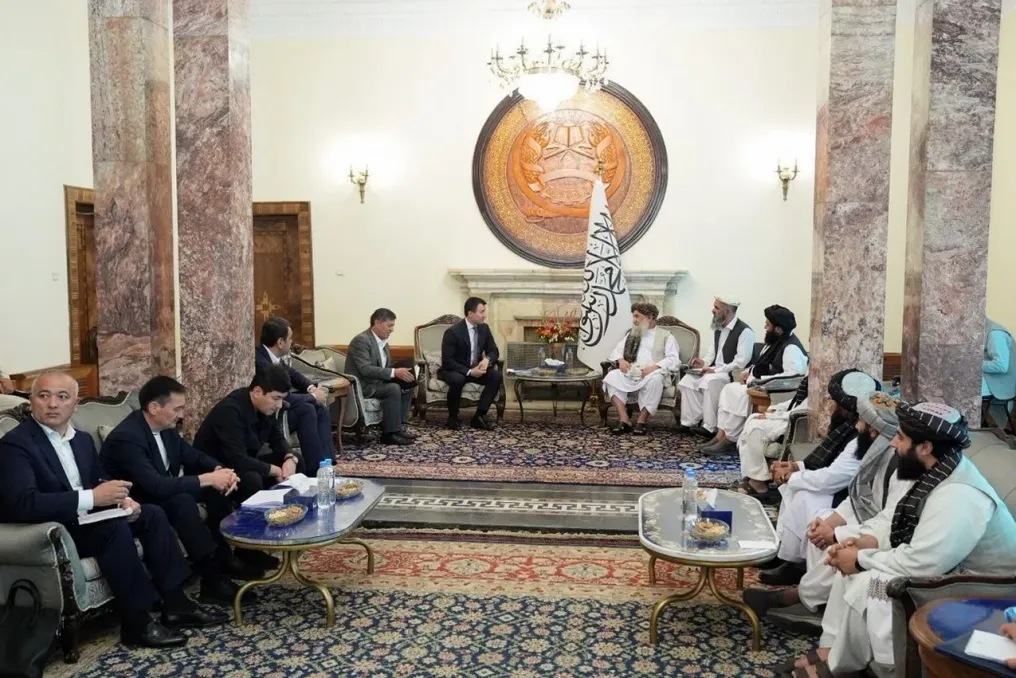
A meeting took place in Kabul between the Prime Minister of Afghanistan, Mullah Mohammad Hassan Akhund, and the Deputy Prime Minister of Uzbekistan, Jamshid Khodjayev, who headed the Uzbek delegation. The governor of the Fergana region, Khayrullo Bozorov, also participated in the negotiations.
The parties discussed the further development of trade and economic interaction, as well as the implementation of previously reached agreements in the field of trade and investment. Jamshid Khodjayev emphasized that the goal of the large Uzbek delegation, which included representatives of state bodies, legislators, entrepreneurs, and investors, is to strengthen political and economic ties between the two countries.
According to him, Afghanistan holds a significant place in Uzbekistan's foreign policy. The delegation's visit was organized at the instruction of President Shavkat Mirziyoyev with the aim of beginning the practical implementation of agreements in the sectors of trade and investment and assessing the results of their execution.
Khodjayev reported that last year the volume of Afghanistan's exports to Uzbekistan reached 150 million US dollars. Since the beginning of the current year, this amount has been 111 million US dollars, and further growth is expected by the end of the year. Furthermore, the deputy prime minister noted that Uzbekistan issued 5000 visas to Afghan citizens, which he links to the development of friendly and economic relations.
Mullah Mohammad Hassan Akhund welcomed the Uzbek delegation, calling its visit an important step for further strengthening bilateral relations. He stated that the arrival of such a representative delegation and the development of economic cooperation demonstrate Uzbekistan's confidence in Afghanistan's future. The Prime Minister of Afghanistan also expressed interest in deepening ties with Uzbekistan and confirmed his readiness to fulfill the reached agreements.
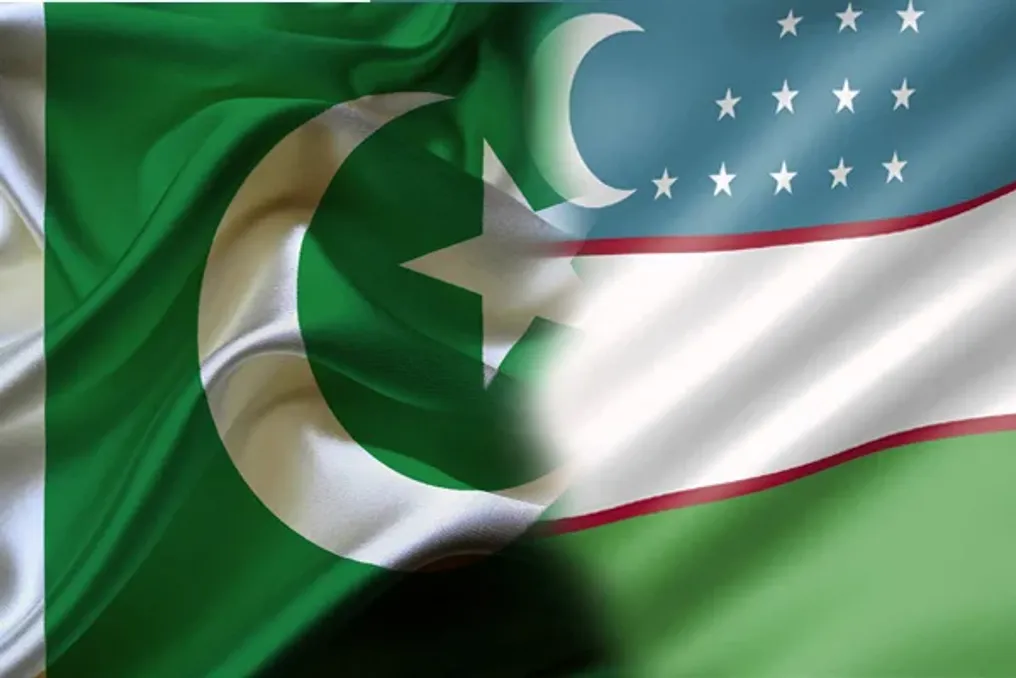
Uzbekistan and Pakistan have reached a preliminary agreement to include the transport corridor through China in their bilateral transit trade system.
According to information published by Pakistan Today, the relevant amendments are planned to be formalized during the upcoming visit of the Deputy Prime Minister of Uzbekistan to Pakistan. The parties intend to sign a protocol that will introduce changes and additions to the existing Agreement on Transit Trade Exchange between the two states. This document will officially establish the Chinese route in the list of permitted transport corridors.
Under the new plan, goods will move through the Sost dry port, cross western China, and then proceed to Central Asian countries. Pakistan Today reported that expanding the list of routes is intended to ensure the uninterrupted transportation of goods between the two countries amid changing regional security conditions. Once the changes come into force, Pakistan will be able to use the Chinese route to deliver goods to Central Asian countries, including Uzbekistan, while Uzbekistan retains access to Pakistani ports.
Previously, the shortest and most economically advantageous option was the route through Afghanistan, which formed the basis for the Uzbekistan-Afghanistan-Pakistan railway project. However, due to the deterioration of relations between Islamabad and Kabul and the closure of the Torgam and Chaman border crossings in October 2025, this transport corridor has effectively ceased to function. As an alternative, Pakistan developed routes through Iran and China. Nevertheless, difficulties in the Iranian direction reduced the attractiveness of this path, increasing the significance of the Chinese corridor for regional trade.
Although the route through China is longer and potentially more costly in terms of transportation, it is considered a strategic alternative. This allows the countries to diversify their freight transport and reduce dependence on a single route. According to Pakistan Today, bilateral trade between Pakistan and Uzbekistan reached $445.9 million in 2025. Pakistan's exports amounted to $120.9 million, while imports from Uzbekistan reached $325 million. Pakistan is Uzbekistan's second-largest trading partner in South Asia.