Nonhle Thema published a touching message on social media to honor the memory of her late mother, legendary actress and South Africa's first Black beauty queen, Cynthia Shange, on the day that would have been her 77th birthday.
Nonhle Thema published a touching message on social media to honor the memory of her late mother, legendary actress and South Africa's first Black beauty queen, Cynthia Shange, on the day that would have been her 77th birthday.
Cynthia Shange passed away on April 20 in KwaZulu-Natal at the age of 76 due to diabetic complications. She was buried in Inanda on April 26. On July 27, Thema marked this day by writing: 'Happy heavenly birthday to my mom 'Cynthia Philiswe Shange'. Today she would have turned 77 on the 27th of the seventh month, and 777 is a number of completion. She finished her race on earth strongly and will forever remain in our hearts. Thank you, Mom; your legacy lives, you will always be remembered.'
This emotional moment comes against a backdrop of broader cultural reevaluation related to Thema's notable influence in South African media. This resonance began after a viral interview she gave on 947 Drive with Thando Thabethe. The interview, broadcast on July 18, became popular after Thema claimed to have introduced Twitter to South Africans. She also shared that her family was one of the first Black families to move to Bryanston in 1990.
Comments on social media sparked controversy: some users questioned her claims, while others felt a broader meaning was being missed—Thema acted as a modern influencer even before the influencer economy existed. She did what today's online celebrities do: built a personal brand, controlled attention, moved between the entertainment and fashion industries, documented her lifestyle, and turned her personality into cultural currency. The difference was the absence of ring lights, TikTok strategies, or creator economy guides; instead, she had 'O-Access', 'V-Entertainment', and the show 'Nonhle Goes to Hollywood', as well as interviews with international stars and an uncompromising self-confidence that the South African audience was not always accustomed to seeing from young Black women.
Old footage and photos that surfaced reminded people of Thema's international reach and influence in the late 2000s and early 2010s. The discussion began shifting from 'Is she serious?' to 'Wait, maybe she really was that girl.' Although not all claims from the interview were universally accepted, social media users also challenged some aspects of the Twitter timeline. However, the larger discussion became more interesting than the initial dispute: what does it mean to be a pioneer if people only acknowledge the work when culture catches up?
Even Somizi Mhlongo joined the online conversation after some viewers interpreted a TikTok video as a reaction to Thema's interview. He later denied the idea that he was mocking her. In response to support on Instagram, she wrote: 'You are so sweet, THANK YOU 🇿🇦 for supporting me. I LOVE YOU SO MUCH... I see you.' Nevertheless, being ahead of its time came at a high cost. When her uncompromising 'bragging' clashed with local expectations of celebrity modesty, she faced South Africa's first large-scale celebrity 'drag session', resulting in the loss of a high-profile advertising contract with Dark and Lovely.
Coincidentally, this wave of nostalgia perfectly coincided with a monumental moment on the global charts. On July 24, pop star Tyla released her long-awaited second album 'A*POP', which includes a dazzling, reimagined version of the song 'Fairytale' with Liquideep. For South Africans, this track is closely linked to Thema, who played a charming, Cinderella-like lead in the original 2010 music video. As Tyla brings this soul-house anthem to the world stage, the excited online army noticed a cosmic coincidence, expressing hope that Thema would be featured in Tyla's upcoming music video. For fans, the chance to see the 'girl from Mzansi' reclaiming her throne in a global visual project would be the perfect finale to her story.
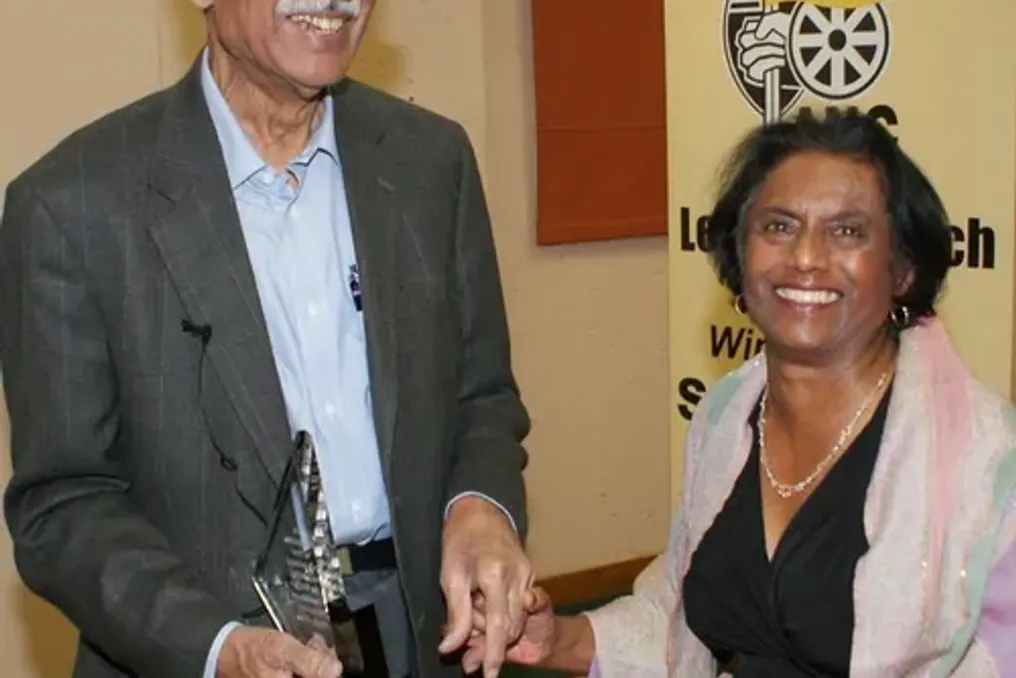
Shanti Naidu Thivi passed away this week, concluding an era of distinguished political figures. Previously, in 1981, she presented a special award on behalf of the ANC to veteran diplomat and activist Enughe Reddy, who played a significant role in advancing the struggle globally, especially during his time as an Indian diplomat at the UN.
Dr. Devi Mudli Rajab, author of a book on South African Indian women, recalls meeting Shanti Naidu Thivi in Johannesburg. During this meeting, she brought a packet of newspaper clippings about her life in the struggle. Shanti was described as a modest, beautiful, and graceful woman with iron strength.
At the meeting, she demonstrated not weakness, but strength, anger, and fighting spirit capable of enduring solitary confinement torture and long bans that frightened even the bravest. Shanti was the granddaughter of Tumbi Naidu, a Gandhi lieutenant in South Africa, and the daughter of Roy Naidu, who became vice-president of the Transvaal Indian Congress. Thus, her family had deep political roots.
At their first meeting, Shanti showed photographs and clippings collected over years. Among them were pictures of strong women from her family, including her grandmother, mother, and aunts, many of whom were dressed in saris and raising children. In the 1950s, her family home in Johannesburg became known as the 'People's House,' where her mother Amma was famous for her hospitality and helping to hide ANC and SAICP activists.
Shanti was born in 1935 in Johannesburg. She was the eldest of five children. Her life was not easy: her father, Roy, died when she was only 18, and she and her brother Indre had to drop out of school to earn a living. Despite this, she maintained that politics became her main education.
She held various temporary positions while remaining politically active. Initially, she worked as a secretary in the Democratic Congress, but after the organization was banned in 1961, she lost her job. She then joined the South African Congress of Trade Unions (SACTU), working there for a year until she was banned for five years in 1963 on charges of political activity.
After the bans were implemented, it became extremely difficult for her to find work, as she was restricted to one magistrate district in southern Johannesburg and had to report weekly to the police station. Nevertheless, her political activities continued, leading her into contact with banned individuals such as Winnie Mandela and Joyce Sikakane, which put her in direct danger.
In June 1969, Shanti was arrested under the Terrorism Act. After two weeks in a Johannesburg jail, where she was not allowed to communicate with family or the outside world, she was transferred to the Commissioner of Police (COPOL) building in Pretoria. There, the police attempted to break her spirit to obtain testimony against 22 ANC members, including Winnie Mandela, Ruth First, Lillian Ngoyi (President of the ANC Women's League), Joyce Sikakane, future Member of Parliament Rita Mzana, future Minister Harbara Hogan, and Dorothy Njembe.
She was assigned a small, dark, windowless cell. She was provided with a toilet, a thin felt mat, and a thin blanket. Although June is mid-winter in Highveld, she faced icy cold concrete. She recalled turning her coat into a pillow.
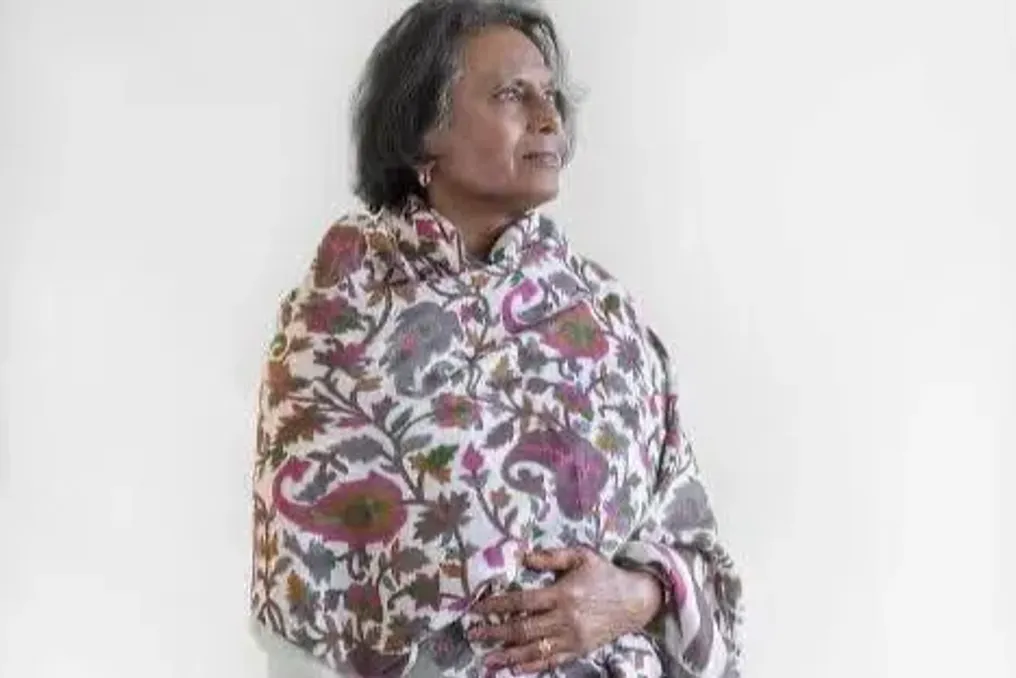
Shanti Naidu Thivi, a distinguished heroine of the South African liberation struggle, passed away on Thursday at the age of 91. The 1860 Heritage Centre and the Ahmed Kathrada Foundation paid their respects to this figure.
In its statement, the heritage centre noted that Naidu was a heroine who walked alongside them. It emphasized that they honor the freedom fighter for her unwavering courage, deep selflessness, and historical pursuit of justice and human rights. Like Nelson Mandela, Shanti Naidu Thivi demonstrated that true leaders fight for equality, overcome prejudice, and restore dignity to the oppressed.
Naidu was placed in solitary confinement with Winnie Mandela for her political activism. Along with seven other women, she spent over a year in Pretoria Central Prison. Her refusal to testify in the 'Trial of 22' in 1969 and the brutal conditions she endured are embodiments of activism that will be forever remembered. The director of the 1860 Heritage Centre, Selvan Naidu, stated that her brave fight for democracy continued even after her release.
The Ahmed Kathrada Foundation announced that Naidu's death marked the end of an entire era, closing a chapter of life marked by quiet dignity, strong resilience, and unwavering commitment to justice. In the statement, they expressed deepest condolences to her husband Dominic Thivi, the Naidu and Pillay families, and everyone who loved her. It was said that Shanti taught that although the body can be imprisoned, the principled soul can never be incarcerated.
Speaking about her life in the struggle, the foundation specified that Naidu did not just join the movement; she was born into its foundations. Coming from the legendary Naidu family, her line of resistance traces back to her grandfather Tambi Naidu, who was a chief lieutenant of Mahatma Gandhi during the early Satyagraha campaigns in South Africa.
Raised in a home where political activism was a natural part of life, Shanti, along with her siblings Indres, Murti, Ramni, and Prema, absorbed the values of selflessness and sacrifice from an early age. In her youth, as a member of the Transvaal Youth Congress and the South African Federation of Women, Shanti stood at the forefront of opposing unjust laws. She distributed leaflets, organized boycotts, and resolutely opposed the horrors of the apartheid regime.
Shanti's true willpower was tested in 1969 when she fell under the regime's power according to the harsh Terrorism Act. She was held in solitary confinement, subjected to sleep deprivation and torture by the notorious intelligence service. She was forced to become a state witness in the infamous 'Trial of 22'. Faced with the threat of life imprisonment, her response on the stand became a defining moment of moral courage in South African history. She looked the judge in the eye and refused to testify against her comrade, Winnie Madikizela-Mandela, and others, stating: 'I have two friends among the accused. I do not want to testify because I cannot live with my conscience if I do it.'
Due to her choice of conscience over comfort, Shanti endured 371 days of brutal confinement. Her resilience left an indelible mark on Mamme Winnie, who later recalled Shanti's vacant eyes and emaciated body on the stand, describing her immense love and respect for her sister who sacrificed everything so as not to betray her people.
When the regime could not break her spirit, it tried to erase her presence. For years, the apartheid government deliberately denied Shanti permission to leave. Only through significant international pressure and direct intervention by the liberal Member of Parliament Helen Suzman was she finally allowed to leave South Africa in September 1972. Despite being stripped of her citizenship and banned from returning, her departure from Jan Smuts Airport was a powerful act of defiance: hundreds of supporters gathered to sing 'We Shall Overcome' as she bid farewell to loved ones.
Uprooted from her homeland, Shanti refused to be silent during 19 years of exile. Upon arriving in London, she immediately resumed participation in the global anti-apartheid struggle. The foundation reported that Naidu joined the research department of the International Defence and Aid Fund for South Africa (IDAF), meticulously documenting human rights abuses, smuggling financial aid to families of political prisoners, and raising international awareness about the crimes of apartheid.
Her activities later led her to Morogoro, Tanzania, where she served the African National Congress (ANC) at the legendary Solomon Malango Freedom College (SOMAFCO). In this sanctuary, established for young students fleeing after the Soweto uprising in 1976, Shanti helped nurture and train the next generation of freedom fighters. It was during this period of exile that she met and married her husband, Dominic Thivi.
The foundation noted that despite decades of longing for home and the pain of separation from family, Naidu's activism never waned. She successfully survived the tyranny that sought to erase her and finally returned home to Johannesburg in 1991.
The foundation reported that Naidu, along with her brothers, testified before the Truth and Reconciliation Commission (TRC) in 1997. Her appearance was driven not by a desire for revenge, but by a profound duty to expose the systematic cruelty of the apartheid regime. In a heartbreaking and deeply moving testimony, Shanti first voiced the quiet horrors she experienced in isolation:
She detailed the psychological and physical torture inflicted by the intelligence service, describing how she was forced to stand continuously for five days and five nights under constant interrogation. She recounted terrifying moments when she began losing touch with reality, experiencing vivid, nightmarish hallucinations due to sleep deprivation. Furthermore, she testified about how the police used her love for family as a weapon, threatening the detention of her entire family if she did not comply. Despite the deep trauma of reliving these memories, Shanti's testimony before the TRC became a model of courage, ensuring that the regime's attempts to crush her spirit would be forever documented as a monumental failure.