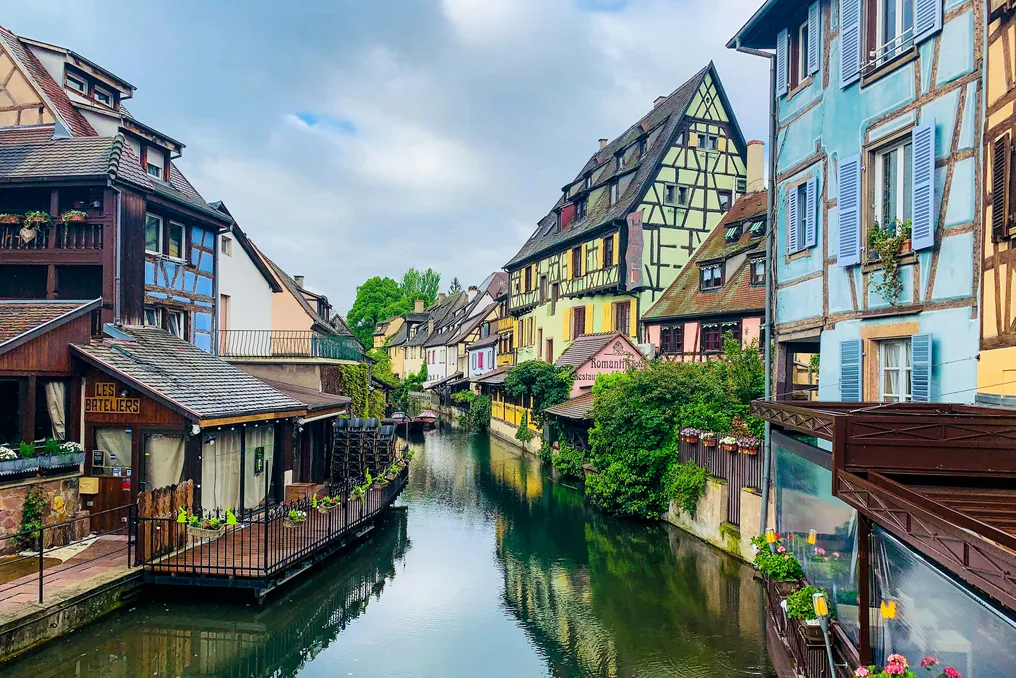
Alsace, an area historically marked by territorial conflicts that defined the two world wars, currently belongs to France but retains numerous Germanic origins.
History of Territorial Disputes
This region, which oscillated between France and Germany over the last 160 years, is a recurring theme in history studies to understand the confrontations in Western Europe during the 19th and 20th centuries. The turbulent past of disputes is reflected today in the culture and architecture of Alsace.
Although it is French, Alsace exhibits many typical constructions of Germanic customs, visible in Strasbourg, its capital. The region is also famous for its award-winning wines and preserved medieval villages, dating back to periods before identity disputes.
Franco-Germanic Legacy
The French call the area Alsace, while the Germans call it Elsass. Located further east of the current French territory, the region was under the Holy Roman Empire for centuries, which gave it a notable Germanic influence. In Strasbourg, for example, Johannes Gutenberg significantly advanced the development of printing from the 15th century, transforming communications and religion.
German dominance only began to be challenged in the 17th century, when the reign of Louis XIV sought to incorporate these lands into France, initiating a process of territorial dispute in subsequent centuries. Although a large part of the territory formally belongs to France, the long presence of German power remained evident in the language, customs, and local laws.
The reconquest of the region became a frequent reason for wars between neighbors. In 1871, Germany annexed the area after the Franco-Prussian War. However, the story did not end there: Alsace was a central point of disagreement during the First World War, returning to French possession after the Allied victory. During the Second World War, Hitler also aimed to reclaim Alsace, and the Germans again raised their flag in the region. France regained control of Alsace in 1945, maintaining it since then.
Main Attractions of Alsace
The successive occupations left deep marks, making Alsace a unique area within France, distinct from the more uniform national identity found in other parts of the country. Strasbourg deserves a visit to experience this historical and geographical mix, featuring half-timbered buildings traditionally associated with the Germans, contrasting with French flags.
At the end of the year, Strasbourg transforms into the 'Christmas Capital,' hosting Christmas markets similar to those found across the border. Furthermore, smaller towns are worth exploring at other times. Colmar, with roots in the 9th century, is known for its Christmas market and has an old area with canals, earning the nickname Petite Venise (Little Venice).
Riquewihr, a neighboring town, shows a remarkable Germanic influence even in its name. With only a thousand inhabitants, the locality preserves almost intact 16th-century buildings, without new constructions, and is part of routes celebrating local wine tradition.
Wine tourism lovers can travel the Route des Vins d’Alsace, which covers 170 km of producer properties. The area is famous for its white wines, whose grape varieties, such as Riesling, Gewürztraminer, and Pinot Gris, carry German references in their names.
Another relevant tourist spot is the imposing castle of Haut-Kœnigsbourg. Probably originating in the 12th century, this fortress stands out for its privileged position on a cliff in the Vosges mountains, 757 meters above sea level, offering a panoramic view and being one of the most visited places.