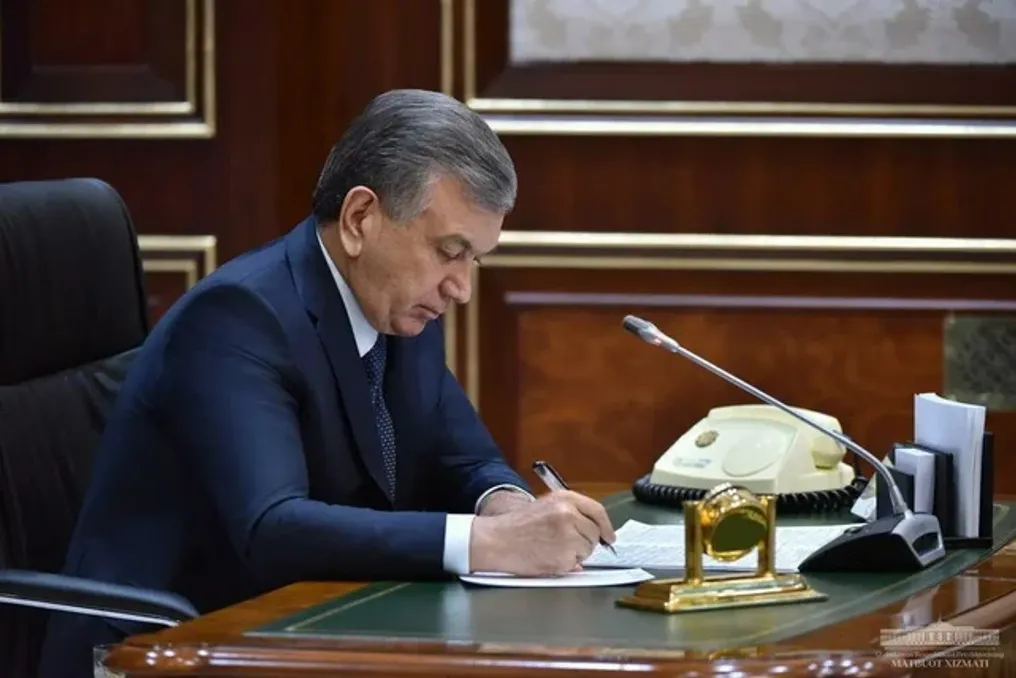
The President of Uzbekistan approved a number of measures aimed at improving strategic planning in the field of digital technologies and strengthening state control in this sector. Decree No. UP-141 was signed on July 24, 2026.
The President of Uzbekistan approved a number of measures aimed at improving strategic planning in the field of digital technologies and strengthening state control in this sector. Decree No. UP-141 was signed on July 24, 2026.
According to this decree, it is necessary to update the development strategies for 'Digital Uzbekistan — 2030' and artificial intelligence until 2030. These updates must comply with current requirements and harmonize with the goals of the 'Uzbekistan — 2030' strategy.
Under the new priorities, it is expected that by 2030, the 'Five Million AI Leaders' project will train five million young people. The decree also provides for improving radio frequency spectrum management and further digitalization of economic sectors.
The document pays special attention to state supervision in the areas of mass communications, telecommunications, digital technologies, and publishing.
Uzbekistan intends to improve its position in the Global E-Government Survey. It is planned that by 2030, the country will enter the top 30 global countries according to the E-Government Development Index.
According to the document, by 2030, the coverage of fiber-optic communication networks and broadband internet should reach 99%. Conditions will also be created for residents of remote areas to use satellite communication technologies. Programs will be established to support and accelerate the development of startups in the field of digital technologies, which can receive assistance with the participation of international experts and business mentors.
The country plans to create more than 15 artificial intelligence laboratories. A system called 'Followers of Muhammad al-Khwarizmi' will be introduced for high school students, and women's participation in digital technologies will be expanded. By 2030, it is planned that the share of services on the Unified Interactive State Services Portal provided using AI will reach 10%, and the share of electronic public services available via mobile devices will reach 90%.
According to the Fiscal Strategy for the upcoming three-year period, Uzbekistan has set its medium-term fiscal policy goals for 2027–2029.
The document provides for maintaining economic growth rates at around 7% annually, stabilizing the inflation rate within the target of 5% starting from 2027, and limiting the budget deficit to no more than 3% of GDP and public debt to no more than 40% of GDP.
According to national forecasts, GDP growth will reach 8.1% in 2026, 6.9% in 2027, 7.1% in 2028, and 7.4% in 2029. The main driving forces will be industry, which is expected to expand by 6.7–7.9%, and market services, showing an annual growth of 14.3–15%. Agriculture is expected to increase by approximately 5%.
This strategy aligns with the overall goal of expanding the economy to over 240 billion US dollars by 2030 under the Uzbekistan–2030 strategy. To achieve this goal, it is planned to create sustainable sources of growth, increase private investment and exports, raise the country's sovereign credit rating to investment grade, and include Uzbekistan in the group of upper-middle-income countries.
The document mentions the IMF forecast from April, according to which global economic growth will slow from 3.4% in 2025 to 3.1% in 2026, and global inflation will accelerate from 4.1% to 4.4%. Despite external uncertainty, strong domestic economic activity is considered the basis for maintaining high growth rates.
Key policy priorities include expanding the tax revenue base through improving tax administration, reducing the shadow economy, and abolishing inefficient tax benefits, alongside targeted budget expenditures and strict adherence to fiscal rules. Furthermore, salaries of civil servants, pensions, and social benefits will be indexed at a rate no lower than inflation.
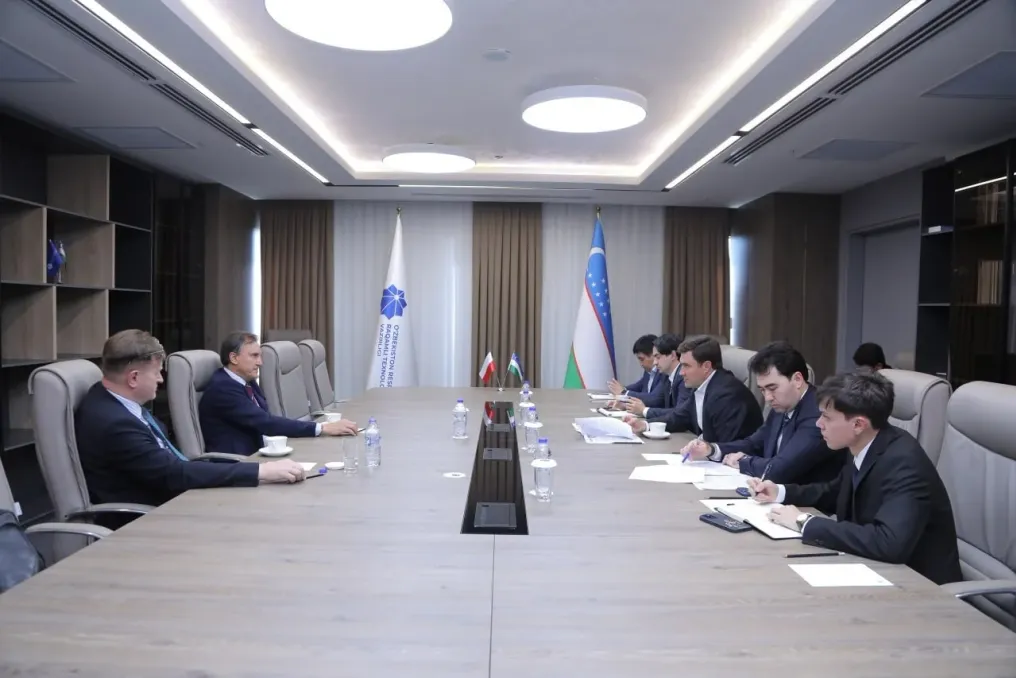
The First Deputy Minister of Digital Technologies of Uzbekistan, Oleg Pekos, held a meeting with the Polish Consul in Uzbekistan, Marian Pjezdzeczyk, and Asseco International Vice President, Pschemislaw Senkowski. The parties discussed potential for joint work in the field of digital transformation and implementation of large IT projects, as reported by the Ministry of Digital Technologies.
During the negotiations, participants reviewed opportunities for interaction in the fields of e-government, financial technologies, artificial intelligence, data centers, as well as the implementation of state and corporate digital initiatives.
Polish representatives received detailed information about the reforms being carried out in Uzbekistan aimed at developing the digital economy, increasing the export of IT services, conditions for residents of the IT Park, mechanisms for supporting foreign companies, and major investment projects for developing digital infrastructure.
Special attention was paid to the development of artificial intelligence. Participants were presented with information on specific incentives for AI and data center projects in Karakalpakstan, the President's initiative to create artificial intelligence laboratories, and the system for training highly qualified IT specialists.
The parties also discussed the possibility of applying Asseco International solutions in Uzbekistan for sectors such as public administration, banking, and healthcare, as well as implementing joint projects, training local specialists, and knowledge exchange. At the end of the meeting, an agreement was reached to continue the dialogue for developing practical cooperation, studying the possibility of opening Asseco International operations in Uzbekistan, and jointly executing mutually beneficial projects.
As part of the visit, the delegation familiarized itself with the activities of UZINFOCOM and its projects in the field of digital government, state information systems, data centers, cloud technologies, cybersecurity, and artificial intelligence.