Multiverse Computing, a Spanish technology player, has reached a significant financial milestone by raising $570 million in a major Series C funding round. These funds are intended to scale its energy-efficient software globally.
Multiverse Computing, a Spanish technology player, has reached a significant financial milestone by raising $570 million in a major Series C funding round. These funds are intended to scale its energy-efficient software globally.
The deal, led by Forgepoint Capital International, BNPP Solar Impulse Venture Fund, and Bullhound Capital, values the San Sebastián-based company at $1.7 billion pre-money. Additional participants in the round include HP Inc., Orange Ventures, Scania Invest, and Santander.
Multiverse Computing has gained a reputation for challenging the common belief that powerful artificial intelligence requires massive data centers and colossal energy consumption. Co-founders Enrique Lizaso and Dr. Roman Orus created CompactifAI to change the approach to working with software models in business. This software uses tensor networks to compress large language models, reducing their size by 80% to 95% while maintaining overall accuracy.
Thanks to these sophisticated tools, it is now possible to run them on local processors, avoiding huge electricity bills. CEO Enrique Lizaso emphasized that businesses no longer have to rely solely on expensive cloud data centers to achieve high performance.
Running software on local hardware offers significant advantages to modern corporations. Complete dependence on remote cloud servers leads to latency issues, high costs, and serious privacy risks. Multiverse eliminates this bottleneck by placing compressed intelligence directly onto edge devices. Now, smartphones, autonomous vehicles, industrial cameras, and satellites can perform complex tasks without an active internet connection.
Major companies such as Bosch, Telefónica, Allianz, and the Bank of Canada are already implementing these solutions to optimize daily operations. The software also includes an intelligent router that determines whether a task should be executed locally on the phone or sent to a cloud server, thereby saving computational power at every stage.
The injection of $570 million in the Series C will actively support Multiverse's global growth strategy. The company plans to establish specialized hubs in North America, the Middle East, East Asia, and Southeast Asia. The goal is to deliver green computing tools directly to local commercial centers. A significant portion of the capital will also be directed towards supporting sovereign AI projects, as governments and corporate clients require software platforms to be hosted on their own territory to comply with strict regional laws.
Multiverse provides an operating system layer that helps regional mega-factories function efficiently without dependence on foreign cloud providers. The commercial momentum supports this strategic leap. Since the Series B round in 2025, Multiverse's annual revenue has grown more than tenfold, and sales in the first quarter of 2026 increased by 96 times compared to the previous year, making it one of Europe's fastest-growing deep tech companies.
Ominimo has successfully completed its Series B funding round, raising $22.5 million. This round allowed the company to reach a valuation of $1.6 billion just two years after launch, making it one of the fastest-growing unicorns in the European insurtech sector.
Unlike several other fast-funded tech startups in Europe that focus on market size at the expense of profit margins, Ominimo has managed to achieve profitability while continuing to grow its customer base and expand across Europe.
Ominimo is based in Budapest and was founded in 2024 by Dusan Komar, Dennis Weinberger, Laslo Horvat, and Kristina Kozina. The company's main focus is modernizing vehicle insurance through the use of advanced data, process automation, and artificial intelligence technologies.
Ominimo is preparing to enter the US market while accelerating long-term international growth and regulatory compliance initiatives. Currently, the company provides insurance services in Hungary, Poland, the Netherlands, and Sweden, and plans further expansion. Operations will soon begin in Belgium and Romania, followed by plans to enter the Spanish, Italian, and French markets. Management aims for a successful launch of Ominimo's insurance services in the US market by 2027.
Obtaining its own insurance license is a key strategic goal. Currently, Ominimo operates as an managing general agent, handling pricing, customer acquisition, and claims management, while underwriting risk is borne by partner insurers. Transitioning to a licensed model will allow the company to retain a larger share of underwriting profit and gain greater control over product development, although this will also require significantly more regulatory capital.
Ominimo has distinguished itself by using hundreds of data points to assess insurance risk instead of relying on the limited variables traditionally used by insurance companies. This allows the company to price policies more accurately and increase operational efficiency. Its proprietary technology automates a significant part of the insurance process, including pricing and underwriting support, customer service, and claims management. The platform continuously learns from customer data, helping to improve pricing accuracy and reduce operating costs over time.
The company's financial results reflect this approach: Ominimo's annual gross premium revenue growth rate increased from 26.3 million euros in 2024 to approximately 307 million euros to date. The company serves nearly a million customers across various European markets while remaining profitable. Staff numbers have also grown rapidly: from about 40 people in the early stages to approximately 130 today, with plans to reach 150 employees by the end of the year.
Unlike many insurtech companies, Ominimo prioritized sustainable growth over aggressive expansion and weak financial operations. Its strategy involved partnering with existing insurers while simultaneously improving technology and operational capabilities for long-term success. This approach ensured steady growth, fostering strong partnerships with insurers such as Signal Iduna and DA Direkt. These partnerships have enhanced the customer experience, pricing models, and operational performance of the company across numerous global insurance markets. Investors remained confident as Ominimo consistently demonstrated strong business execution throughout its growth and expansion history. After being valued at $200 million during its Series A round in 2025, Ominimo successfully achieved unicorn status.
Whale has successfully closed a Series C funding round, securing an additional $40 million. This brings the total funding in Series C to $100 million. The fundraising comes amid growing corporate interest in artificial intelligence platforms capable of integrating digital tools with real business processes.
The leaders of this round were CMB International and SMBC Asia Rising Fund. They were joined by Krungsri Finnovate, Singtel Innov8, Hyundai Motor Group, and Charisma Partners. Previously involved in the round were funds such as Bosch Ventures, MTR Lab, MDI Ventures, Gentree Fund, and Linear Capital.
The company plans to use the raised funds to strengthen international growth, enhance relationships with corporate clients, and deepen integration into local infrastructure. In the near term, Whale aims to increase its presence in North America and the Asia-Pacific regions.
Founded by Jerry Ye, Whale developed an AI Operating System designed to assist organizations in understanding and automating physical production environments. The company's proprietary Business World Model interprets data collected via cameras, sensors, and audio devices.
Investors are demonstrating confidence in AI tools that genuinely impact business operations, rather than being merely impressive autonomous software. Whale intends to direct capital toward recruiting new specialists, expanding its presence across various regions, and improving the reliability of its platform, especially given the demand for such solutions.
Whale currently collaborates with enterprises in sectors such as retail, automotive, manufacturing, finance, food processing, healthcare, and telecommunications. The company's primary objective is to help a greater number of organizations automate workflows, ensure regulatory compliance, and gain deep insights into their business operations.
CMB International emphasized Whale's capability to execute complex corporate AI projects across different industries and markets, believing that the company's technological foundation ensures long-term global growth. SMBC Asia Rising Fund noted Whale's ability to structure data from the physical environment into actionable business analytics. This partnership is expected to combine Whale's technologies with the international client network of SMBC Group to accelerate solution adoption across various sectors.
Krungsri Finnovate gained capabilities for comprehensive operational support in the ASEAN market from Whale's AI platform, while Hyundai Motor Group believes the technology can be applied in sales, marketing, customer interaction, and service within the Group's business.
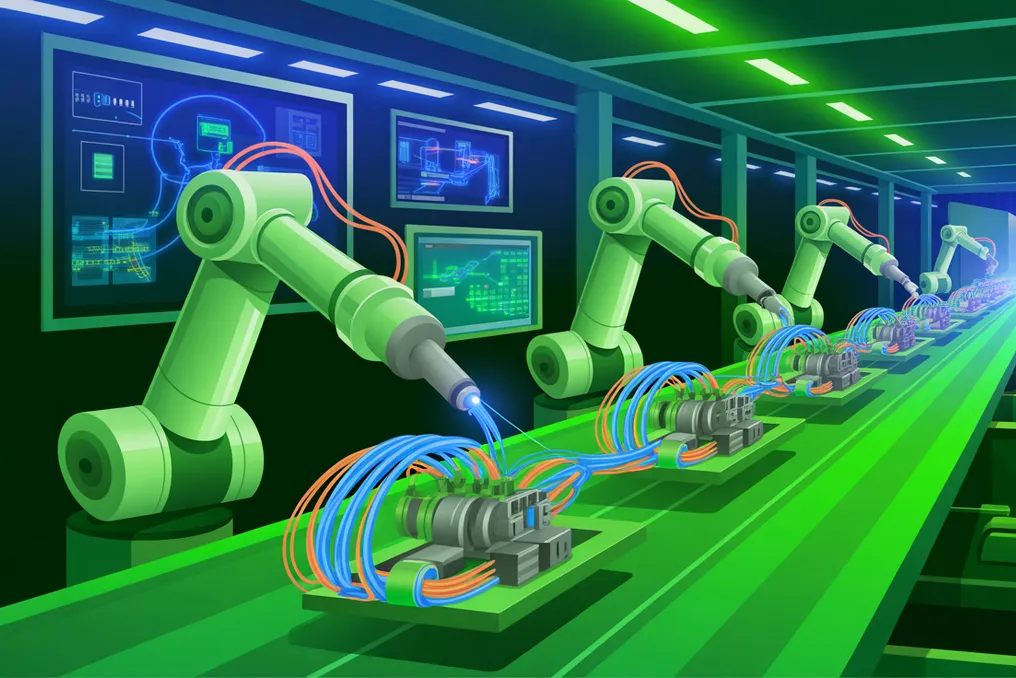
Senra Systems has successfully raised $65 million in a Series B funding round. These funds will be used to scale its software-driven manufacturing platform designed for wire harness production. The investment will allow the company to open a third production facility, which is necessary to meet growing demand from the aerospace and defense industries.
The funding round was co-led by Lowercarbon Capital and Interlagos. General Catalyst, Sequoia Capital, Andreessen Horowitz, Founders Fund, 8VC, CIV, Dylan Field, The Friedkin Group, Jaws Estates Capital, Sozo Ventures, and Alumni Ventures also participated.
CEO and co-founder Jordan Black noted that wire harnesses remain one of the most undervalued bottlenecks in manufacturing for the aerospace and defense industry, despite being critical components in advanced aircraft, satellites, launch vehicles, and defense systems.
Senra produces complex wire harness systems that provide power, communication, and data distribution across all aerospace and defense platforms. Their platform helps reduce manual operations, accelerates adaptation, and increases production stability.
The company's manufacturing operations are based on Amp—Senra's proprietary software platform. This system integrates engineering, calculations, supply chain management, production planning, and manufacturing workflows into a single digital environment.
Earlier this year, Senra opened its second manufacturing site in Cypress, which increased its production base fivefold. This 80,000 square foot facility is expected to help the company increase its monthly production capacity from approximately 1,000 wire harnesses to around 10,000 by next year.
The demand for wire harnesses has significantly increased amid rising government investments in aerospace and defense programs. Nevertheless, the industry continues to face labor shortages and production constraints. Senra aims to solve these issues by combining software automation with structured personnel training programs. The company is creating an integrated manufacturing solution capable of supporting the aerospace, defense, energy, and computing sectors.
Lowercarbon Capital General Partner Kai Lee stated that wire harnesses form the basis of virtually every advanced electronic platform, making manufacturing automation vital for expanding industrial potential.
The company has strengthened its leadership team by appointing Ken Wenner as Chief Technology and Product Officer. Wenner previously served as Director of Information Technology at SpaceX, where he oversaw corporate systems and the development of manufacturing infrastructure. He managed technologies supporting SpaceX's production operations and launch infrastructure across numerous advanced aerospace programs.
At Senra, Wenner will be responsible for the company's manufacturing platform, operating systems, and long-term technology roadmap. He will guide the technological strategy during the company's preparation for the next phase of business expansion. The company believes that software, automation, and workforce development will strengthen domestic manufacturing capabilities in critical industries.