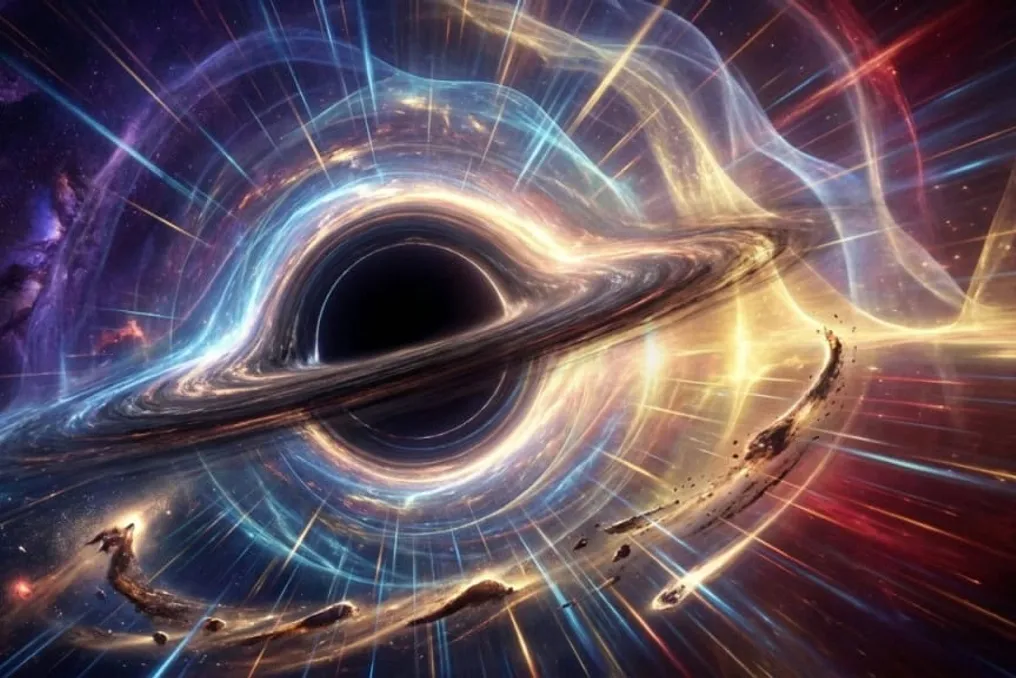
NASA is implementing a distinct approach to study supermassive black holes using the Nancy Grace Roman telescope. This instrument will seek to identify these cosmic giants by analyzing the explosions that occur when stars are destroyed.
NASA is implementing a distinct approach to study supermassive black holes using the Nancy Grace Roman telescope. This instrument will seek to identify these cosmic giants by analyzing the explosions that occur when stars are destroyed.
Black holes reside at the core of most galaxies, including the Milky Way, and some possess masses equivalent to millions or even billions of suns. However, a question persists among astronomers: how did these objects reach such vast sizes in such a short period?
According to a study published in The Astrophysical Journal, NASA's Nancy Grace Roman is scheduled for launch on August 30, 2026. Its function will be to observe supermassive black holes that existed approximately 11 billion years ago, aiding in reconstructing the formation trajectory of these celestial bodies.
Locating such entities is not trivial, given that black holes do not emit light themselves. Therefore, scientists rely on the light emitted by the material orbiting these objects before it is absorbed. Smaller ones attract less matter and consequently tend to go unnoticed.
In this context come the so-called Tidal Disruption Events (TDEs). When a star approaches a black hole too closely, it can be torn apart, generating a temporary flare that surpasses the brightness of an entire galaxy.
Mitchell Karmen, a graduate student at Johns Hopkins University and lead author of the study, stated that the Roman Space Telescope will be a transformative agent for transient event science. He emphasized that due to the equipment's high sensitivity, it will be possible to detect multiple TDEs at 'greater distances and in cosmically older epochs than ever before.'
The mission's methodology involves repeatedly returning to the same area of space during its research at high latitudes. The monitored region covers about 18 square degrees of the sky, which is equivalent to approximately 90 full moons. This tactic increases the probability of capturing ephemeral phenomena.
Among the central objectives of the mission are: identifying TDEs in distant galaxies; recognizing smaller and older supermassive black holes; investigating the evolution of these objects throughout cosmic history; and comparing various models regarding the genesis of the first black holes.
It is important to note that not all black holes cause this type of explosion. Those with more than a billion solar masses swallow stars before there is any disruption. Those with masses between 100 thousand and 100 million times that of the Sun are the ones that produce the luminous signals detectable by telescopes.
Roman will primarily focus on near-infrared light, while the Vera C. Rubin Observatory will conduct measurements in visible light, allowing each to reveal a distinct facet of the Universe's history.
Researchers project that Rubin could record thousands to tens of thousands of these events annually, while Roman should identify up to one hundred. Despite being less frequent, these records will provide information about a very primitive phase of cosmic evolution.
Suvi Gezari, an associate professor of astronomy at the University of Maryland and co-author of the study, stated that simply counting these events across different redshift values—a metric representing different eras of universal history—will already allow for establishing crucial limits for the population of black holes with about a million solar masses.
The current expectation is to verify whether the observations made by Roman and Rubin corroborate the study's predictions, contributing to elucidating how these giants arose and evolved over billions of years.
If your computer or laptop is experiencing slowness when starting the system or transferring files, it is recommended to consider a storage upgrade. Three options for NVMe SSDs with the PCIe Gen4 interface that are currently on sale on Amazon have been selected.
The Kingston NV3, with a 1TB capacity in the M.2 2280 format and NVMe PCIe Gen4 interface, offers read and write speeds superior to traditional SATA SSDs. This model is suitable for users seeking good daily performance while maintaining enough space for games, projects, and large files.
Another highlighted option is the Western Digital WD Green SN3000 500GB NVMe PCIe Gen4 (WDS500G4G0E). This drive combines the reliability of Western Digital with the speed of the PCIe Gen4 standard, reaching up to 5,000 MB/s read speeds. It is ideal for those who want to upgrade a laptop or PC without needing high capacity, making it perfect for the operating system and common applications.
Additionally, there is the 500GB version of the Kingston NV3, which shares the NVMe PCIe Gen4 standard but in a more compact configuration and at a more accessible price. This presents itself as a great alternative to replacing a slow hard drive with a much faster component, whether in a desktop or a laptop that has an M.2 slot.
It is important to note that SSD promotions can change rapidly throughout the day, so it is recommended to secure the product before the stock or offer runs out. Interested parties should check the provided links to verify current availability and conditions on Amazon.
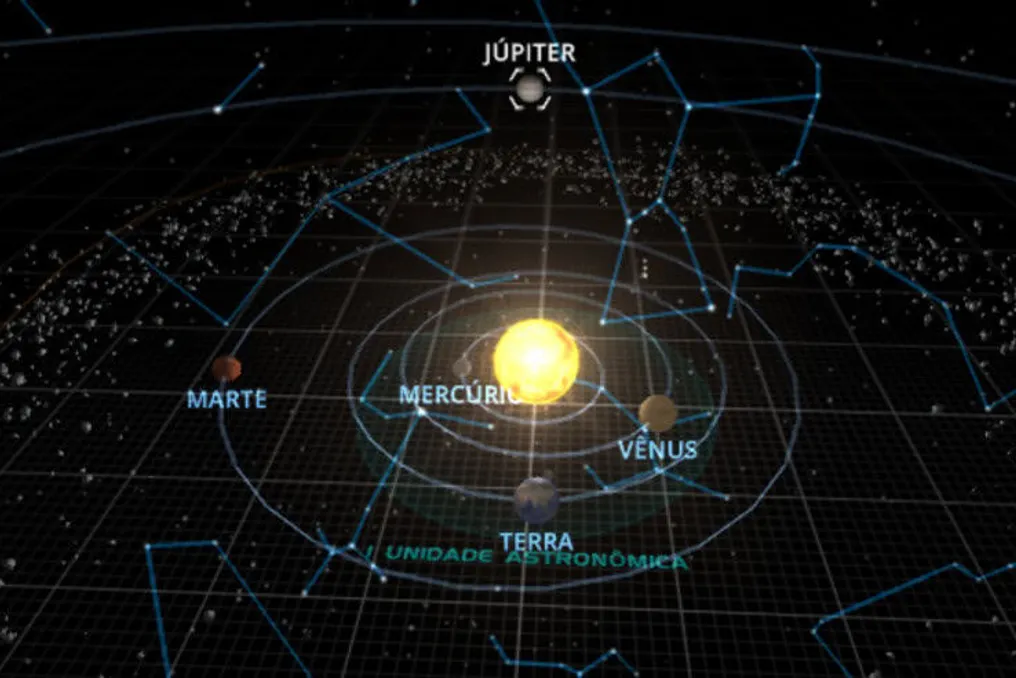
Jupiter is about to enter a period known by astronomers as solar conjunction. During this event, the planet will be invisible in the night sky because it will be immersed in the Sun's brightness for several weeks.
At this moment of maximum apparent proximity to the Sun as seen from Earth, the planet will be at a distance of 0°28' (28 arcminutes).
The race for supremacy in Artificial Intelligence (AI) has escalated into a heated confrontation, marked by allegations of intellectual property theft between China and the United States.
China accused American AI corporations of using Chinese models in their training processes. This incident involves a technique known as model distillation and has intensified geopolitical tension between the two nations in the battle for AI dominance. Meanwhile, Reuters sources indicated that US authorities are investigating Chinese companies suspected of improperly using American technologies, placing intellectual property at the heart of this debate.
Model distillation is a technical procedure used in AI development to transfer knowledge from a more sophisticated system to another that is lighter and more efficient. China's Ministry of Commerce stated that US companies had applied this method to extract knowledge from Chinese models during research and training phases. In turn, US authorities maintain that certain Chinese companies may have exceeded legitimate use of the technology, using the process to replicate functionalities of models created in the US.
The main elements in dispute include the demarcation between machine learning and technological copying, the safeguarding of intellectual property in AI systems, the use of open models in developing new tools, and potential trade barriers related to technology.
The discussion gained prominence after the launch of the Kimi K3 model, developed by the Chinese startup Moonshot AI, which attracted attention due to its remarkable performance in programming tasks. Michael Kratsios, Director of the White House Office of Science and Technology Policy, as reported by Reuters, stated that the US possessed information suggesting that Moonshot used the distillation of Anthropic's Claude Fable 5 model to create Kimi K3. Kratsios added that the company allegedly established an internal platform to execute large-scale distillation processes, employing various access methods to conceal its identity.
In response to the accusations, Moonshot vehemently denied any wrongdoing. In communication with the Chinese newspaper National Business Daily, the company argued that the progress achieved by Kimi K3 resulted from internal modifications to the system's architecture, not from a mere reproduction of American technology.
Scott Bessent, US Treasury Secretary, warned that Chinese companies could be subject to sanctions or inclusion in the Entity List, a mechanism that restricts access to American technologies. Bessent emphasized: 'Open source is not an open season for American intellectual property.' Conversely, the Chinese government stated that it would adopt 'all necessary measures' to defend its interests if national companies were harmed.
Reuters also reported that Anthropic detected over 3.4 million interactions with its models linked to Moonshot. The company mentioned that hundreds of fake accounts were used to access features such as data analysis, programming, and tool usage. This case demonstrates that the rivalry for artificial intelligence has transcended the simple creation of the most advanced models, now encompassing training, infrastructure, data, and technological protection in the competitive landscape between China and the United States.