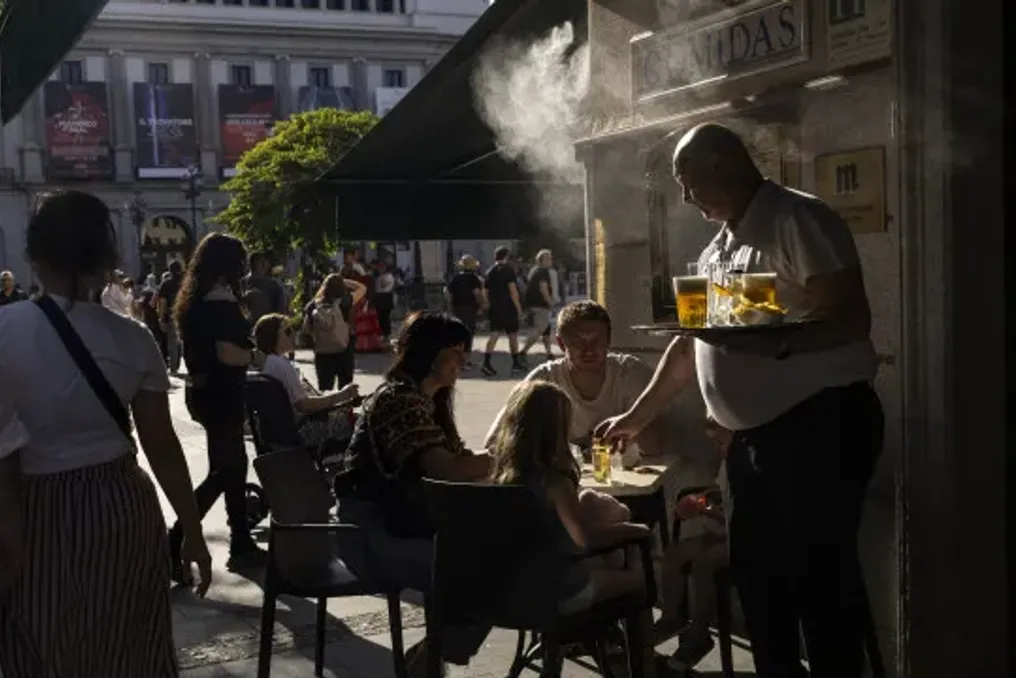
A recent heatwave has been classified as the deadliest in France since 2003. The state agency recorded half of these excess deaths in just three days, between June 25th and 27th.
Impact and Vulnerable Groups
Although two-thirds of the victims were 75 years or older, the increase in mortality from all causes, which cannot yet be fully attributed to the heat, was noted across all age groups starting from 15 years old, with a sharp increase starting from 45 years old. This situation was described as unprecedented by experts.
Political Debate and Comparison with 2003
The mortality data, which remains under rigorous monitoring in recent weeks, has generated an intense political debate in the country. The opposition has accused the Government of not being prepared to deal with the consequences of climate change. The French Government tried to avoid direct comparisons with the extreme heatwave of 2003, which resulted in about 15,000 excess deaths, many of them in nursing homes.
Official and Expert Position
Despite this, the office of the French Minister of Health, Stéphanie Rist, stated that even after the intense episode in June, the number of excess deaths recorded is visibly lower than in 2003. She emphasized that the 2003 heatwave lasted about three weeks, while the current one extended for 16 days. However, SpF expert Guillaume Boulanger warned against comparing the two events, given the evolution of healthcare systems and population aging.
Characteristics of the Current Heatwave
The state agency reported that the recent heatwave, which affected much of Europe, was characterized by an 'unprecedented earliness' and 'duration,' reaching almost the entire French population while school and professional activities were still underway. Two-thirds of the excess deaths occurred among people aged 75 or older, a group especially susceptible due to their fragile health.
Detailed Mortality Data
Furthermore, there was a significant increase in mortality among individuals aged 45 to 64, recording 979 excess deaths, representing a 55% increase compared to what was expected for that period. SpF emphasized that these figures are preliminary, and an assessment of deaths truly linked to the heat will only be made in the autumn. According to the agency, the final balance is likely to grow, as some deaths classified as normal may be reattributed to high temperatures.
Situation in Paris and Previous Episodes
In the Paris region, which was particularly impacted, the mortality rate doubled compared to the usual level, totaling 1,999 deaths. Deaths increased in all types of facilities, including hospitals, nursing homes, and elderly residences, but they were 'mainly at home,' according to Guillaume Boulanger. Added to this picture are about 300 excess deaths recorded during the first heatwave of the year, which occurred between May 24th and 28th, which was less intense and shorter. France also experienced a third extreme heat episode in mid-July.
Repeated Consequences of Heat
Experts indicate that repeated exposure to heatwaves causes a gradual wear on the body, affecting children, the elderly, vulnerable people, and chronic patients. Although heat days represent only 4% to 5% of summer days, they account for about 30% of heat-related deaths during this period. Guillaume Boulanger reinforced that 'heat exposure can impact mortality throughout the summer.' In 2025, about 1,900 heat-related deaths were counted in three distinct heat episodes, but the total number of deaths related to high temperatures between June 1st and September 30th of this year reached approximately 5,700.