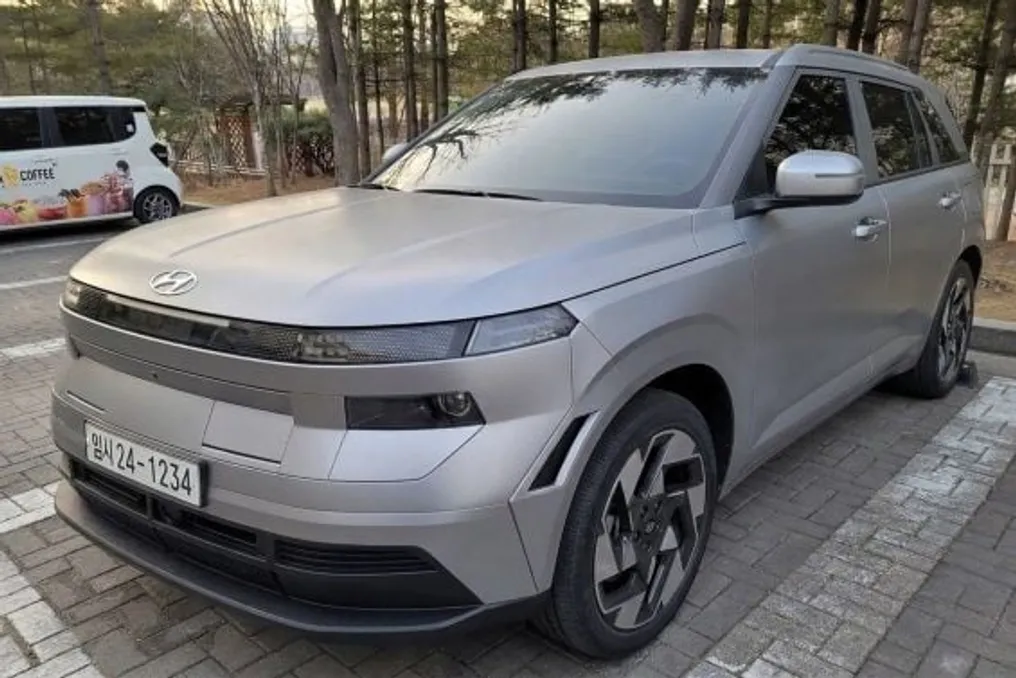
The next iteration of the Hyundai Kona was revealed without any type of camouflage in South Korea, through images shared on social media. This prototype suggests a much more comprehensive overhaul than a simple mid-cycle update.
Prototype Design and Aesthetics
The pre-series prototype features a more elevated and vertical silhouette, moving away from the fluid lines of the current version and adopting visual characteristics similar to the electric vehicles in the Ioniq family. On the front, the split lighting concept, characteristic of the first two generations, has been maintained, but with smaller main headlights and a more robust upper LED strip that spans the entire width of the front.
The sculpted lower bumper has reduced air intakes and appears to feature a closed grille. A notable change is the absence of unpainted plastic cladding on the wheel arches, which gave the previous Kona a more rustic look. In its place are smooth surfaces, without the diagonal creases of the previous generation, and a subtle two-tone treatment, contrasting gray pillars with the matte silver body. The beltline remains straight until a redesigned and more vertical rear.
Dimensions and Market Positioning
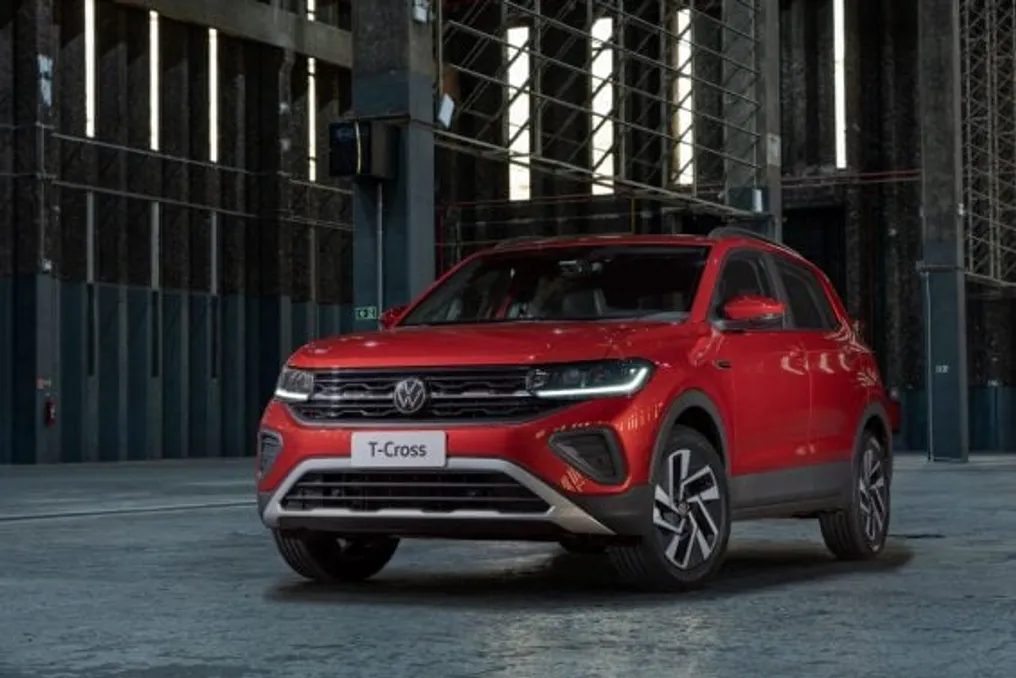
Although exact measurements have not been confirmed, the SUV is expected to increase in size. The current Kona measures 4.35 meters in length, as does the Creta (4.33 m), while the new generation Kia Seltos, which shares mechanics, reaches 4.43 m. A larger size would help the model position itself at the intersection between the subcompact and compact segments in Europe, competing against models like the Volkswagen T-Roc, Toyota C-HR, Honda HR-V, and Mazda CX-30, occupying the space between the Bayon and Tucson.
Model Integration and Partnerships
A crucial aspect raised by international publications is Hyundai's intention to consolidate the Kona and Creta lines into a single global product, which is consistent with the similar size of the two SUVs. The shapes of the prototype echo the Crater concept, presented in 2025, which served as the aesthetic basis for this project.
For the Brazilian market, this decision gains additional relevance, given that the Creta is one of the best-selling vehicles in the country, and its third generation, codenamed SX3b, is expected to emerge from this unification. Furthermore, there is an expectation that the structure will be used by General Motors. Due to the agreement signed between the manufacturers in August 2025, which foresees the joint development of five models, the future Chevrolet Tracker should be derived from the Hyundai SUV. The initial launch of this first product of the partnership is scheduled for 2028.
Interior and Technical Specifications
Inside, a digital cockpit equipped with larger screens is anticipated, following the trend initiated by the Ioniq 3, and operating under the new Pleos Connect system, based on Google Android. Hyundai does not plan to eliminate all controls, maintaining physical commands for frequently used functions.
The engine range should be adapted according to the market, including 2.0 naturally aspirated, 1.6 turbo, and 1.6 self-charging hybrid options, available with front-wheel drive or all-wheel drive. The purely electric version may be retained, possibly with an extended range system. The official debut of the vehicle is expected in the coming months, as part of the 2027 lineup.