In the city of Gwadar, located in southwestern Pakistan, residents are facing serious problems amid the active growth of the port. During one hot day on June 12, a local resident, Shamsul Haq Kalmati, discovered that the coastline was covered with a dark oil slick, indicating larger-scale pollution.
Environmental Threats and Spill Causes
Local officials warned that the 20-kilometer-long slick poses a threat to marine fauna and the local fishing industry. Shortly after its discovery, a dead sea turtle was found, half-buried in the oily sand. The government continues to investigate the cause of the spill, which is presumed to be related to military actions in the Persian Gulf, where crude oil tankers are being attacked in the conflict between Iran, the US, and Israel. Other theories link the incident to oil smuggling from Iran into Pakistan.
Gwadar, situated in Balochistan province, is near the Strait of Hormuz, through which about a quarter of the world's maritime oil volume was transported annually until February. However, the vulnerability of the waters around the port and local fishermen is due not only to proximity to oil flows but also to years of rapid urbanization, which has led to flooding, displacement of populations, and environmental degradation.
History of Gwadar Port Development
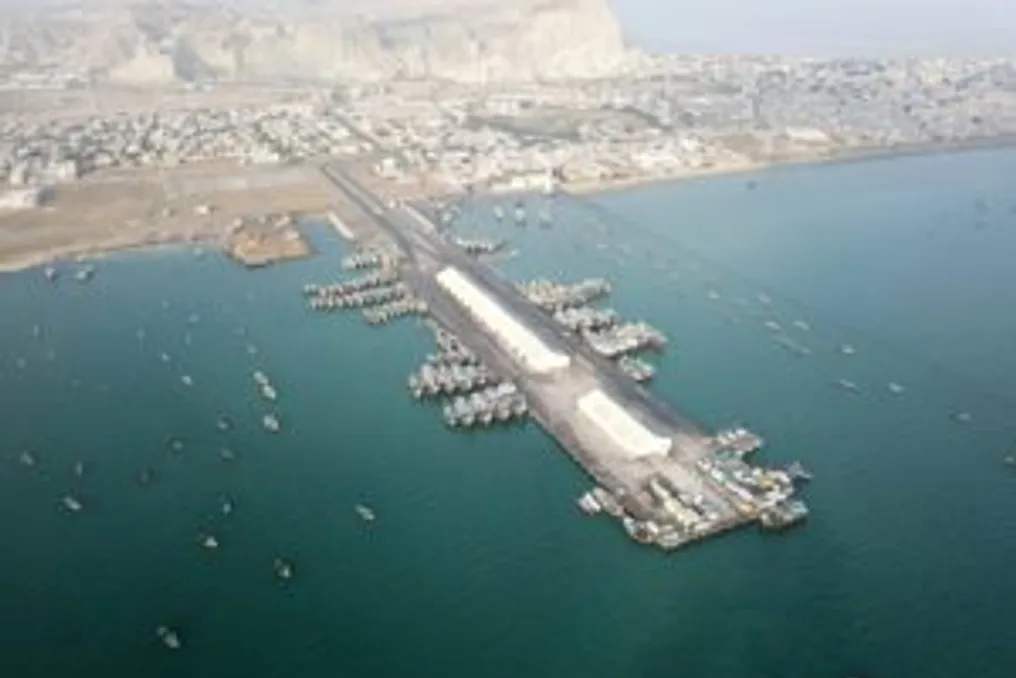
In 2015, China and Pakistan signed a cooperation agreement under the China-Pakistan Economic Corridor (CPEC)—an ambitious infrastructure project designed to connect western China with the Indian Ocean and bypass the potential maritime choke point of the Malacca Strait. Gwadar Port was envisioned as the terminus of this corridor. The first phase of the port was built by the governments of Pakistan and China for $248 million and was opened in March 2007. It was leased to the Port of Singapore Authority (PSA) for 40 years, but in 2013, PSA withdrew from Gwadar, transferring rights to China Overseas Ports Holding Company Ltd, which has managed it since then.
The second phase, started in 2007, focuses on developing infrastructure around the port, including the completed coastal highway and airport. At the beginning of this year, both countries announced the resumption of efforts to develop CPEC and further develop Gwadar. The Chairman of the Gwadar Port Authority, Nur ul Haq Baloch, stated that the administration is considering reviving plans for an extensive 'Oil City' project in the district for the storage, refining, and processing of petroleum products.
Impact on the Local Environment
Since the announcement of CPEC, there have been serious concerns about the impact of constructing the deep-sea port and associated infrastructure on the environment. The city is susceptible to drought, climate change, groundwater depletion, and sea-level rise, regularly experiencing unpredictable extreme weather events. Furthermore, the development has altered the local marine ecosystem. Previously, a natural bay formed by a crescent served as the center of a fishing community where fishermen could fish year-round. Locals proudly called this bay their Saindak and Rekho Dik, comparing the rich marine life to the well-known gold and copper mines of Balochistan. However, with the advent of the deep-sea port and rapid development in the city area, this era has ended.
An expert on China and Associate Professor at Lahore University of Management Sciences, Hasan H Karar, notes that environmental impact is inevitable when implementing mega-projects such as ports and railways, regardless of funding. He emphasizes that key issues concern the assessment of these consequences, methods for mitigating them, and the participation of the local population in discussing these projects, which, according to him, is currently insufficient.
Restrictions for Fishermen
Fishermen in Gwadar traditionally gather daily on the shore at Dhoria—an open platform. Three multi-purpose port jetties were previously located near this spot, where ships were loaded and unloaded. After the 2000s, fishermen were forced to leave their former fishing grounds as they fell within the port's territory. A former local fisherman, who wished to remain anonymous, stated that locals avoid public discussion about the port due to fear of local authorities.
Currently, fishermen are prohibited from approaching either the port or the places where they used to fish. Rauf Baloch recalls fishing with his father, noting that catches were plentiful before, but the situation has changed now. In his late thirties, he is forced to go out to sea for Iranian oil smuggling. He describes it as an 'open prison' that has disrupted his mobility.
Besides displacement, the port's development has brought other problems. The construction of the $168 million Eastbay expressway in 2017, connecting Gwadar Port to the Makran coastal road and further to Karachi, sparked protests among fishermen in 2018. The highway blocked their routes to the Arabian Sea. Although authorities eventually built a concrete passage under the road for fishermen access to the sea, some consider it inadequate, and Rauf Baloch also describes it as an 'open prison.'
Water and Infrastructure Issues
Many roads built in Gwadar and its surroundings as part of ongoing development, according to locals and some experts, exacerbate flooding during rains. Of particular concern is the highway known as the GT road. Barkat Baloch from Gwadar district claims that because of this road, water does not drain into the sea or soak into the ground, hindering the construction of houses and walls.
The situation worsens with increasing construction. Hydrologist Nasir Ahmad explains that previously, during heavy rains, water flowed from the land into the sea, but this no longer happens. The resulting floods have led to the resettlement of many families. Ahmad notes the paradox that life in Gwadar depends on the absence of rain, as any rain exceeding 40 mm, especially when coinciding with high tide, quickly raises the groundwater level and causes inundation.
Smuggling as a Means of Earning
The problems caused by development are compounded by the long-standing issue of competition from trawlers. Maulana Hidayat-ur-Rehman, a prominent political leader of local protests, has criticized illegal trawling off the coast of Gwadar for years, which causes environmental damage. He points out that large commercial trawlers from the neighboring Sindh province violate territorial boundaries, should not fish within 12 nautical miles of the coast, and use destructive bottom trawling methods. Unlike them, local fishermen use small boats and do not engage in trawling.
Fishing rights remain a contentious issue, sparking mass protests. Maasi Zainab, an elderly woman from the coastal area of Mulla Band, agrees that development and restricted access to the coast have created great difficulties for fishermen. She adds that they are often stopped for several hours due to the movement of Chinese or VIP figures near the port, and by the time they reach deep waters, trawlers have already caught most of the fish. Social activist and researcher KB Firaq lists several problems forcing local fishermen into oil smuggling. He argues that despite CPEC projects, the benefits for the residents of Gwadar are not yet visible, and trawlers have been destroying fish and eggs with their nets since the 1990s, threatening marine life. Moreover, projects around the city have stopped the natural drainage of water into the sea, and areas once rich in spawning grounds are damaged by oil spills, which, according to Firaq, has become the cause of an ecological disaster for marine life in Gwadar.