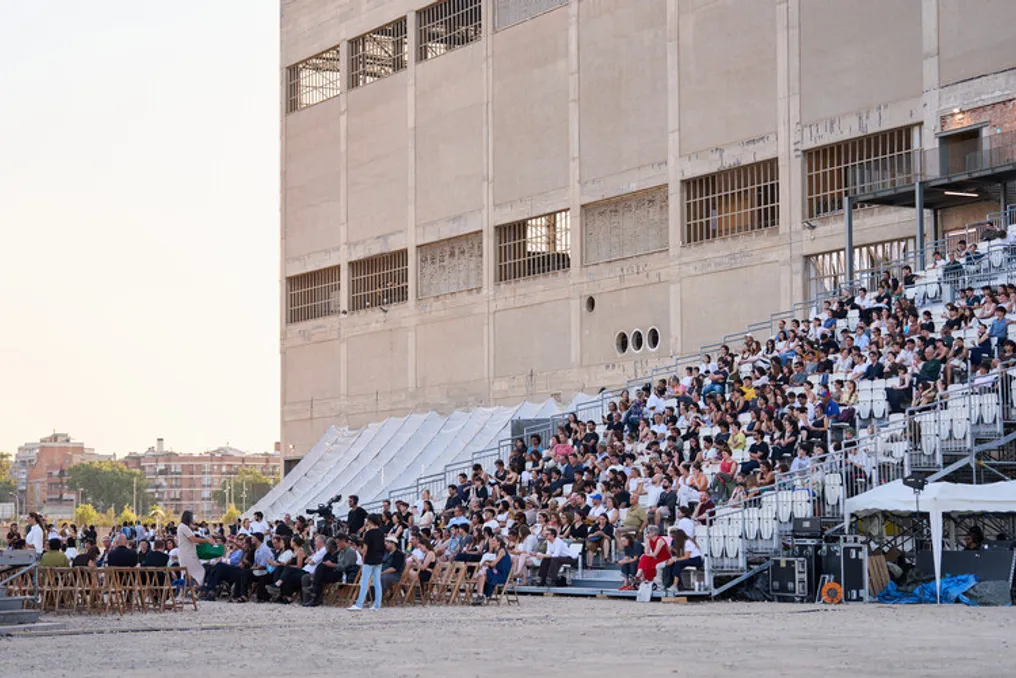
With the conclusion of the UIA 2026 World Congress of Architects in Barcelona, a central idea emerged from the debates, lectures, and exhibitions: the future of architecture must focus less on final solutions and more on the ability to accept change and jointly question established models.
Central Themes and Challenges
Under the theme 'Becoming. Architectures for a Transitioning Planet,' the Congress positioned architecture as an area of continuous development, driven by dialogue across various fields, research, and cooperation. Issues such as public health, resource consumption, climate adaptation, and housing emerged as interconnected problems, impossible to be solved by a single institution or profession.
Discussion forums prioritized existing buildings as a common asset, highlighting renovation, adaptation, and reuse practices as pathways to reformulate architecture's contribution in the face of social and environmental transformations.
Urban Renewal Initiatives
Mariona Benedito and Carmen Torres, members of the UIA 2026 Barcelona curation team, observed that these conversations served as a platform for presenting Re:Living, a comprehensive renewal framework introduced by the VELUX Group during the event. This model, based on the findings of the Green Paper A Housing We Need for the Future We Want, proposes that urban renewal transcends isolated projects, adopting a more scalable and structured methodology focused on sustainability, economic accessibility, and health.
The vision of viewing current structures as future housing is reinforced by European data. The Green Paper points out that approximately 85% of buildings used in Europe in 2050 were already constructed, indicating vast untapped potential in the existing built stock.
Potential of the Built Stock
Developed in collaboration with ARTELIA, BPIE, RISE, and No Objectives, the Green Paper examines how the European built heritage can help address challenges related to energy, climate, health, and housing. Research on the European Union's housing stock suggests that adapting, reusing, and better utilizing these constructions could enable between 50 and 107 million new housing units, reducing the need for new land, materials, and carbon emissions.
This document, intended for policymakers, researchers, the construction sector, and civil society, aims to stimulate debate on the feasibility of large-scale renovations across the European continent. Complementarily, Re:Living, created with DGJ Architektur and Transsolar, details this research by suggesting a holistic four-phase structure: Re:Think, Re:Scope, Re:Design, and Re:Cover.
Open Dialogue and Experimentation
The emphasis on open dialogue characterized the congress. Discussions converged on the notion that architecture is built through exchange, not absolute truths. Many sessions encouraged the exchange of views among different disciplines on urban transformation, climate, and housing—topics that demand collective answers.
Parallel events, such as Architects, not Architecture (AnA), organized by VELUX in Barcelona, featured speakers like Winy Maas from MVRDV, Xu Tiantian from DnA_Design and Architecture, and Arno Brandlhuber from bplus.xyz (b+) and HouseEurope!. These focused less on finished works and more on the ideas and influences underpinning professional practice, always returning to opportunities present in old buildings, with a focus on minimal intervention and reuse.
The new generation of architects participated in the VELUX Light of Tomorrow student competition, in partnership with the International Union of Architects (UIA). Eight finalist teams presented proposals on the use of natural light before an international jury. Out of 539 projects, the winner, Sun the Quilt, created by students from the Xi'an University of Architecture and Technology, exemplifies how daily urban conditions can generate new architectural solutions through the careful integration of ventilation, natural light, and domestic routines, as highlighted by Niall McLaughlin.
Conclusion of the Event
The congress activities demonstrated that the most urgent issues in architecture cannot be resolved in isolation. Debates on built heritage, circularity, and resource use pointed toward continuous processes of collaboration that extend beyond the event period. In addition to the official agenda, the VELUX x Barcelona Exchange & Experience provided a space for global interaction among students, researchers, industry leaders, and architects, making Barcelona a living place to test ideas for transformation and healthier buildings.