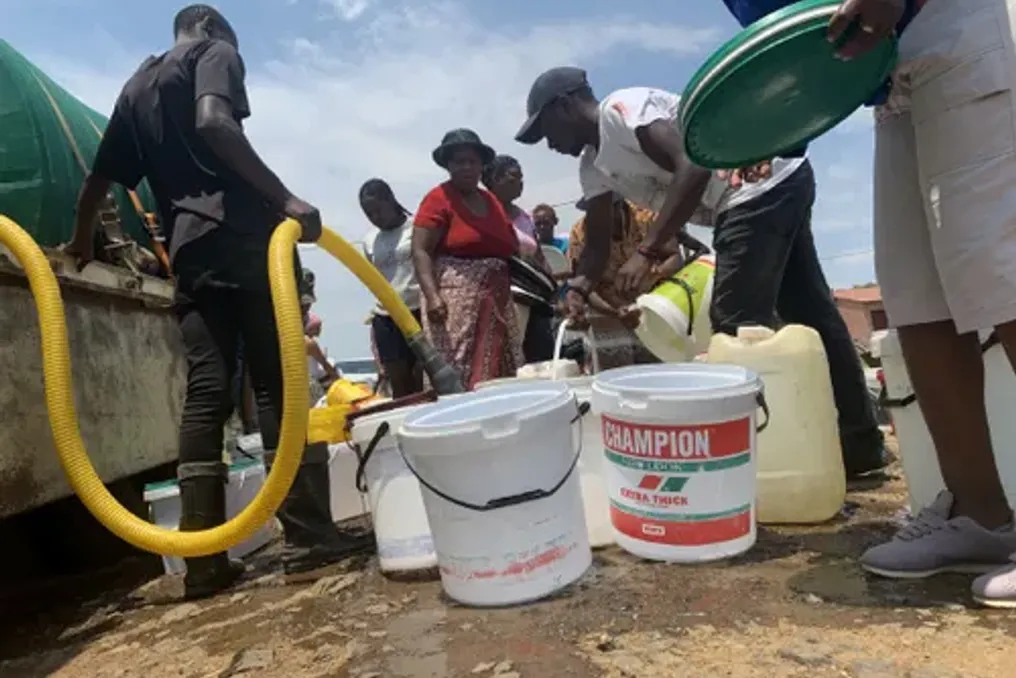
As South Africa struggles to ensure water security, the Water Research Commission insists on the need for revolutionary changes in agricultural methods to ensure sustainable use of water resources.
Current Water Resource Situation
As the CEO of the Water Research Commission, the author emphasizes that the availability and quality of water determine South Africa's economic power, public health, and ecosystem sustainability, especially in agriculture. The country is one of the driest on the planet, and the strain on water systems is increasing due to climate change, which intensifies both droughts and floods. Furthermore, a significant portion of the infrastructure is outdated or poorly maintained, and inefficient usage models persist across all sectors, bringing the country close to a critical point.
Agriculture, which is the foundation of food security and rural life, consumes between 60% and 62% of South Africa's water resources. Without decisive action, growing pressure could undermine food production, rural employment, and the stability of entire communities. Demand for water already exceeds supply, and if trends continue, the deficit could reach 17% by 2030.
Paths to Sustainable Farming
Despite the challenges, there is optimism due to examples of innovation. Farmers and agribusinesses are demonstrating resilience by using local, drought-resistant crops such as sorghum, millet, beans, and peanuts, which can retain up to 70% of potential yield under prolonged drought conditions. Regenerative farming methods are also being employed, including no-till farming, cover cropping, mulching, and composting, which improve soil health and restore degraded lands.
Technology is also transforming the food production process. Modern irrigation systems, such as center pivots, drip lines, and intelligent web platforms, significantly increase efficiency compared to traditional flood irrigation. Digital tools, from soil sensors to AI-based satellite monitoring, enable real-time water management, leak detection, and risk forecasting.
The 'Water Wise Nation' Campaign
These successful practices serve as a model for the future, but their potential will only be realized through scaling across the entire agricultural value chain. This requires not only technical solutions but also a cultural and operational shift in attitudes towards water use. The 'Water Wise Nation' campaign is the WRC's flagship initiative aimed at stimulating action and providing industries, especially agriculture, with knowledge to make informed water decisions. This campaign supports the National Water and Sanitation Plan and aligns with the UN Sustainable Development Goals.
'Water Wise Nation' promotes three core principles: wise water use is smart business, as efficient irrigation, crop diversification, and water reuse reduce costs; collaboration is key, requiring the exchange of experience among farmers, policymakers, researchers, and communities; and every drop matters, regardless of farm size.
The Necessity of Change
Change management is no longer an optional element; it is an investment in the long-term survival of agriculture, the prosperity of rural communities, and the preservation of natural heritage. For agribusiness decision-makers, this means integrating water resource management into corporate strategy. For farmers, it implies experimenting with new crops and adopting precision irrigation. Policymakers and researchers must align incentives, regulations, and research programs to accelerate the adoption of proven solutions.
It is important to understand that water security encompasses not only the presence of resources but also equity, efficiency, and proper governance. It is necessary to ensure that the most vulnerable groups, such as smallholder farmers, women farmers, and rural youth, have access to the knowledge and opportunities to thrive in a changing climate. The author expresses confidence in South Africa's ability to handle this challenge, calling for decisive and collaborative action, as the cost of inaction is too high.