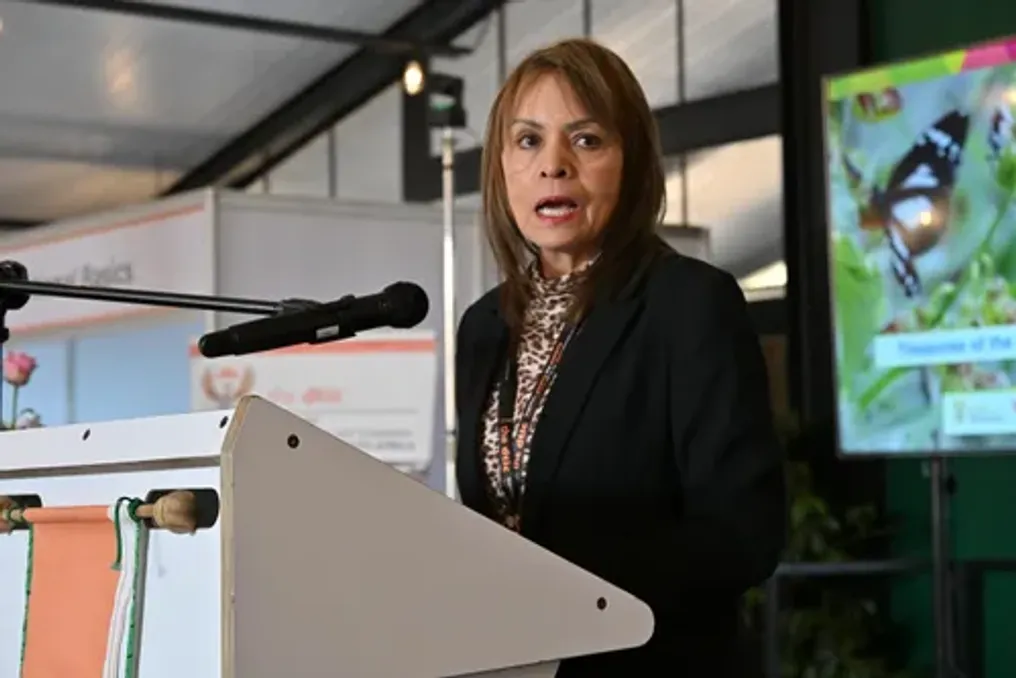
Claudie Stein, Director of Chemistry, Cosmetics, Pharmaceuticals, and Plastics at the Department of Trade, Industry and Competition, delivered a welcoming speech at the fourth South African Essential Oils and Vegetable Oils Conference held in Pretoria.
Potential of Local Production
The South African essential oil industry is recognized as an important opportunity to strengthen local production, create sustainable jobs, and increase export revenues. The government and international partners are calling for increased investment across the entire value chain.
Speaking at the conference opening, Stein emphasized that every liter of local essential oil represents a chance to expand industrialization. She noted that this creates opportunities for farmers, processors, laboratories, packaging manufacturers, logistics companies, retailers, and exporters.
Sector Development Strategy
Stein stated that through local industrialization and adding value before export, South Africa can strengthen domestic production, ensure sustainable employment, and gain greater benefits in global markets. The two-day conference, organized by dtic in collaboration with the South African Essential Oil Producers Association, the Swiss State Secretariat for Economic Affairs, and the UN Industrial Development Organization, was held under the theme 'Treasures of the Past Leading to the Trophy of the Future.'
According to Stein, South Africa's rich biodiversity, local knowledge systems, and entrepreneurs enable the country to become globally competitive in the essential oil industry while promoting industrialization, export growth, and comprehensive economic development.
Requirements for Growth and Cooperation
Stein pointed out that the essential oil sector occupies a unique position at the intersection of agriculture, manufacturing, innovation, and export development. To unlock its full potential, continuous investment in quality, sustainability, market diversification, and cooperation across the entire value chain is necessary. She added that closer interaction between government and industry is critical for realizing the sector's growth potential.
She called for improved access to financing, strengthening technical standards, expanding testing and certification capabilities, increasing investment in research and development, and better access to domestic and international markets. She also mentioned dtic initiatives to promote exports, including support for 13 South African companies that participated in the In Cosmetics Global 2026 exhibition in Paris earlier this year.
Opinion of International Partners
Daniel Lauchenauer, Head of the Swiss State Secretariat for Economic Affairs in South Africa, noted that South Africa's biodiversity economy offers significant opportunities to build globally competitive enterprises supported by employment and international trade. He stressed that South Africa's exceptional biodiversity, local knowledge, and entrepreneurial spirit are valuable assets that must be transformed into high-quality products, competitive businesses, and long-term economic opportunities through continuous investment in innovation, sustainability, and quality.
Lauchenauer emphasized that maintaining internationally recognized quality standards has become a vital condition for businesses aiming to enter global markets. He stated that quality has ceased to be merely a competitive advantage, becoming a basic requirement for market access. Strong quality systems allow businesses to gain trust, enter new markets, and compete successfully internationally.
He concluded that the broad participation of government, industry, researchers, and development partners demonstrates a shared commitment to the development of South Africa's essential and vegetable oil industry through collaboration and knowledge sharing.