The arbitration body for pension funds issued a landmark ruling that mandated the pension fund to recalculate the pensioner's payment, thereby confirming that pensions with certain benefits must be adhered to according to the fund's rules.
The arbitration body for pension funds issued a landmark ruling that mandated the pension fund to recalculate the pensioner's payment, thereby confirming that pensions with certain benefits must be adhered to according to the fund's rules.
A pensioner who contributed to his pension fund for nearly 29 years expected to receive the monthly pension promised by the fund's rules. However, he was informed that the lump sum would cover approximately R21,000 less each month. Refusing to accept this shortfall, he appealed to the Arbitration Body for Pension Funds and achieved a decision that could have far-reaching consequences for participants in pension funds with specific benefits across the country.
Deputy Arbitrator of Pension Funds Nahim Essop ruled that while actuarial reserve values remain a legitimate method for converting pensions into lump-sum payments, the pension fund's rules must be interpreted strictly. If the fund's rules define the pension using a specific formula, the capital value must be sufficient to provide that pension.
The complaint was filed by a former employee of ZF Services South Africa, who retired on October 31, 2023, after joining the company's pension fund in April 1995. According to the fund's rules, his annual pension was calculated at R1,347,595.47, equivalent to R112,299.62 per month. Instead of a direct pension payment, the fund provided a lump sum of R14,468,962.88 to purchase an annuity from an insurer.
However, the applicant stated that a quote from Sanlam showed that the lump sum would provide a monthly pension of about R91,200, which is significantly lower than the R112,300 stipulated by the fund's rules. According to the insurer, approximately R17 million in a lump sum would be required to secure the promised pension.
The pensioner argued that the fund guaranteed a pension with specific benefits, not a lump-sum payment dependent on actuarial assumptions. He also contended that applying actuarial assumptions when calculating both the lump sum and the annuity unfairly reduced his benefit, leading to an alleged deficit of R2.53 million. The pension fund insisted that its calculations were actuarially sound, and the capitalization rate used to determine the lump sum was reasonable. The fund stated that actuarial assumptions regarding mortality, investment returns, and pension increases are necessary to ensure the financial sustainability of the fund.
The fund also noted that the pensioner's benefit had been increased through surplus distribution, bringing the total benefit to R18,346,411 as of September 2024. An independent actuary appointed by the Arbitration confirmed that the annual pension was correctly calculated according to the fund's rules and deemed the capitalization rate reasonable. The actuary explained the difference between the fund's lump sum and the insurer's quote due to product features, insurer commissions, expenses, and market conditions.
Nevertheless, the Deputy Arbitrator found that the dispute revolved around the interpretation of the fund's rules, not the actuarial methodology. Essop ruled that the rules did not explicitly allow the fund to replace a pension with specific benefits with any annuity that could be purchased using an actuarially determined reserve value. He also established that fund participants with specific benefits are entitled to the pension specified in the rules, and the risk of any funding deficit lies with the employer or the fund, not the participant. The ruling noted that there was no evidence that paying the full pension to the applicant would threaten the financial stability of the fund.
The complaint was granted, and the fund's calculation of the lump sum of R14.47 million was overturned. The fund was ordered to recalculate within 30 days the capital amount necessary to provide the applicant's annual pension of R1,347,595.47 through a registered insurer. Furthermore, it must provide the applicant with a written explanation of the revised calculation within the same period.
South Africa is facing a serious labor crisis as thousands of migrant workers have left the country following outbreaks of violence. This situation has led to factories and farms across the country having an acute need for labor.
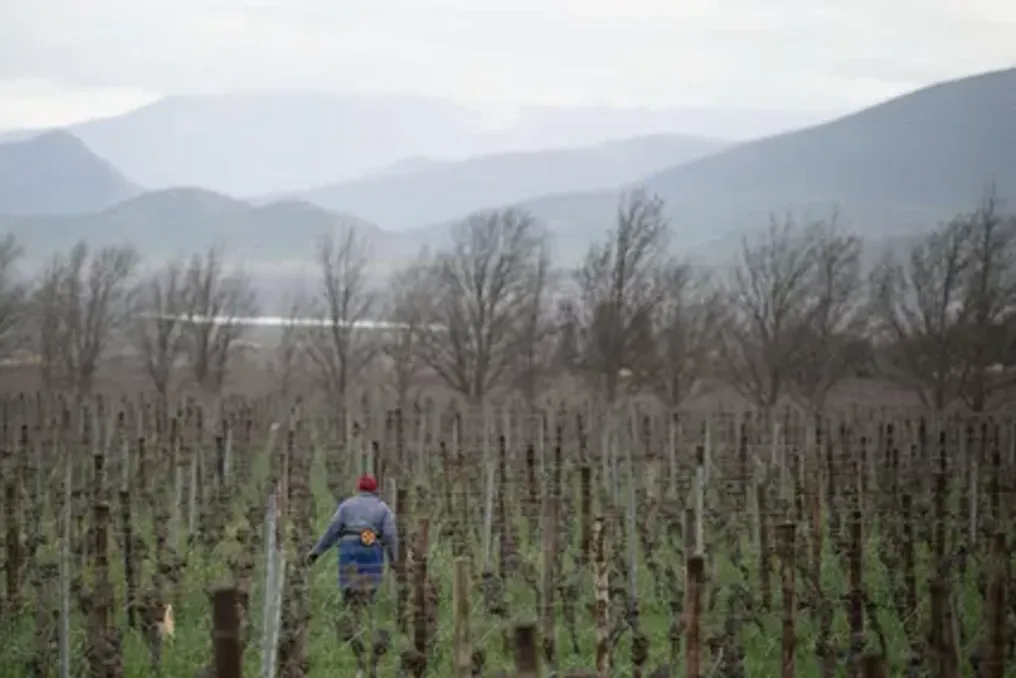
Similar problems are observed on farms, such as vineyards near the city of Robertson. Aaron Majatamhe, a 33-year-old worker from Zimbabwe, told AFP that many farm owners are now desperate because they need to harvest citrus fruits but lack workers. He noted that a similar shortage is also present in vineyards where it is time to pick grapes.
Such difficulties are felt everywhere: factories, farms, and even private households are experiencing staff shortages after thousands of foreign workers left over several weeks to avoid deadly anti-immigrant protests and increased immigration control.
Groups opposing illegal immigration, such as March and March, set an unofficial deadline of June 30th for illegal migrants to leave. This has triggered the departure of over 160,000 people, according to AFP estimates based on data from African governments managing the repatriation of their citizens.
Zimbabwe, which provided the largest number of returnees, reported that many of them worked in the agricultural, domestic, and construction sectors in South Africa.
The first signs of the crisis appeared almost immediately in the KwaZulu-Natal sugar belt. One farmer from the northern coast reported losing up to 80% of his sugarcane harvesting workforce in practically one night. He stated that production and deliveries deteriorated to such an extent that milling plants would struggle to continue operations, speaking anonymously for fear of retaliation.
Another producer near Mid-Illovo, in the hilly region south of Durban, mentioned that most sugarcane harvesters in his area came from Lesotho, a small kingdom surrounded by South Africa. He added that there are fields that need harvesting, but there are not enough people, and local residents avoid this work due to its harshness and physical demands.
However, this argument is disputed. Labor unions and researchers argue that with unemployment rates above 33% (and even higher if those not seeking work are included), there are enough people in South Africa willing to work. Instead, they believe that many employers prefer migrants because they are cheaper, more flexible, and less likely to require formal contracts, benefits, or legal protection.
Patrick Williams, a local organizer for the Commercial, Freight, Agricultural and Allied Union, stated that foreign farmers regularly worked seven days a week, skipped lunch breaks to maximize piece-rate earnings, and often received less than the national minimum wage.
For employers, the problem is not only finding workers but also replacing years of experience. A clothing manager in the Chatsworth industrial area of Durban said that the departure of skilled machine operators from Malawi and Mozambique forced factories to struggle to fulfill orders. She noted that they are barely meeting targets because most were forced to leave, and it will take time for local workers to master the job.
The government is trying to respond to public discontent over migration by promoting a 'locals first' approach, while acknowledging that some industries depend on foreign skills and labor. This week, the Trusted Employer Program was expanded, accelerating visas for compliant companies, including predominantly hiring South African citizens, investing in skills development, and working in priority sectors.
Industry groups are strongly urging the government to create legal channels for seasonal foreign labor, arguing that sectors like agriculture have become dependent on migrants and cannot replace them overnight. Siyabonga Madlala, CEO of the South African Farmers Development Association, believes that South Africa should consider a regulated seasonal worker program similar to that in the United States. He also suggested the need for special permits for seasonal workers from SADC countries where the local supply is insufficient.
More than 60% of South Africa's immigrants, it is estimated, come from SADC countries. However, for many who have left the country, debates about labor policy have taken a backseat due to fears for their safety after at least four foreigners were killed, according to the police.
Wayne Chimbadzwa Mutasa, a Zimbabwean citizen who lived in Robertson since 2014, recounted leaving after foreign workers were subjected to targeted home raids. He told AFP that people who came to Zimbabwean homes claimed to be police officers and alleged illegal residency. His compatriot, farmer Aaron Majatamhe, decided to stay for now, stating that they are afraid to stay even in that place, but they do not have enough money to return home.
Infosys received a fine of €175,000 from the French labor authority due to its employee time registration system not complying with local legislative requirements.
As part of its reporting to stock exchanges, Infosys announced receiving a notification from the French labor authority DRIEETS Ile-de-France regarding the imposed fine. The French authority determined that Infosys's working time tracking system does not fully comply with legal norms. Deficiencies were identified in the reliability, auditability, and monitoring functions for certain employee categories.
Infosys stated that this fine is not material and is unlikely to have a significant impact on its financial position, operational activities, or overall performance. The company also explained the delay in disclosing this information to stock exchanges, citing the need for additional time to verify the received notice and determine an appropriate course of action.
Separately, Infosys reported a 12.2 percent year-on-year growth in consolidated net profit for the June quarter of fiscal year 27. Net profit increased to 7,769 crore rupees from 6,921 crore rupees the previous year. Operating revenue grew by 14 percent, reaching 48,211 crore rupees compared to 42,279 crore rupees in the same period last year.
Furthermore, last week the company announced a change in leadership, appointing Ashish Kumar Dash as CEO designate. He will take over management after Salil Parekh completes his second term. Following a recommendation from the Board of Directors' Nomination and Remuneration Committee, Infosys announced that Dash will assume the role of Chief Executive Officer on April 1, 2027, for a five-year term. Parekh's current term ends on March 31, 2027, at which point he will have served nine years at the company.